Heavy Quarks in the Early Universe's Plasma Move Unlike Einstein Predicted
MIT and UC Santa Barbara theorists find that kicks in a fast quark's momentum are lopsided, hinting that quark-gluon plasma behaves more like a liquid than a gas.
Topic
27 stories from Planck Standard. Latest: November 8, 2026.

MIT and UC Santa Barbara theorists find that kicks in a fast quark's momentum are lopsided, hinting that quark-gluon plasma behaves more like a liquid than a gas.

Models of dense, metal-poor clusters seen in two lensed galaxies suggest they could birth black holes of up to 4,000 Suns, a possible head start for supermassive ones.

If the preprint holds up, EBG-1 would be an unusually efficient source of the radiation that cleared the early universe's fog, but it is one object and the estimate rests on model assumptions.

Nearby starburst galaxies with the fastest winds leaked the least ionizing light, suggesting young stars did the work before the first supernovae went off.

Astronomers using a gravitational lens say the galaxy MG B2016+112 hosts the most tightly paired black holes yet confirmed at such a distance, seen when the universe was about 2 billion years old.

A transient called AT 2026abck, in a galaxy at redshift 5.017, was caught four to 10 days after its blast without help from a gravitational lens, astronomers report.

The source, TXS 2354+015, sits at redshift 4.946, when the universe was under 1.2 billion years old, and its radio output beats the previous record from a 2008 census.

A University of Arizona-led team found heavy elements being blown out of three early galaxies at up to 250 kilometers per second, showing the young universe was already far less pristine than astronomers assumed.

The JADES overdensity, four times denser than its surroundings, holds nearly half of all star formation in its patch of sky. Lyman-alpha light that should be swallowed by neutral hydrogen leaks out strongest at its core, the signature of an ionized cavity about 6 megaparsecs across.

A survey of 1,428 galaxies in James Webb Space Telescope spectra finds that cosmic reionization was driven by a minority of extreme 'leakers,' not by the crowd.

A massive, chemically mature spiral with a 14,700-light-year central bar existed just over a billion years after the Big Bang — a structure astronomers thought could not form so early.

Astronomers argue the universe's X-ray-silent, seemingly overmassive black holes are actually smaller objects feeding at furious rates — a finding that could defuse one of cosmology's freshest crises.
The European space telescope found 31 ancient quasars — two of them shining from when the universe was just 5% of its current age.

The galaxy M1149-BSG-z5 already had a central bar of stars less than 1.2 billion years after the Big Bang — a structure astronomers assumed couldn't exist so early, and one that rewrites the timeline for how galaxies grow up.

Following a gamma-ray burst to its source, the James Webb Space Telescope caught a collapsing massive star from the cosmic dawn and, for the first time at such a distance, imaged its faint host galaxy.

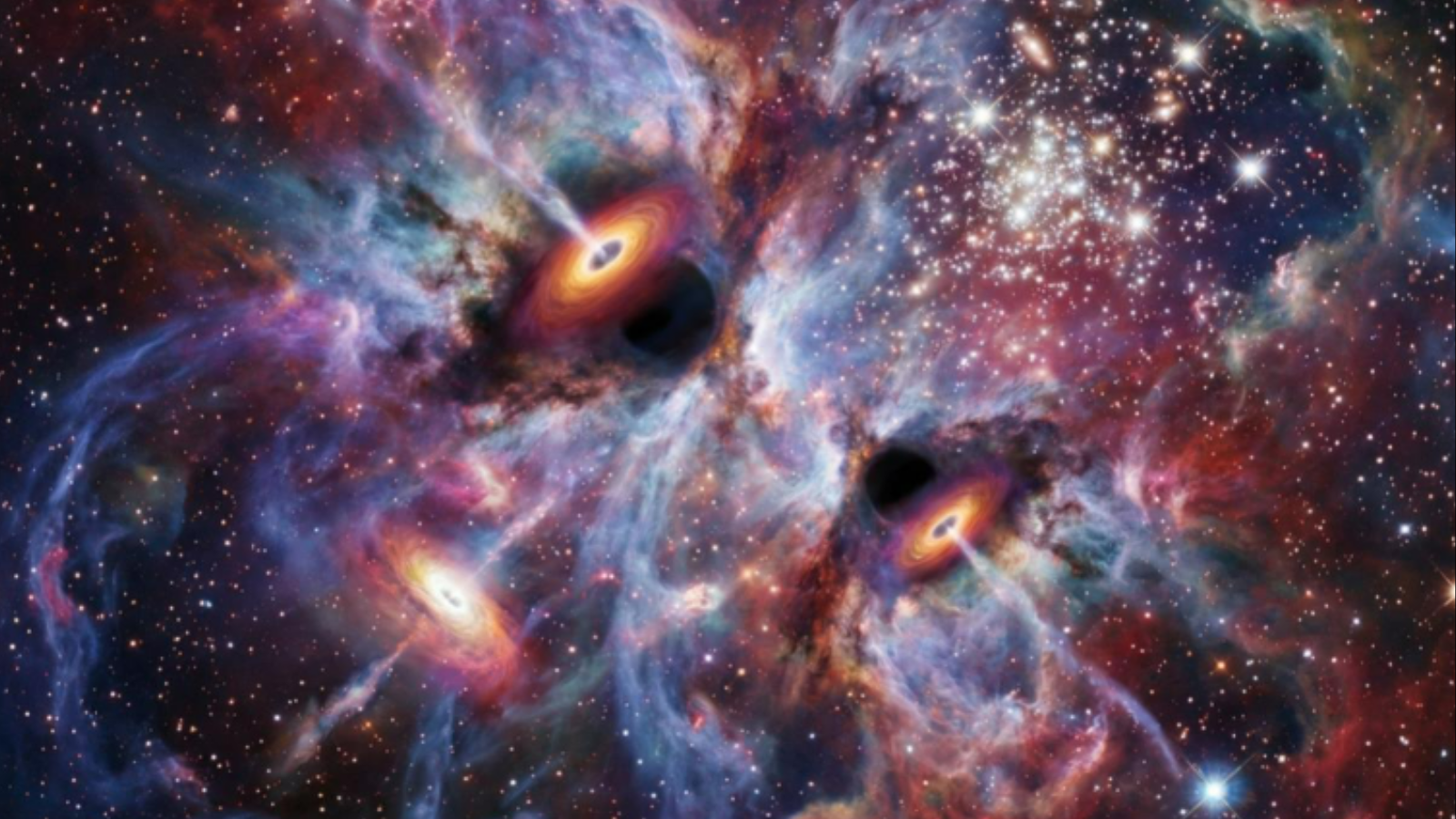
The most detailed spectrum yet of one of these ancient objects strongly favors a black hole cloaked in hot gas over a galaxy full of stars — evidence, researchers say, of heavy black-hole seeds being born in real time.

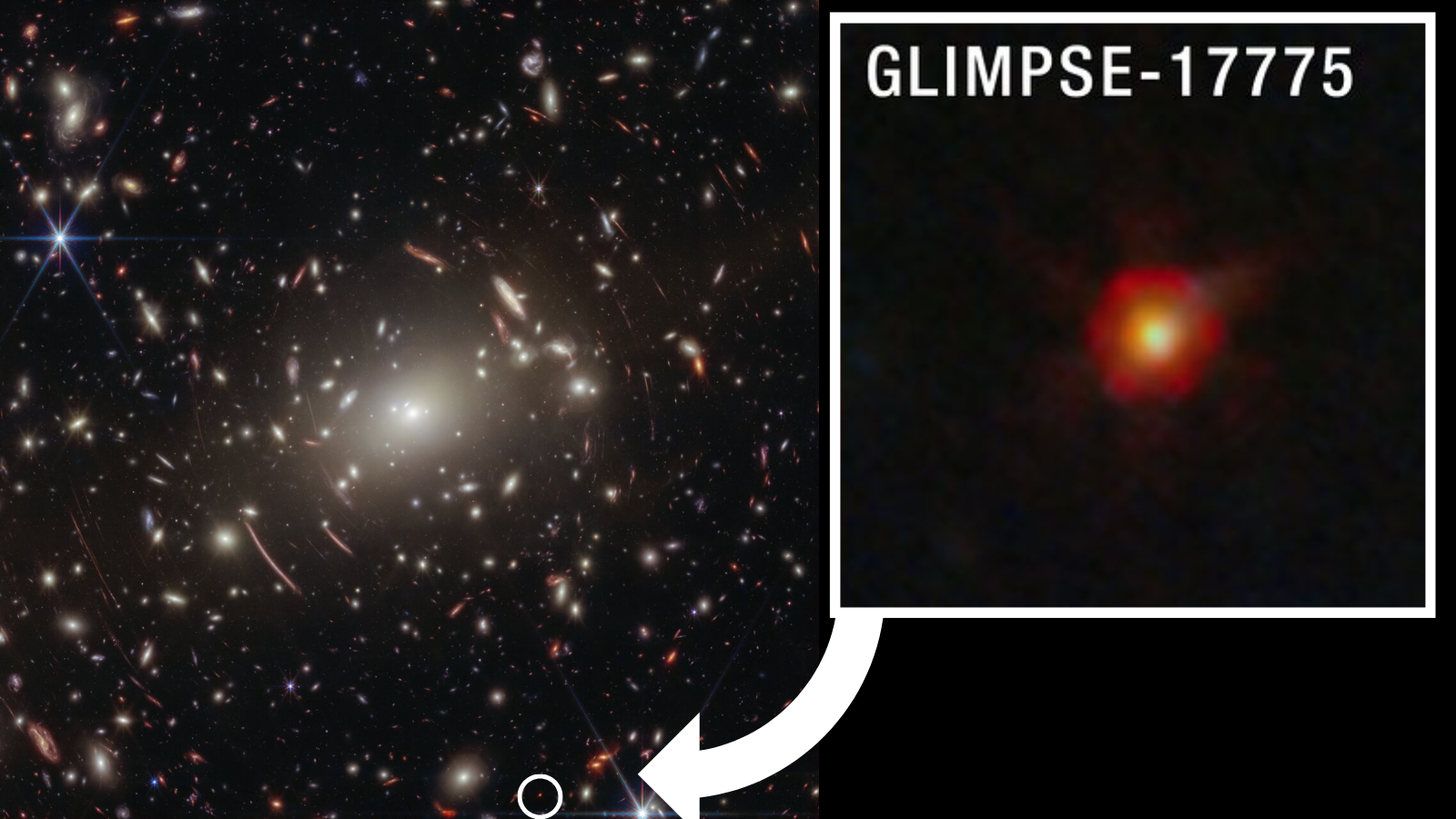
Spectra from a glowing red object called GLIMPSE-17775 reveal a supermassive black hole wrapped in a dense cocoon of gas just 1.8 billion years after the Big Bang.
Astronomers were stunned to find that XMM-VID1-2075, a massive galaxy formed less than two billion years after the Big Bang, shows no sign of rotation — a trait normally seen only in much older, evolved systems.

New simulations suggest small 'seed' black holes gorged on gas faster than thought possible, explaining the monsters the James Webb telescope found just after the Big Bang.

In a 'little red dot' 13 billion light-years away, a supermassive black hole makes up most of the object's mass — a finding scientists call a paradigm shift.

New JWST observations of COLA1 and NEPLA4 — galaxies seen only 800 million years after the Big Bang — show black holes far larger relative to their host galaxies than any modern counterpart, deepening the puzzle of how the universe built its giants so quickly.

Catalogued EGS-z11-R0 contains carbon, multiple stellar generations and thick interstellar dust at a redshift of 11 — features that current cosmological models say should require a billion years or more to assemble.

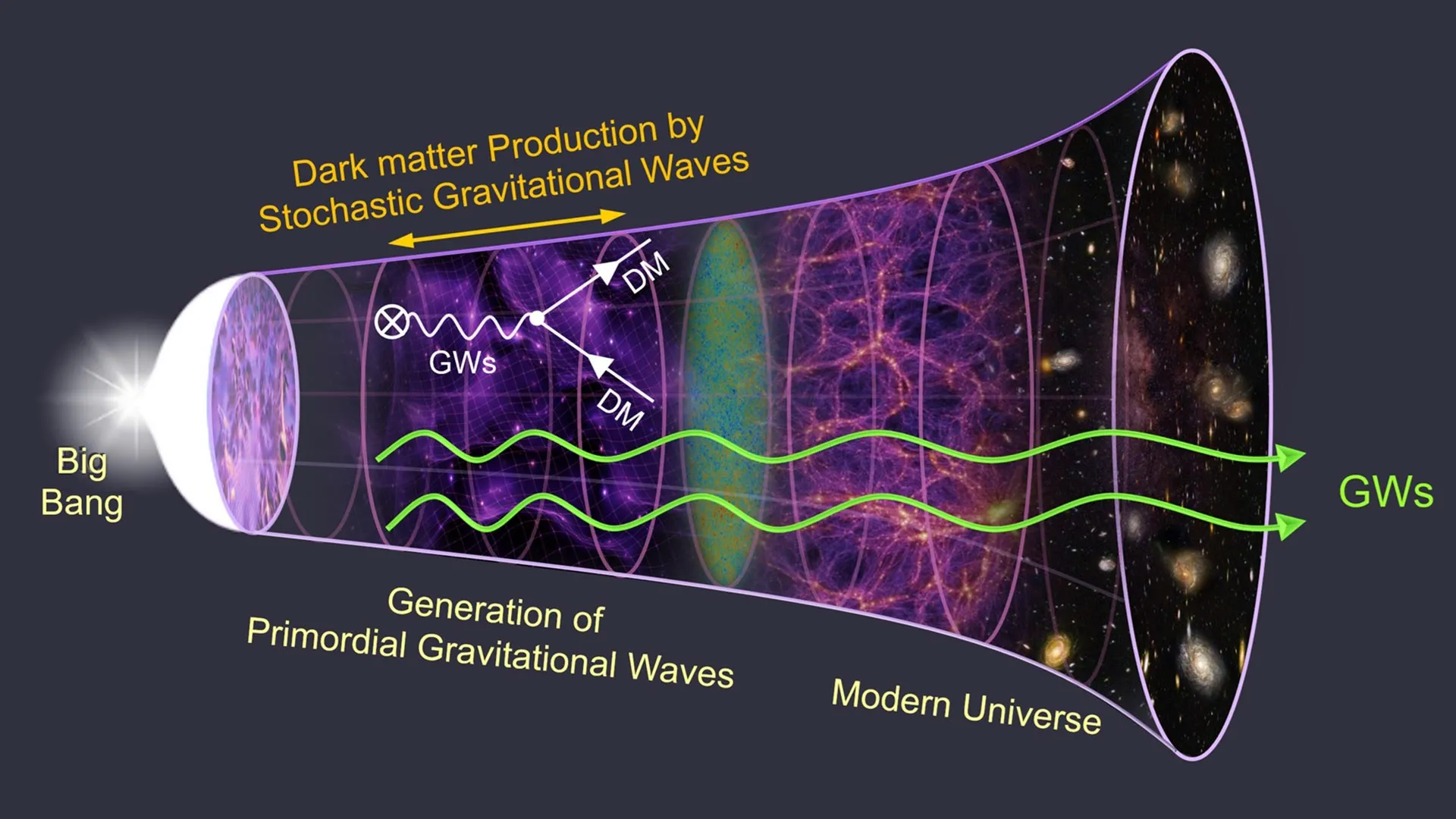
New research suggests ancient ripples in spacetime could have transformed into the invisible particles that shape galaxies today.

New research suggests ancient ripples in spacetime could have transformed into particles that became the invisible substance shaping galaxies today.

The HETDEX survey has increased the known number of these cosmic structures tenfold, revealing the vast hydrogen reservoirs that powered galaxy formation 10-12 billion years ago.

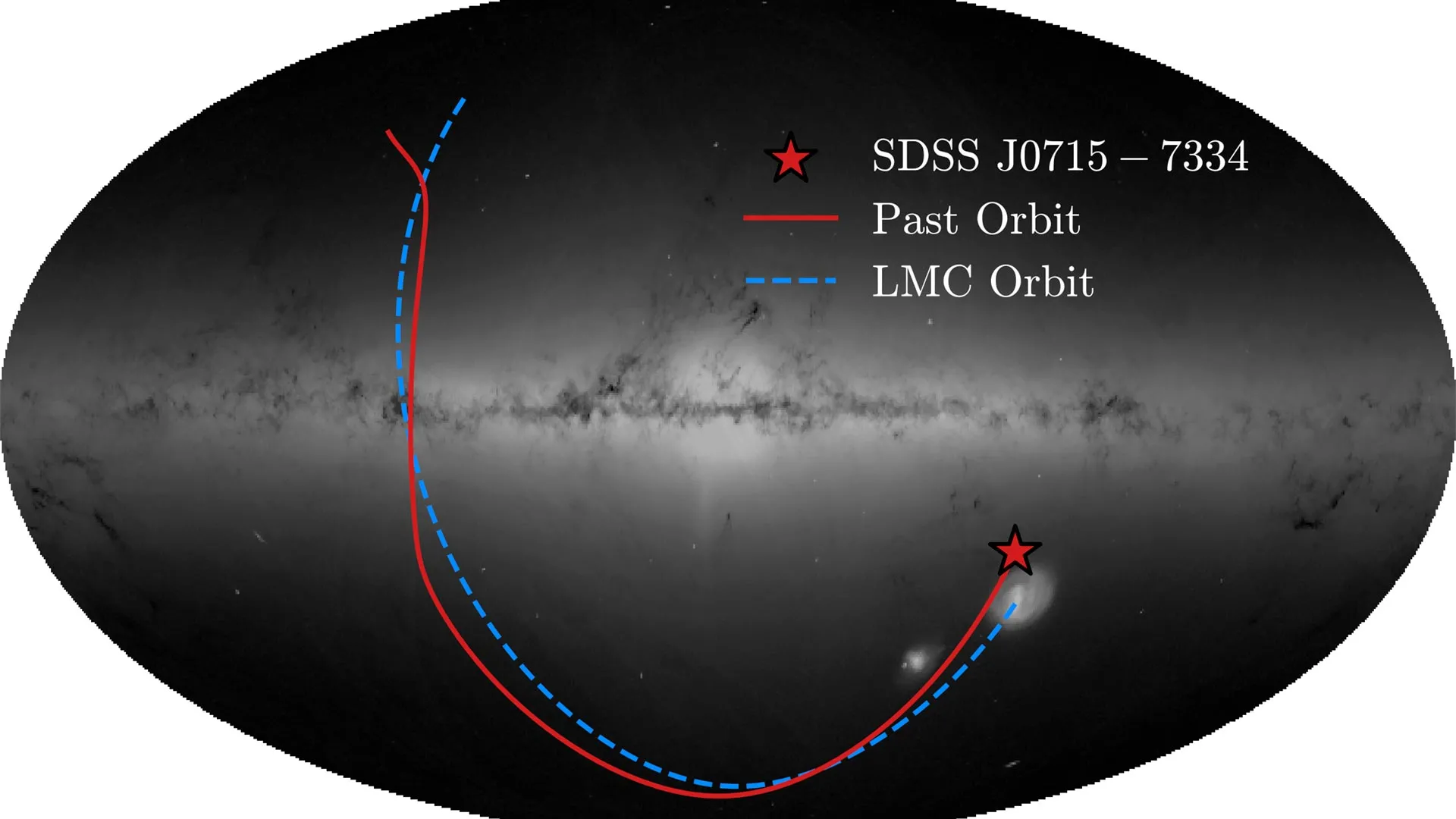
Class project at University of Chicago leads to identification of one of oldest known stars, an 'ancient immigrant' that traveled from Large Magellanic Cloud into Milky Way billions of years ago.

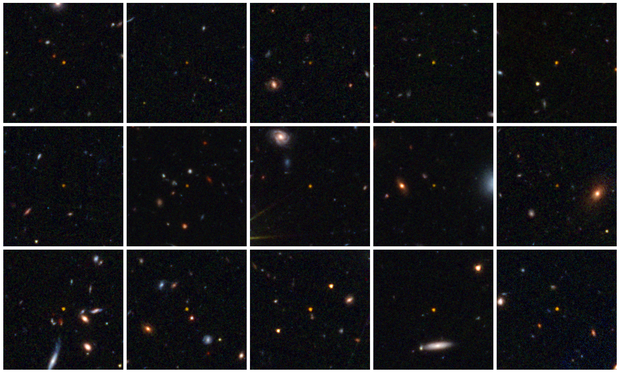
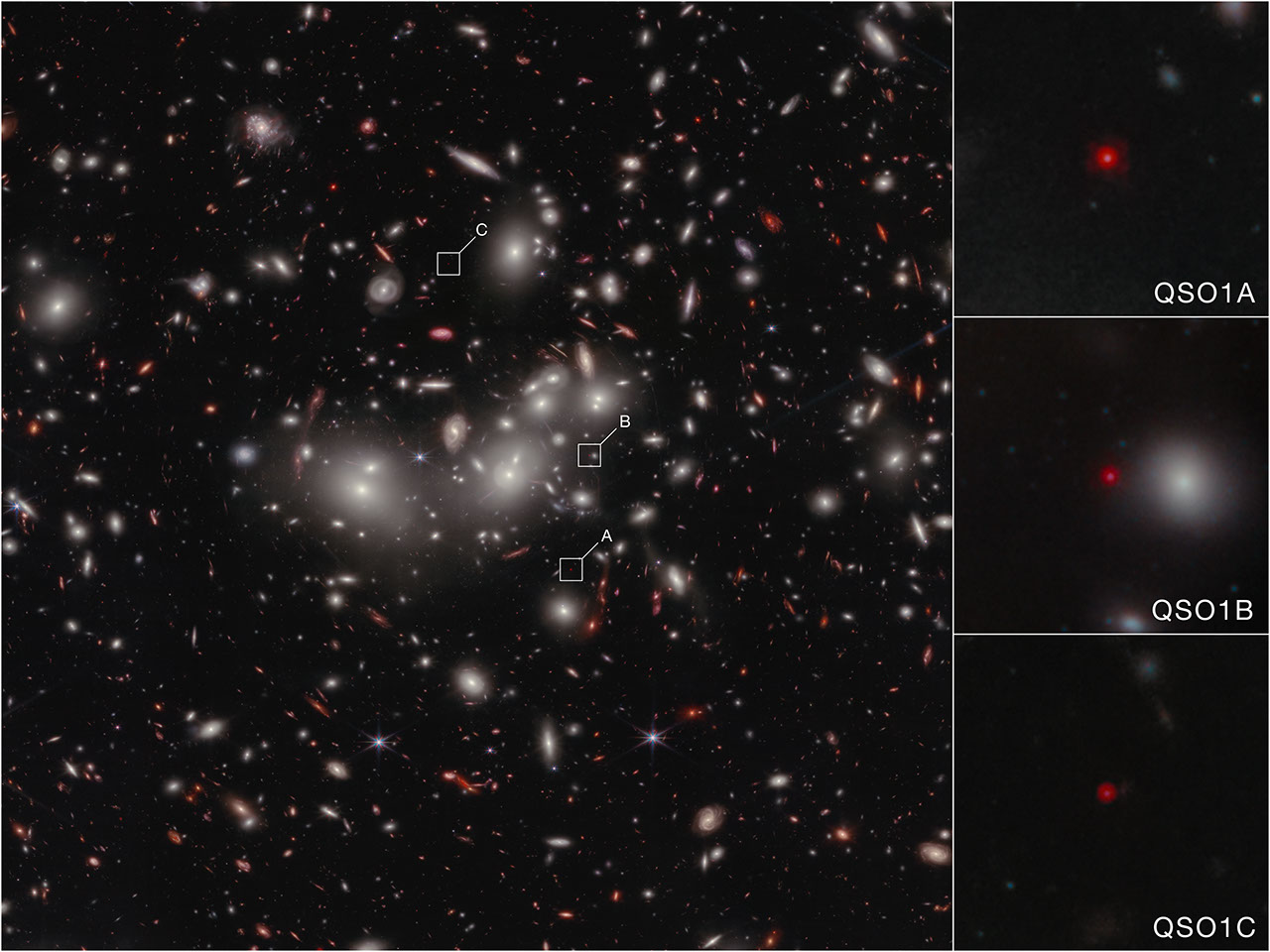
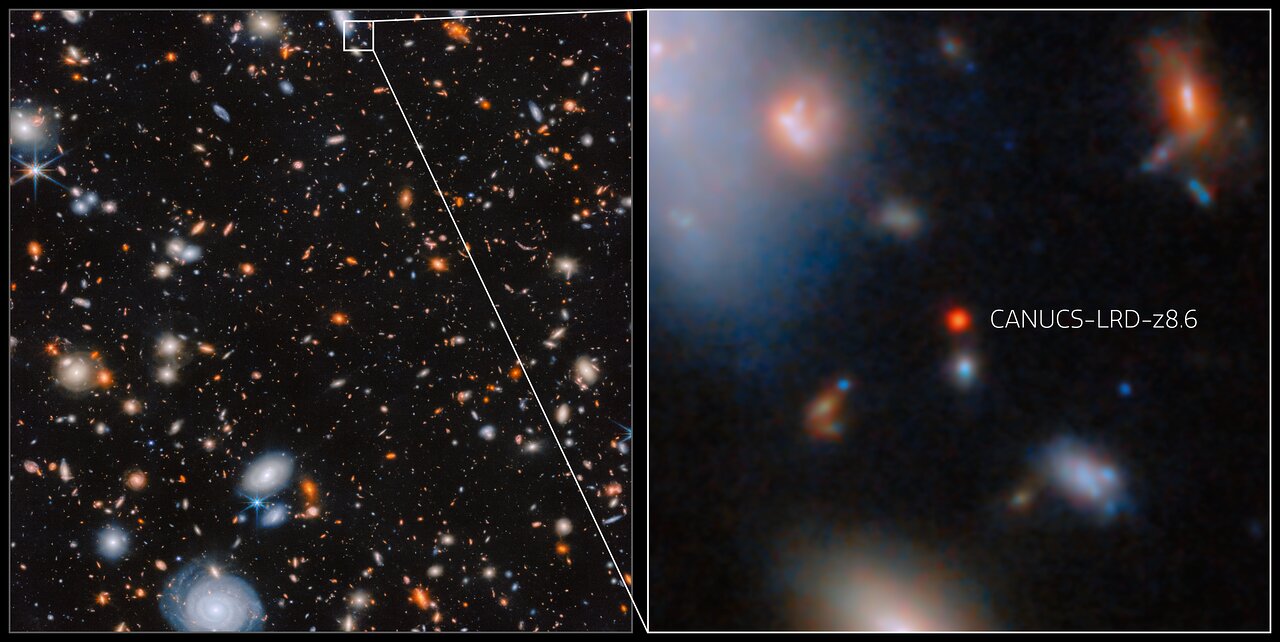
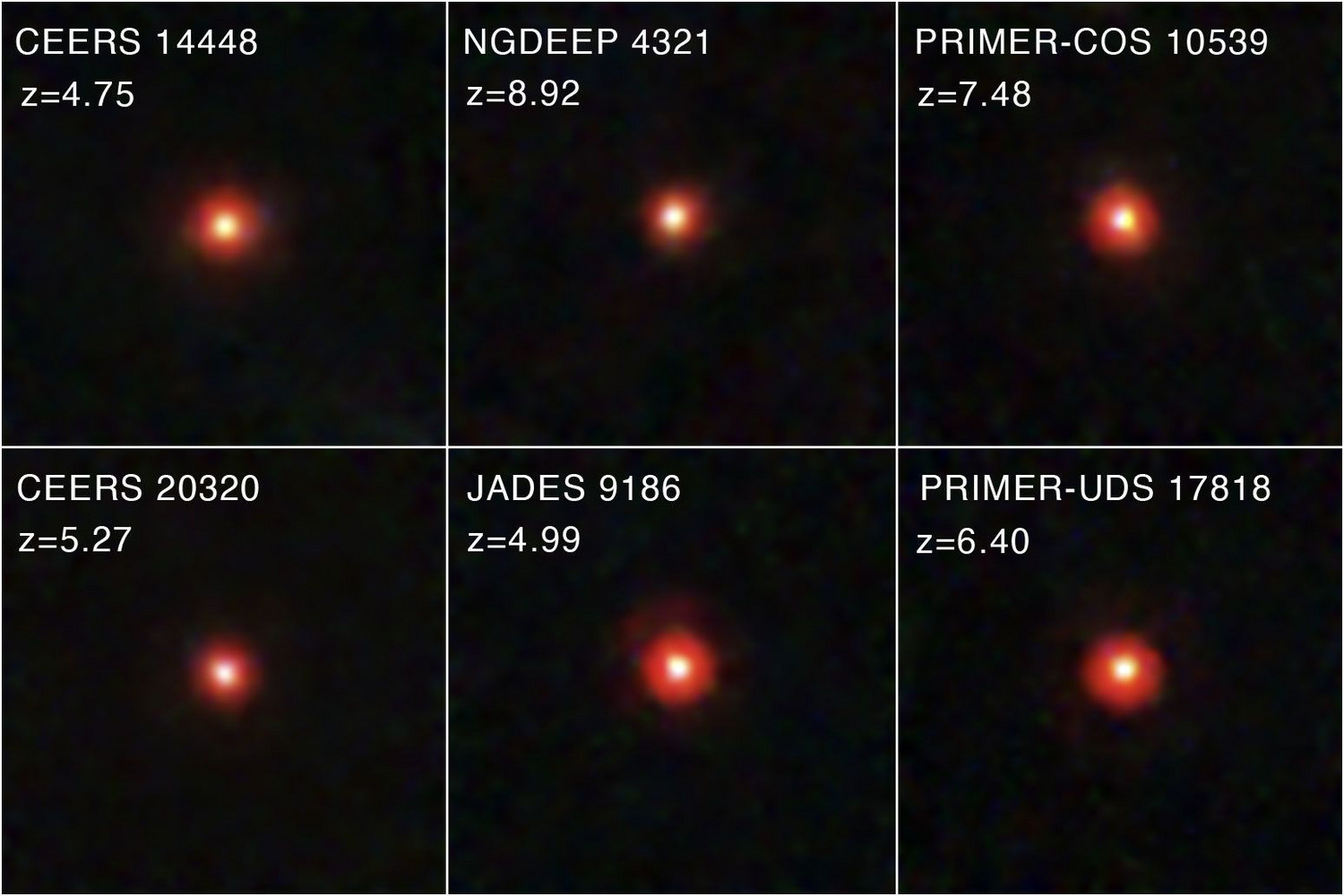
Appearing in nearly every deep-field image since Webb launched, hundreds of mysterious luminous objects in the early universe remain unexplained despite hundreds of scientific studies — and may force a rethink of how the first black holes formed.