Webb Finds Record Heavy Hydrogen in Methane of Interstellar Comet 3I/ATLAS
Measured at about 3.2 percent, the methane's deuterium ratio is 13 times that of comet 67P and points to a birthplace colder and poorer in heavy elements than ours.
Topic
13 stories from Planck Standard. Latest: November 2, 2026.

Measured at about 3.2 percent, the methane's deuterium ratio is 13 times that of comet 67P and points to a birthplace colder and poorer in heavy elements than ours.

The flash, FRB 20240304B, left a tiny star-forming galaxy when the universe was only about 3 billion years old, more than doubling the previous distance record.

HD 3167 b circles its star once a day, 154 light-years away, and is cooler on its day side than bare rock should be. That points to an atmosphere, and maybe a glimpse of what the newborn Earth looked like.

The IC 348 panorama shows newborn stars firing jets into the surrounding gas, two protostars with nearly parallel outflows, and a planet-mass object that appears to have its own disk. The lightest brown dwarfs also carry an unidentified hydrocarbon in their atmospheres.

NGC 1068 is 45 million light-years away and one of the best-studied active galaxies in the sky. The hidden component moves 300 km/s faster than the visible one, tops 2,000 km/s and is escaping the galaxy for good.

The JADES overdensity, four times denser than its surroundings, holds nearly half of all star formation in its patch of sky. Lyman-alpha light that should be swallowed by neutral hydrogen leaks out strongest at its core, the signature of an ionized cavity about 6 megaparsecs across.

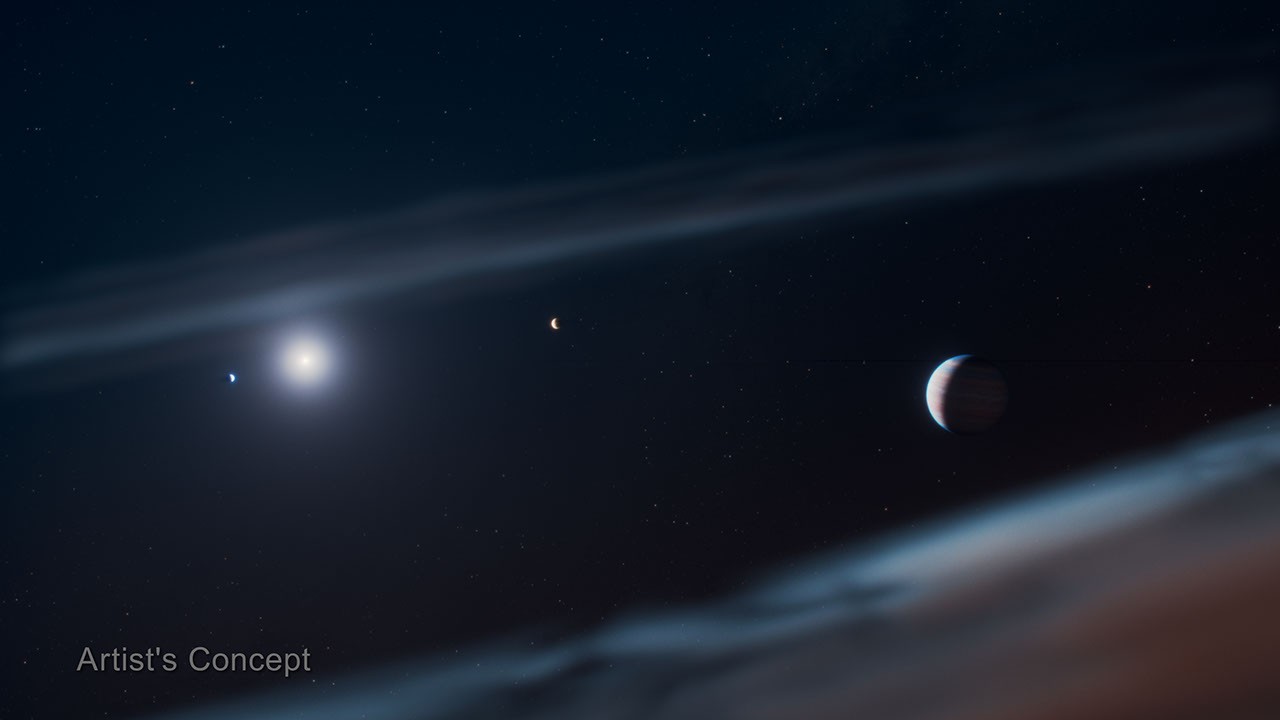
The newly identified world, Beta Pictoris d, makes the young nearby system only the second ever found to host at least three directly imaged planets.

Spectra from a glowing red object called GLIMPSE-17775 reveal a supermassive black hole wrapped in a dense cocoon of gas just 1.8 billion years after the Big Bang.

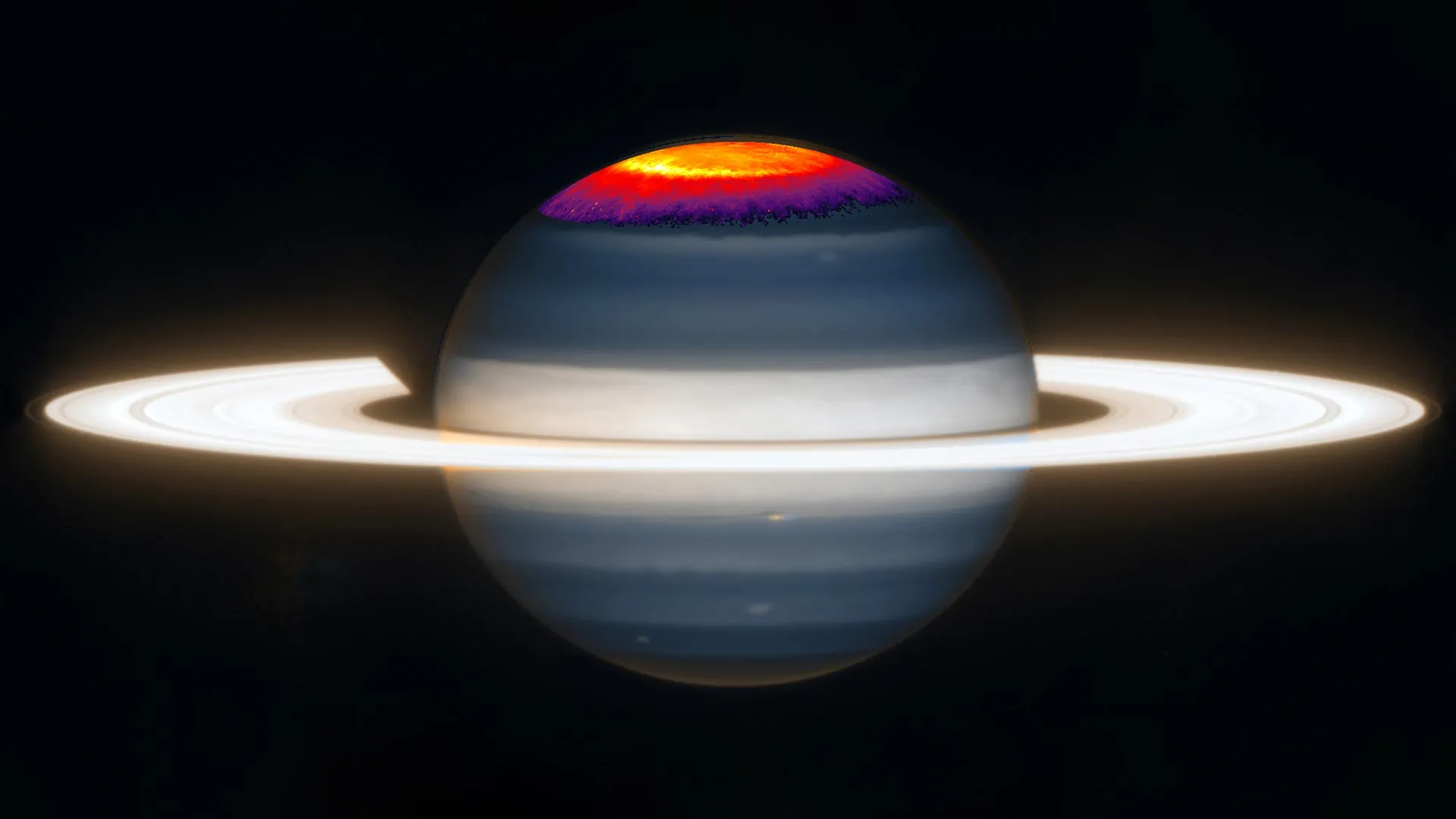
Scientists discovered that the planet's northern lights drive powerful atmospheric winds that create electrical currents, solving a decades-old puzzle.

New JWST observations of COLA1 and NEPLA4 — galaxies seen only 800 million years after the Big Bang — show black holes far larger relative to their host galaxies than any modern counterpart, deepening the puzzle of how the universe built its giants so quickly.
International astronomers led by Stockholm University's Oskar Klein Centre discovered SN 2025mkn, a Type II supernova 9 billion light-years away whose light is bent and amplified by an entire foreground galaxy, creating a natural telescope of unprecedented power.

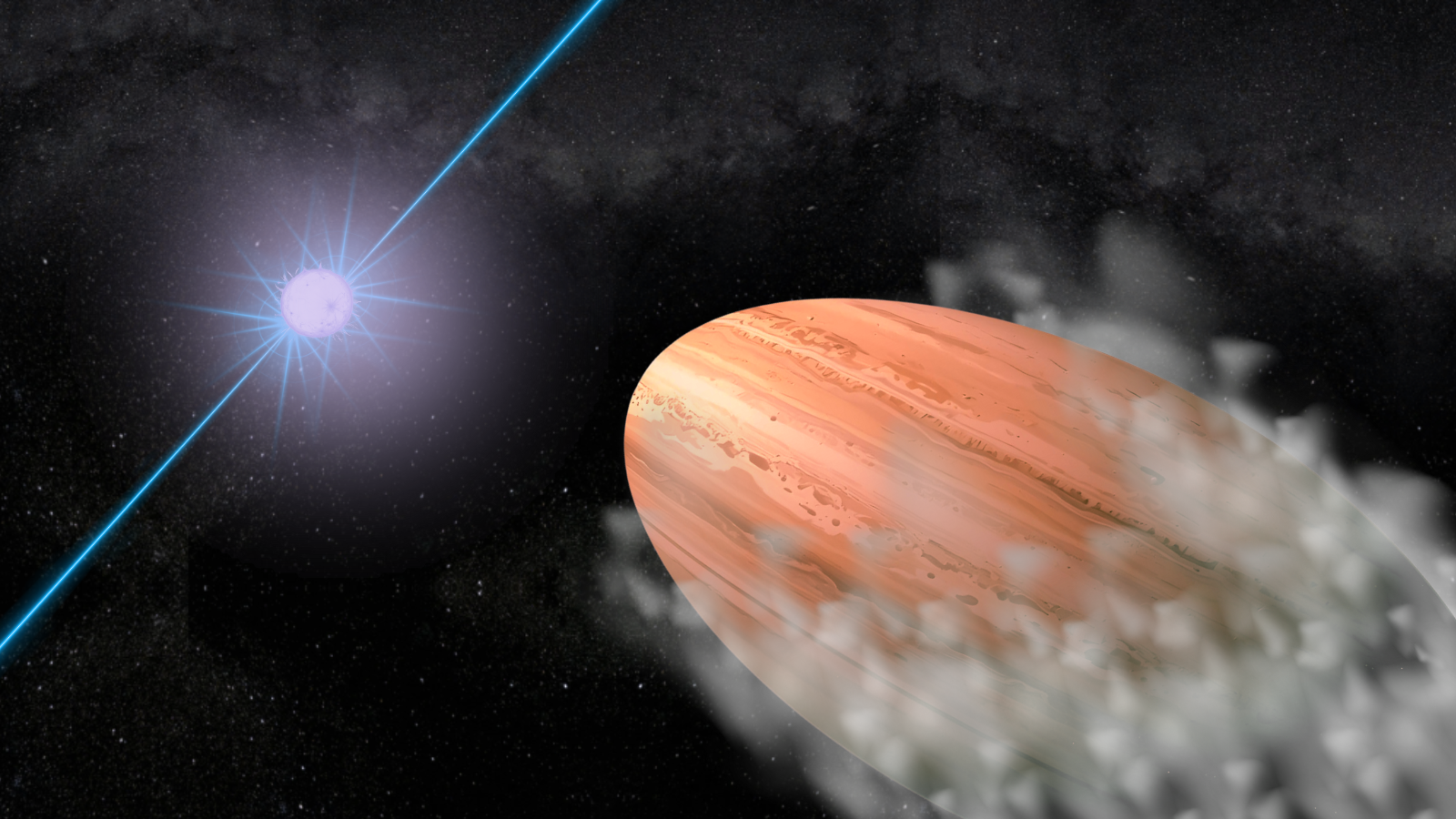
Webb's spectroscopic observations of PSR J2322-2650b revealed helium mixed with carbon molecules including C2 and C3 — the same clusters that form diamond precursors — in an atmosphere unlike anything previously observed.

An unprecedented superluminous supernova, split into multiple images by a foreground galaxy, may help resolve the Hubble Tension