Webb Finds Record Heavy Hydrogen in Methane of Interstellar Comet 3I/ATLAS
Measured at about 3.2 percent, the methane's deuterium ratio is 13 times that of comet 67P and points to a birthplace colder and poorer in heavy elements than ours.
Topic
18 stories from Planck Standard. Latest: November 2, 2026.

Measured at about 3.2 percent, the methane's deuterium ratio is 13 times that of comet 67P and points to a birthplace colder and poorer in heavy elements than ours.

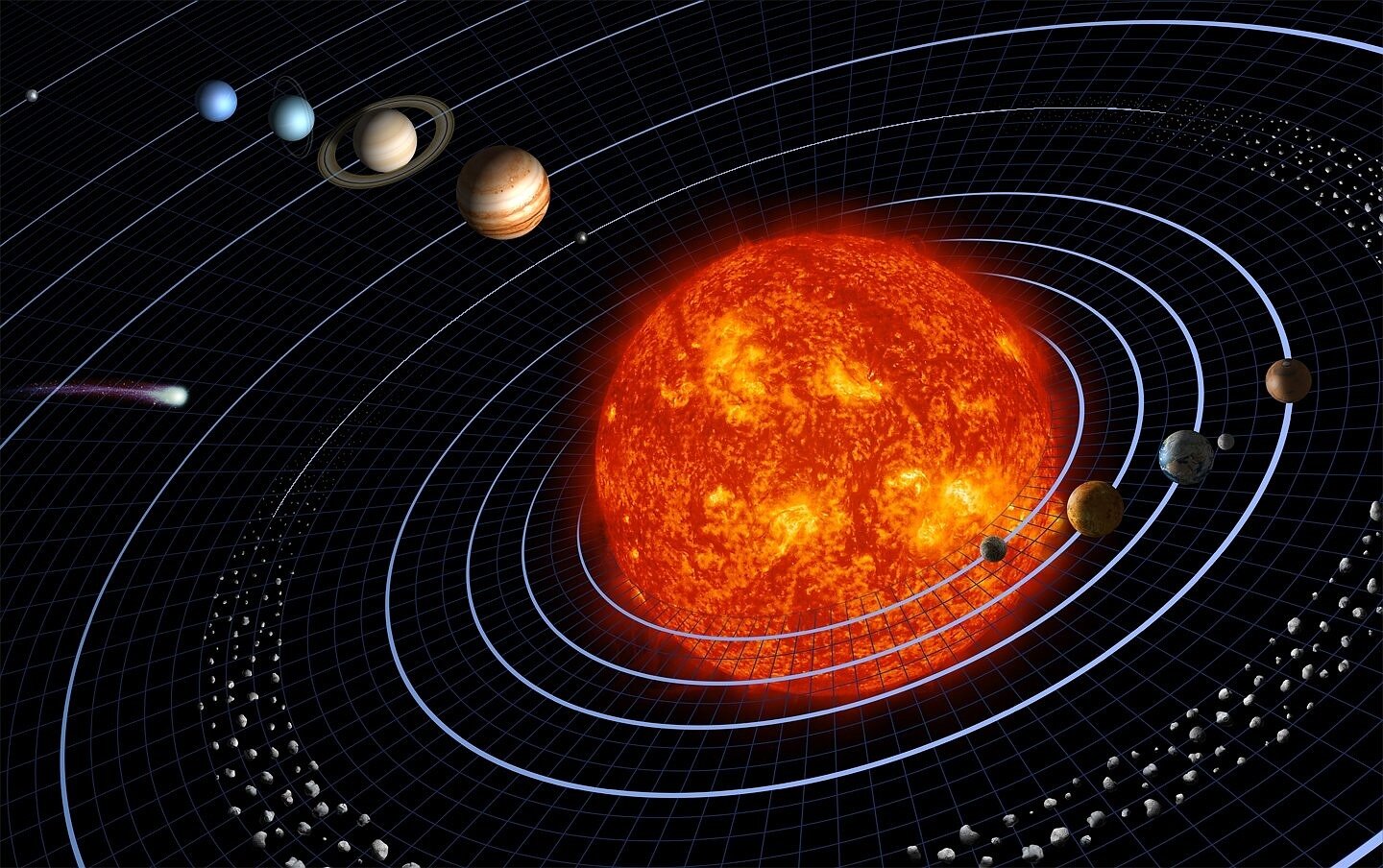
The white dwarf J1328-1450 may preview the fate of our solar system: two concentric rings of vaporized planetary rubble, kept apart by two bodies that outlived their star.

A Jupiter-sized world circling HS 0209+0832 carries a chemical fingerprint, including niobium at over 1,000 times solar levels, that no ordinary first-generation planet should have.

The system ZTF J0440+2325, reported in Nature Astronomy, is the first caught with one low-mass object steadily feeding on another, and it could last for billions of years.

A University of Arizona-led team found heavy elements being blown out of three early galaxies at up to 250 kilometers per second, showing the young universe was already far less pristine than astronomers assumed.

Tidal disruption events compress a supermassive black hole's feeding cycle from millennia into years. A Curtin-IAS team found the delayed radio jets, arriving hundreds to thousands of days after a star is torn apart, switch on at the same threshold known from X-ray binaries in our galaxy. 'The physics does not seem to care how big they are.'

Two independent tracers in outer-solar-system iron meteorites both point to matrix levels of 8% to 17%, lower than in any known chondrite. 'Both tracers independently tell the same story,' said lead author Damanveer Grewal. The result pushes the aerodynamic sorting that built the planets back to the very beginning.

The 'hypersoft X-ray sources,' spotted in the Andromeda and Pinwheel galaxies and four ellipticals, pour out extreme ultraviolet light and may be the long-sought stars that become Type Ia supernovae. The paper is in Nature Astronomy.

Kyoto University researchers say the asteroid's parent body concentrated nitrogen as its briny water froze or evaporated, acting as a slow chemical reactor.

Star formation is running at less than half the rate it did 4.5 billion years ago. A survey of 2.5 million galaxies says the raw gas supply has barely dropped, which breaks the standard explanation.

Tidal torque theory says a galaxy's rotation was set before the galaxy existed, by uneven gravity tugging on the clump of matter that became it. A Xiamen University team reconstructed the primordial density field and found the fingerprint intact.

Rutgers simulations found that water rising from Europa's ocean turns turbulent, dumps its heat and freezes its own escape route closed — before it can ever reach the shallow pockets spacecraft are designed to find.

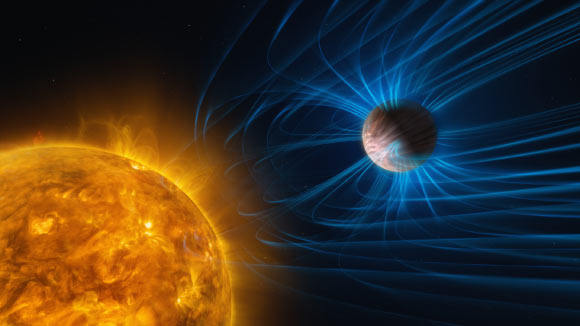
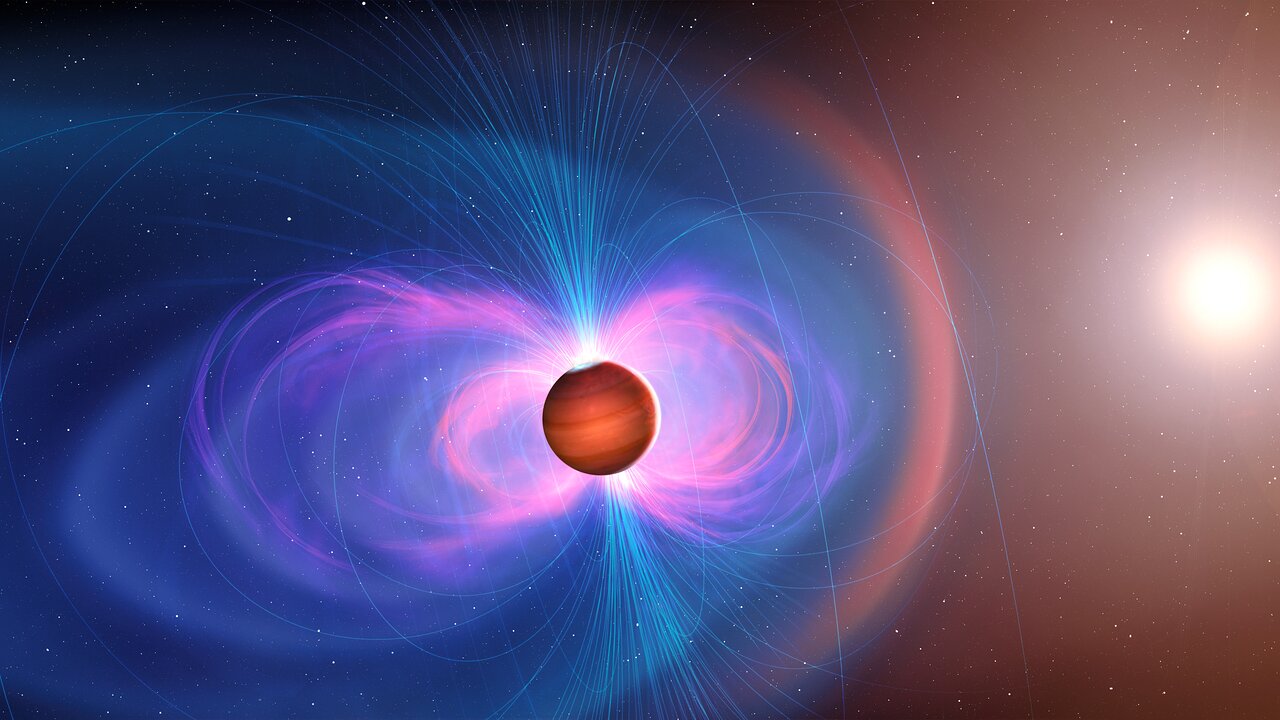
By clocking the winds of seven scorching 'hot Jupiters,' researchers inferred planet-wide magnetic fields up to four times stronger than Saturn's.

By clocking iron-laced winds screaming across seven ultra-hot gas giants, astronomers found a pattern that ordinary weather physics can't explain — but magnetism can.

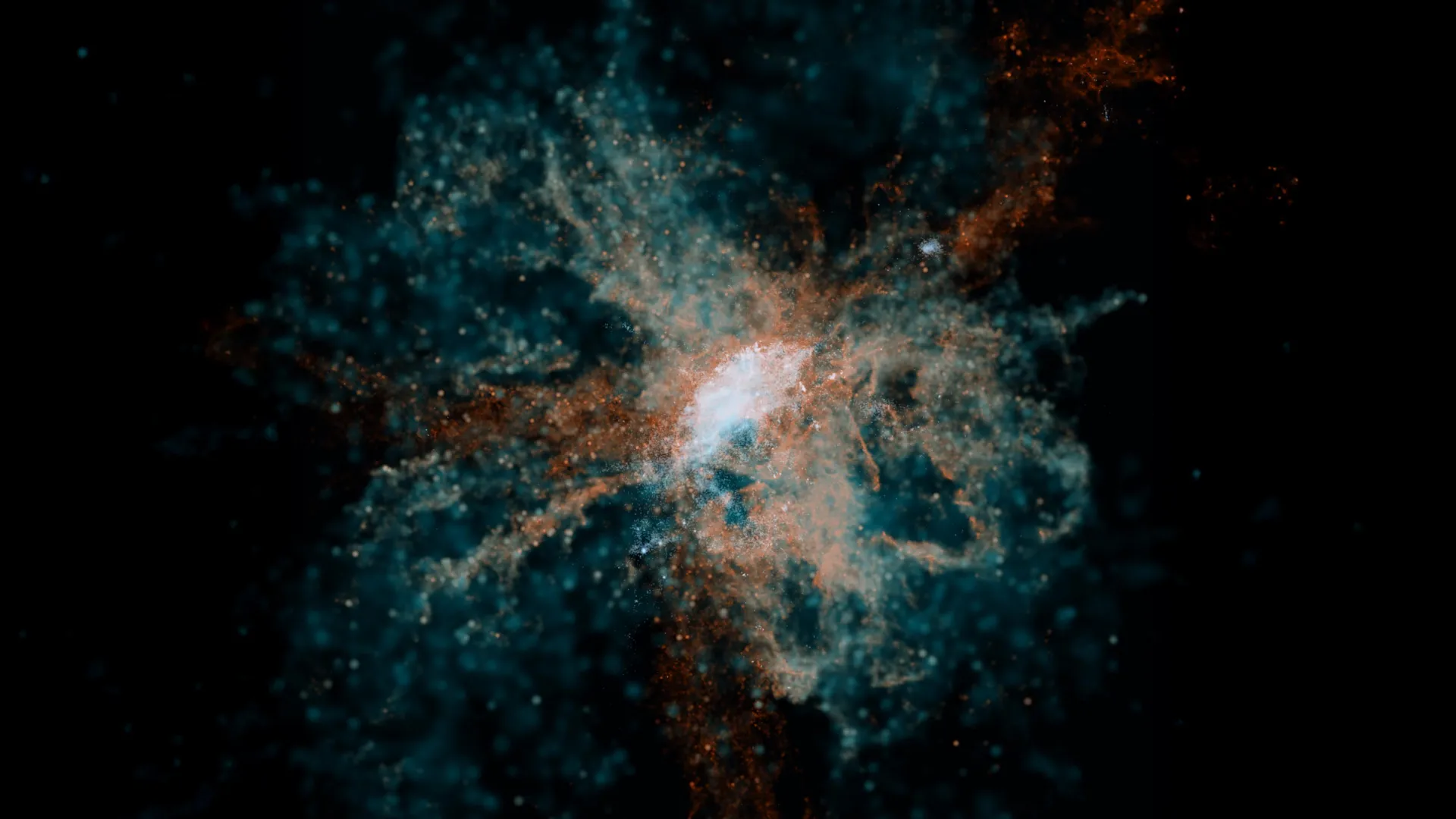
New simulations suggest small 'seed' black holes gorged on gas faster than thought possible, explaining the monsters the James Webb telescope found just after the Big Bang.

XMM-VID1-2075, identified by a UC Davis–led team using JWST's NIRSpec integral-field spectrograph and published in Nature Astronomy on May 4, has a rotation-to-dispersion ratio below 0.3 — making it dynamically indistinguishable from fossil galaxies that should not exist for another five billion years.

Using JWST's mid-infrared spectrograph, an MPIA-led team found the tidally locked exoplanet has no air, a 1,000-Kelvin dayside and a dark basaltic crust closer to Mercury than to Earth.

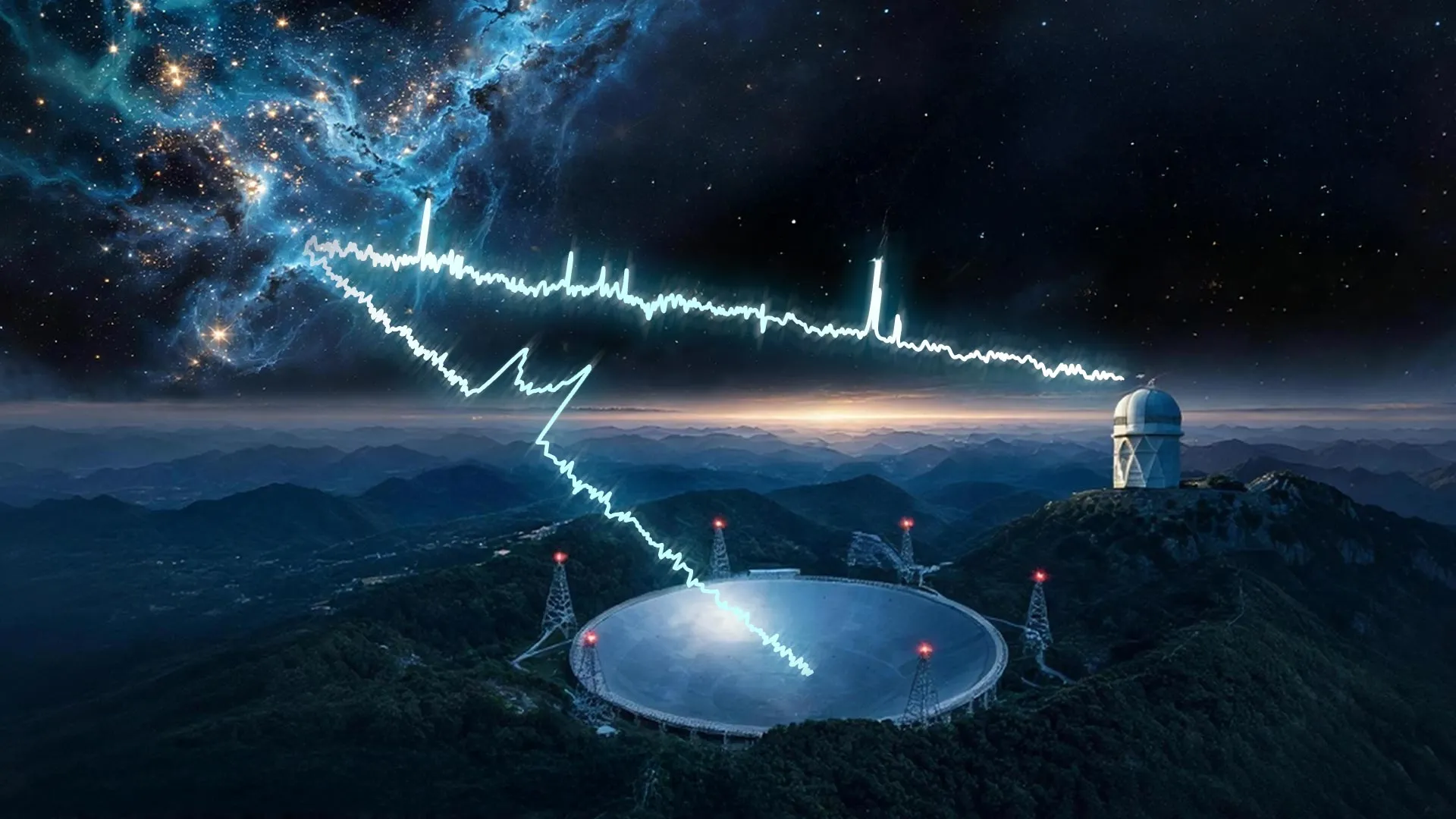
Using a planet-spanning network of radio telescopes to track how stellar winds bent the jets of Cygnus X-1, researchers calculated that roughly 10% of all infalling energy escapes as jets traveling at half light speed — confirming a key assumption of astrophysics.