Webb Telescope Strips LHS 3844 b Bare: Super-Earth Is a Dead, Atmosphere-Less Rock
Using JWST's mid-infrared spectrograph, an MPIA-led team found the tidally locked exoplanet has no air, a 1,000-Kelvin dayside and a dark basaltic crust closer to Mercury than to Earth.
The James Webb Space Telescope has delivered its sharpest verdict yet on a nearby rocky world, and the answer is bleak: LHS 3844 b, a "super-Earth" 48.5 light-years away, is a hot, airless, basalt-covered ball of rock with no plate tectonics and no detectable signs of recent volcanism. The result, published in Nature Astronomy and announced by the Max Planck Institute for Astronomy on May 5, 2026, was led by Sebastian Zieba of the Center for Astrophysics | Harvard & Smithsonian and MPIA Director Laura Kreidberg, who served as principal investigator.
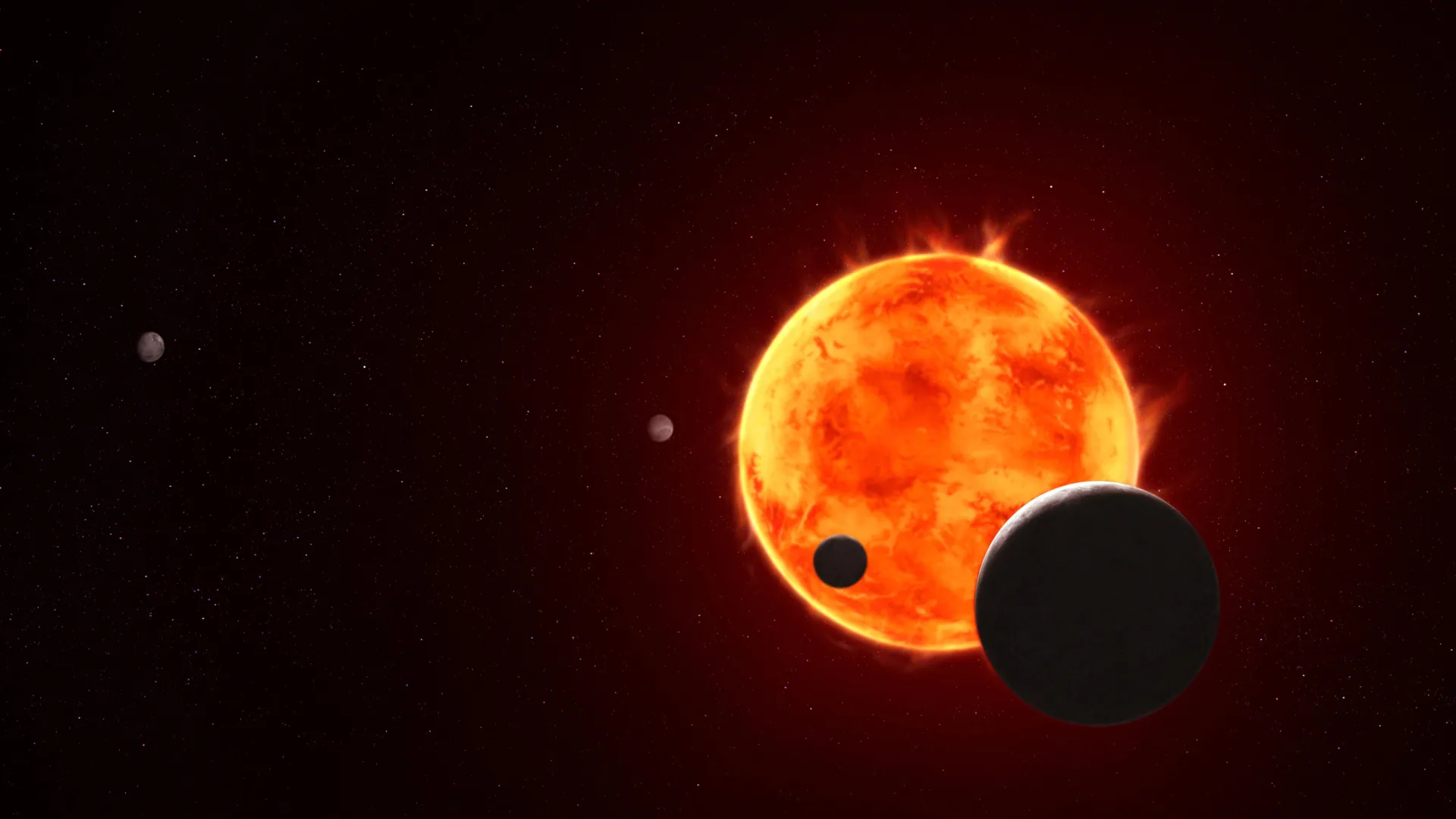
LHS 3844 b is a roughly 30 percent larger version of Earth that orbits its small, cool red dwarf host once every 11 hours. Because of that tight orbit, it is tidally locked: the same hemisphere always faces the star and reaches a daytime temperature of about 1,000 Kelvin, or roughly 725 degrees Celsius. Using JWST's MIRI mid-infrared instrument, the team measured the planet's thermal emission across the dayside in unprecedented detail and found no spectral fingerprints of any atmosphere — a long-standing question for so-called rocky planets around small stars.
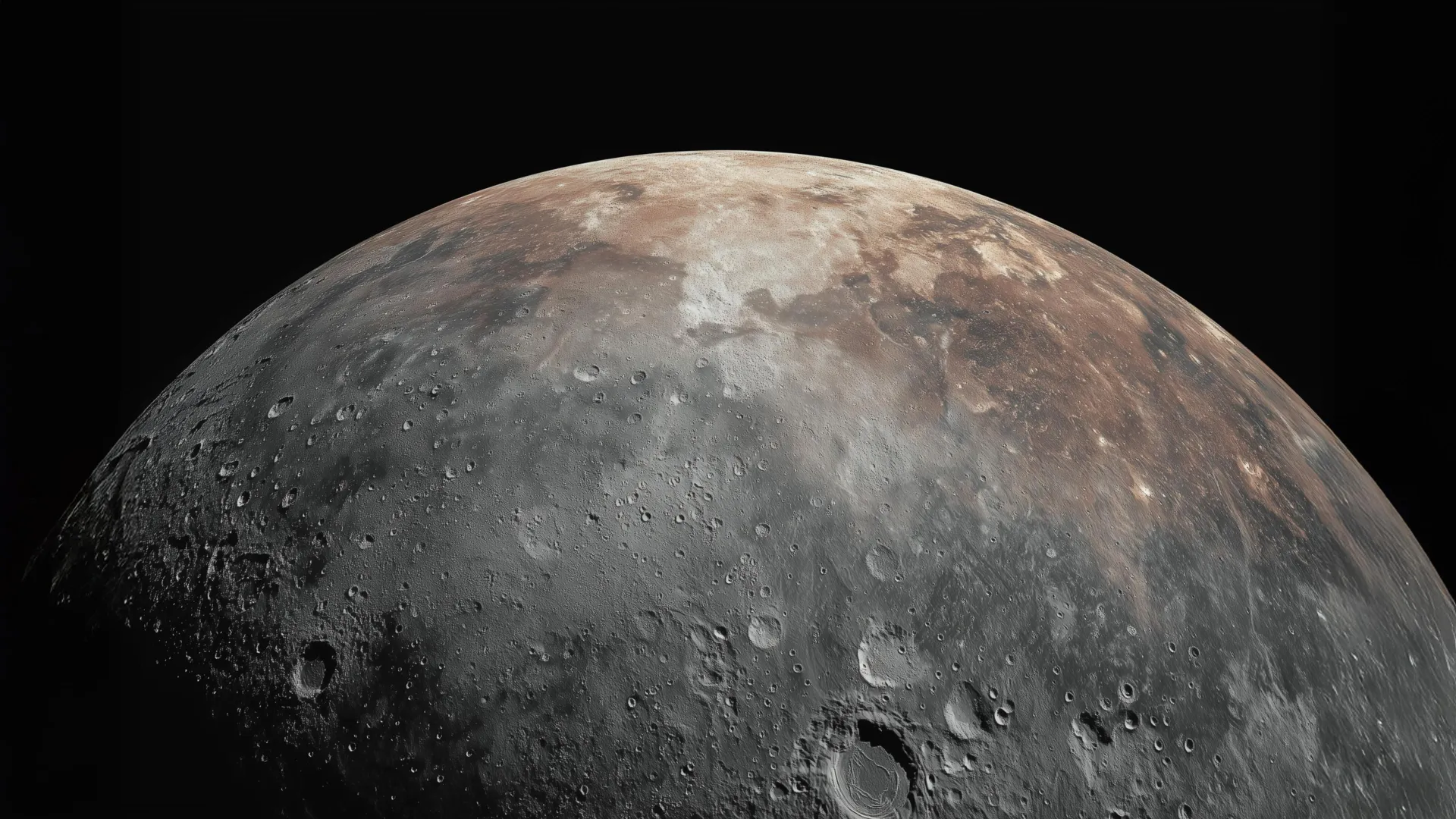
"We see a dark, hot, barren rock, devoid of any atmosphere," Kreidberg said in materials accompanying the study. The temperature contrast between day and night is so extreme, the team argues, that any thin atmosphere would have been stripped away long ago by the red dwarf's stellar wind, which is far harsher than the solar wind in our own system. The dayside spectrum is consistent with a basaltic surface — closer in composition to Mercury or the Moon than to Earth — and shows no sign of the silicate-rich crust that on Earth is recycled by plate tectonics.
The non-detection of sulfur dioxide is also significant. Active volcanism on Earth and Io vents large amounts of sulfur compounds into the atmosphere, and the JWST observations effectively rule out any present-day Io-style outgassing on LHS 3844 b. The team concluded that the planet is geologically inactive, likely because its small size and old age have left it without sufficient internal heat to drive ongoing eruptions or crustal motion.
The findings have direct implications for the search for habitable worlds around M-dwarf stars, which dominate the planet-hosting population in the Milky Way. If even slightly larger super-Earths in close orbits cannot retain an atmosphere against red-dwarf radiation, the prospects dim for finding life-friendly conditions on other tidally locked worlds. Kreidberg's team noted that the LHS 3844 b result will inform target selection for upcoming JWST cycles and for ESA's Ariel mission, which is being designed to characterize the atmospheres of hundreds of exoplanets after its scheduled 2029 launch.