A Pulsar's Odd Slowdown Is Explained by a Rare Triple-Star System
Chinese astronomers say a sunlike star in a 73.5-year orbit tugs on a pulsar and its white dwarf partner, making the pulsar look like it is spinning down faster than it is.
Topic
17 stories from Planck Standard. Latest: October 29, 2026.

Chinese astronomers say a sunlike star in a 73.5-year orbit tugs on a pulsar and its white dwarf partner, making the pulsar look like it is spinning down faster than it is.

The white dwarf J1328-1450 may preview the fate of our solar system: two concentric rings of vaporized planetary rubble, kept apart by two bodies that outlived their star.

Indian Institute of Science physicists followed a magnetized star from birth to white dwarf and found it can far exceed the famous 1.4-solar-mass Chandrasekhar limit, with consequences for the supernovae used to measure the universe.

New simulations show the Sun shedding its outer layers in bursts could destabilize Jupiter, Saturn, Uranus and Neptune far sooner than the quintillion years once assumed.

A Jupiter-sized world circling HS 0209+0832 carries a chemical fingerprint, including niobium at over 1,000 times solar levels, that no ordinary first-generation planet should have.

The 'hypersoft X-ray sources,' spotted in the Andromeda and Pinwheel galaxies and four ellipticals, pour out extreme ultraviolet light and may be the long-sought stars that become Type Ia supernovae. The paper is in Nature Astronomy.

Astronomers measured the gravitational redshift of SDSS J0608−0059 and found it sits on the wrong mass-radius curve for an ordinary white dwarf — evidence it came from a single massive star, not a merger.

Physicists used laser cooling and strong magnetic fields to push an ultracold neutral plasma into territory no model covers, where free electrons, loosely bound atoms and deeply bound atoms all coexist and interact in ways nobody predicted.

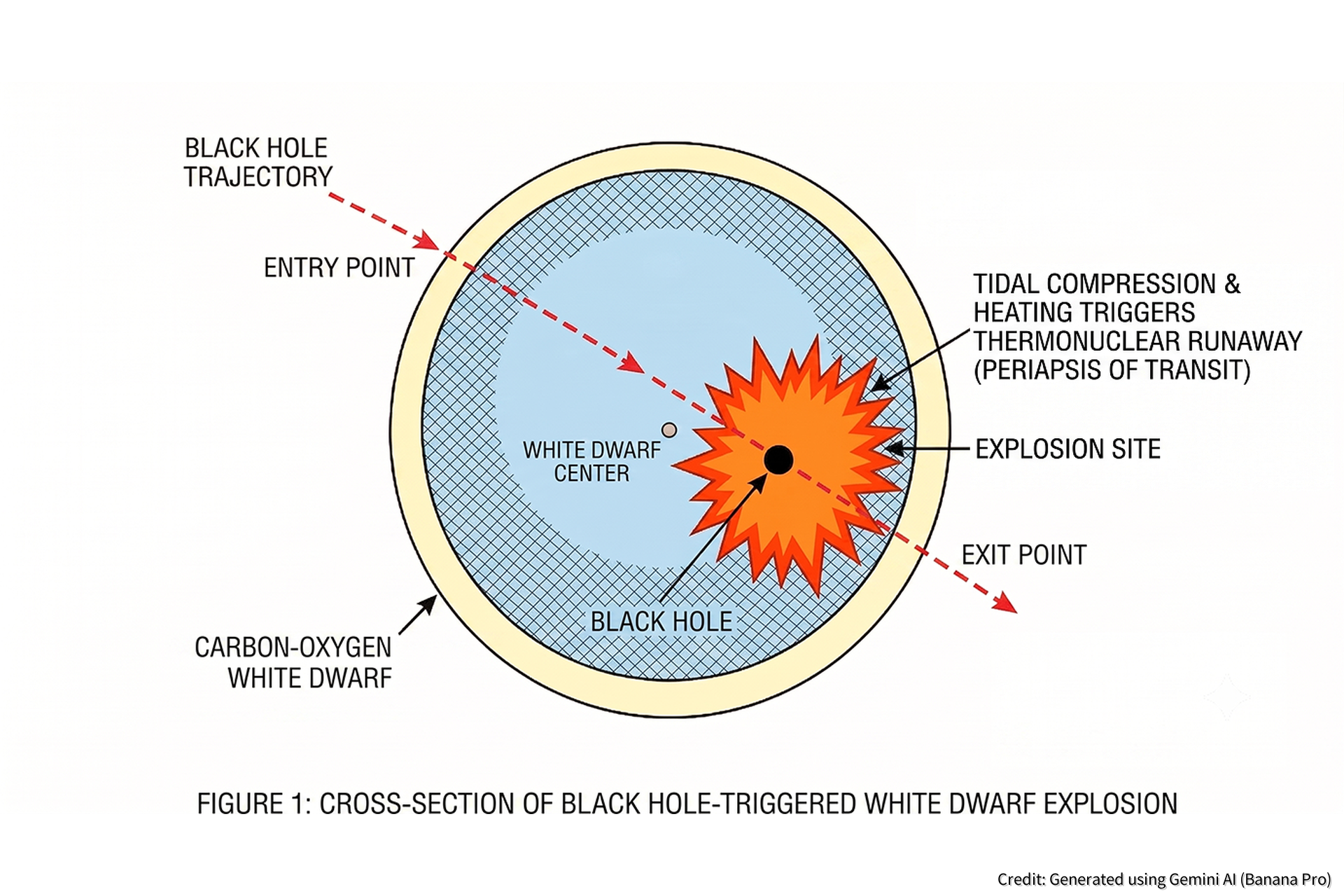
A team led by SUNY Poly and the Kavli IPMU finds that a primordial black hole passing through a white dwarf could tidally heat it into a thermonuclear runaway — and that the resulting explosions would leave a distinctive chemical signature already visible in the Milky Way.

A Caltech astrophysicist calculates that lopsided eruptions from bloated, dying sun-like stars act like thousands of tiny rocket thrusts, nudging the stars to speeds of about a kilometer per second.

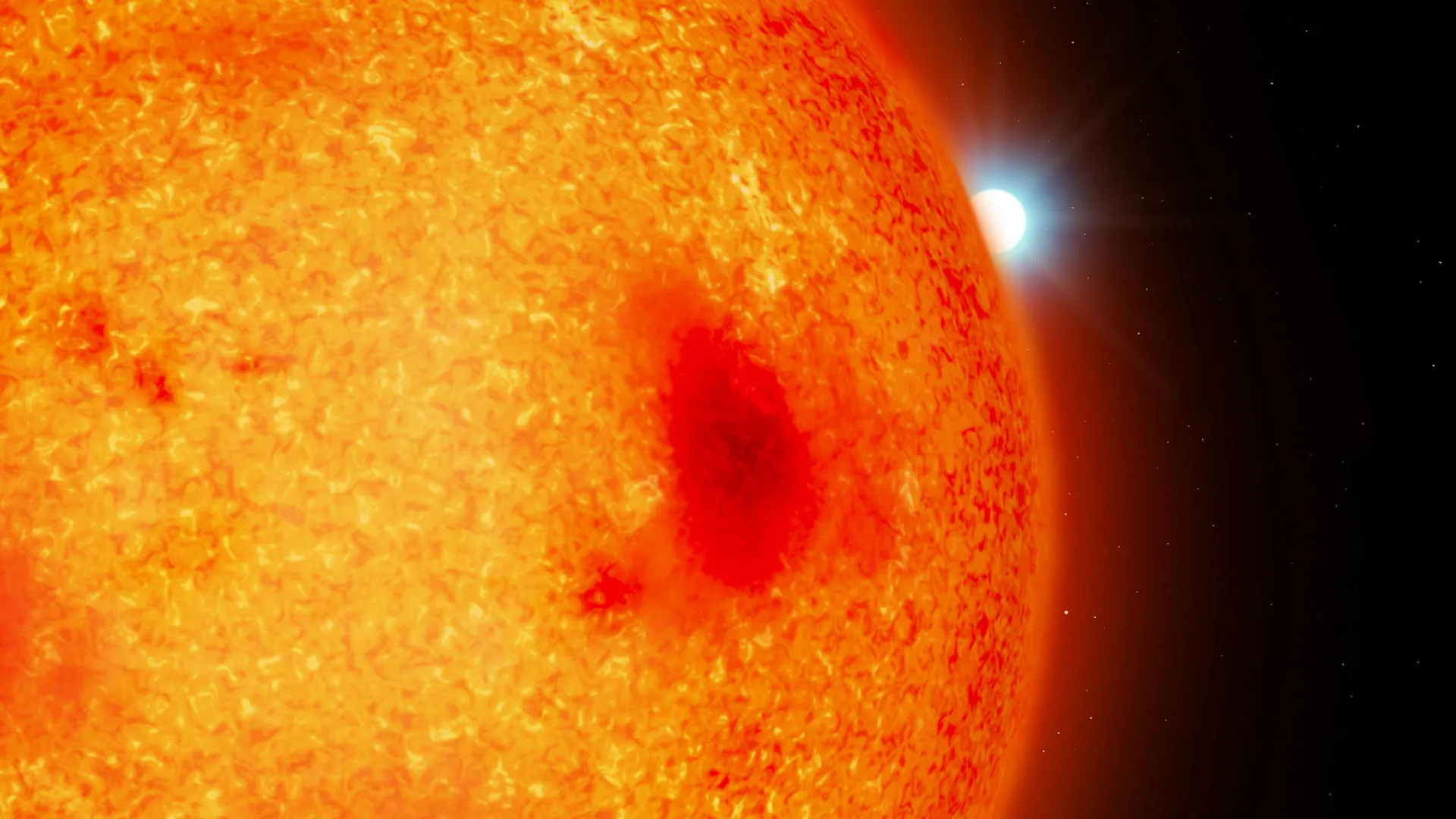
Astronomers at Warwick and Colorado used Hubble's ultraviolet vision to pull four dead stars out of the glare of brighter companions — one just 25 light-years away, now the ninth-closest white dwarf to the Sun.

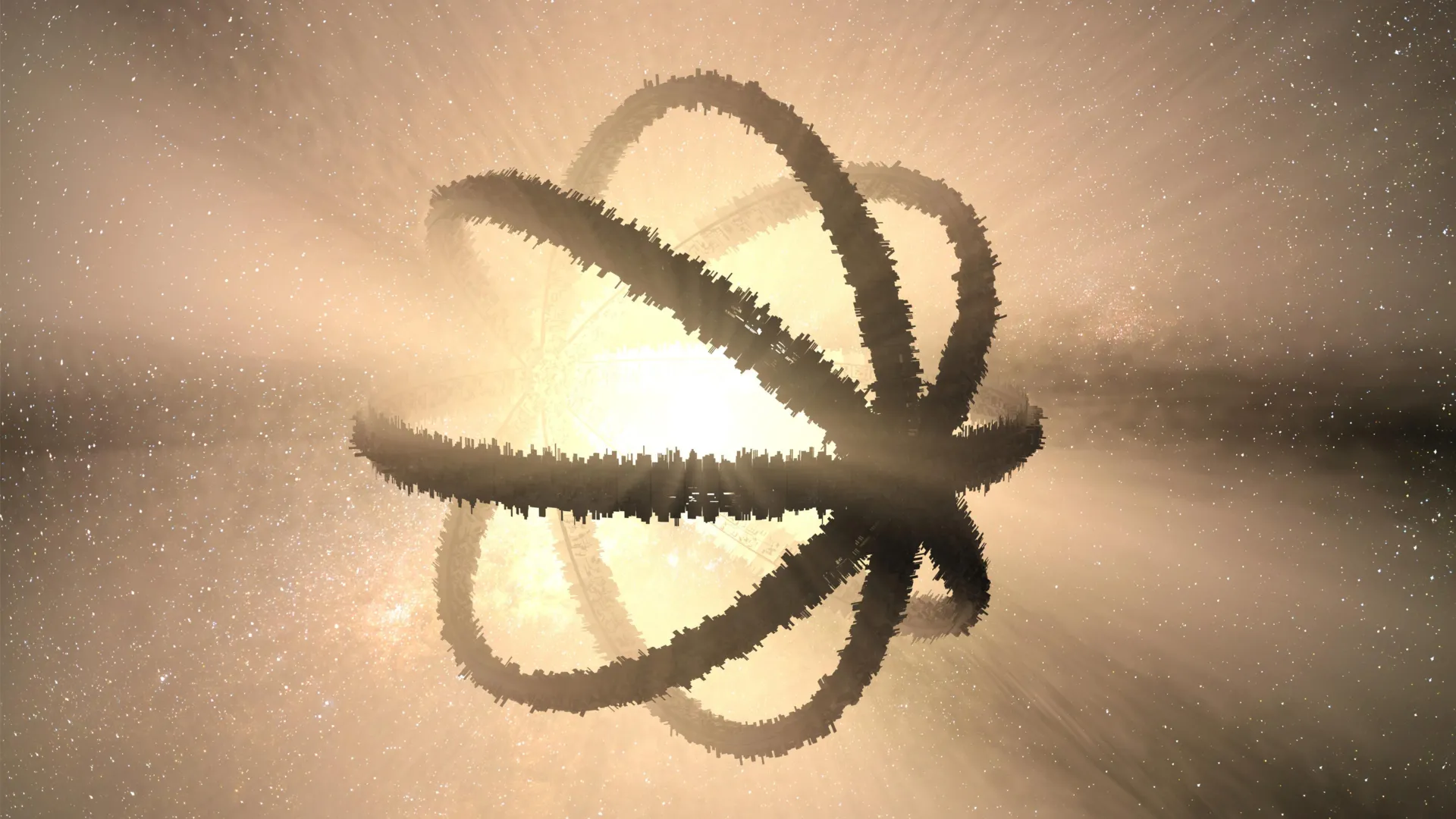
An astronomer argues that red dwarfs and white dwarfs are the best places to catch an alien megastructure, if one exists, by its telltale infrared afterglow.

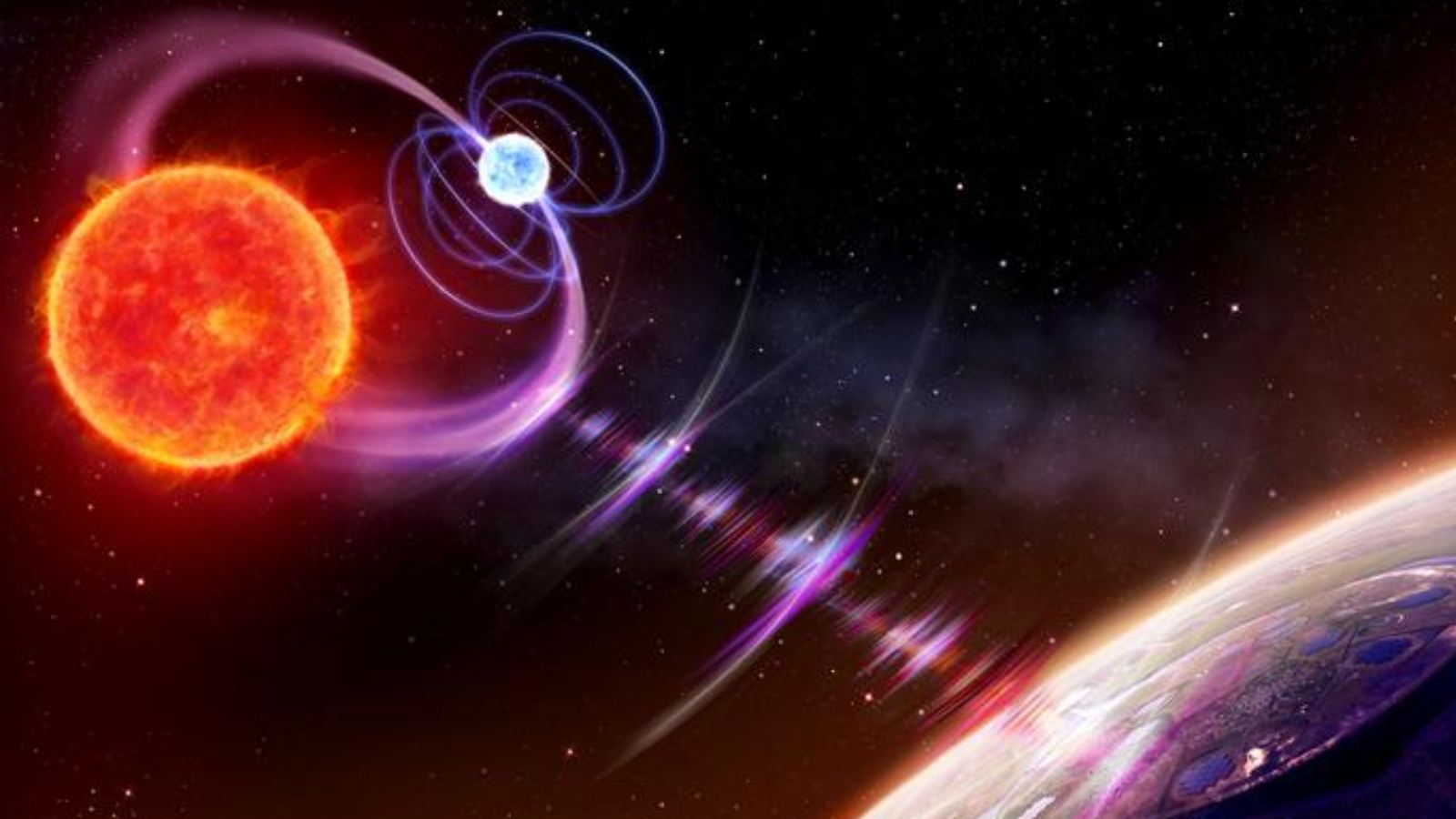
A strange radio pulse arriving every two hours has been traced to a white dwarf and a red dwarf locked in a tight orbit, their colliding magnetic fields firing the beat across space.

An extraordinarily bright X-ray flare could be the first direct evidence of a long-sought intermediate-mass black hole tearing apart and devouring a dead star.

Using Australia's ASKAP telescope, a team traced a baffling repeating signal to a white dwarf devouring its companion star — emitting bursts every 1.4 hours that are 100 times more powerful than any seen before.
Japan's XRISM telescope reveals hidden white dwarf companion pulling material and generating temperatures above 100 million degrees.
XRISM space observatory reveals hidden white dwarf companion pulling material from Gamma Cassiopeiae, finally explaining the star's puzzling high-energy emissions that have baffled scientists since 1976.