Astronomers Crack a Decade-Old Cosmic Mystery: Two Dead Stars Behind a Repeating Radio Signal
A strange radio pulse arriving every two hours has been traced to a white dwarf and a red dwarf locked in a tight orbit, their colliding magnetic fields firing the beat across space.
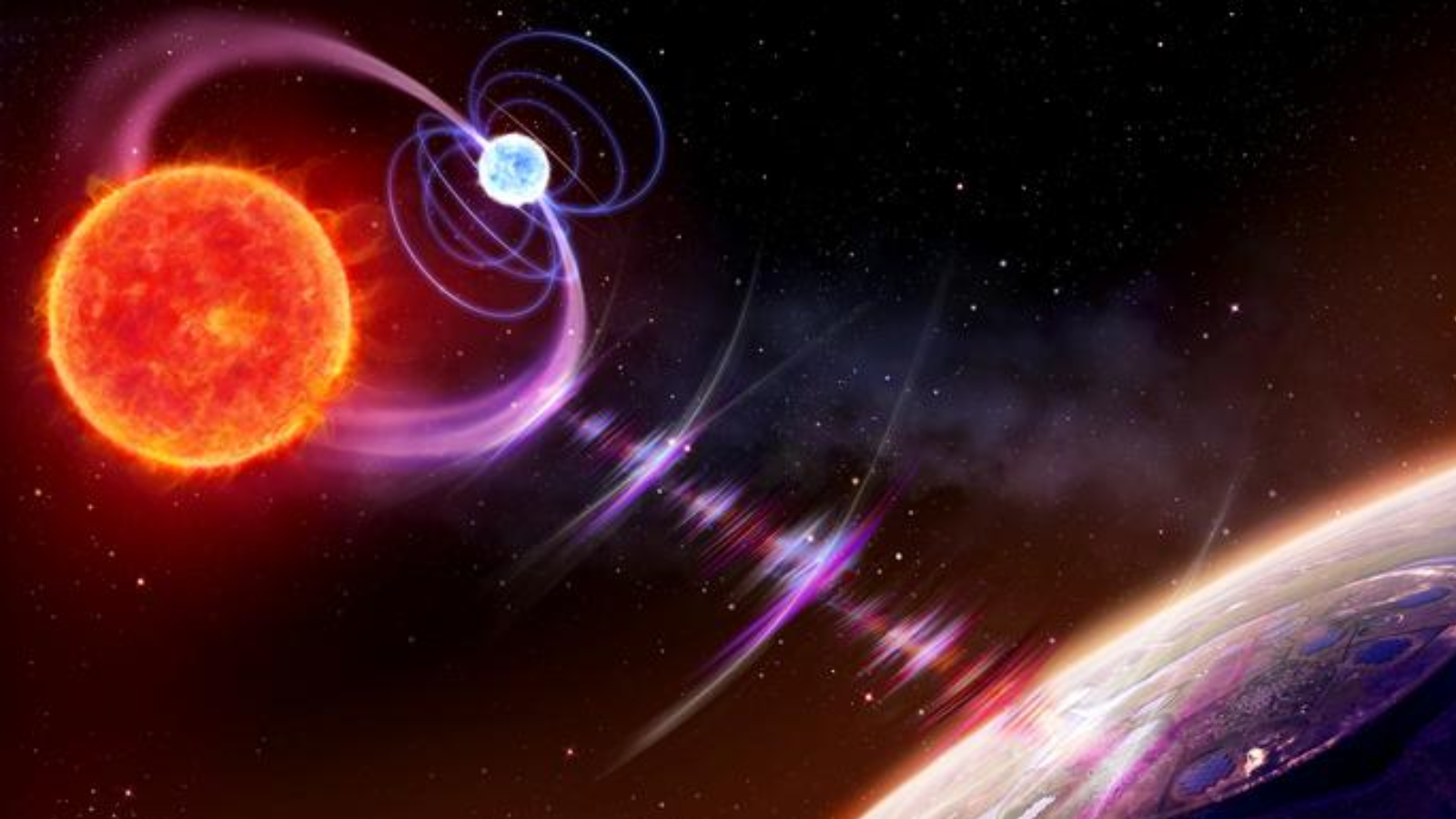
Astronomers say they have finally solved the mystery behind a class of strange repeating radio signals that has puzzled scientists for years, tracing one of the most enigmatic examples to a pair of dead and dying stars whose magnetic fields slam together every two hours.
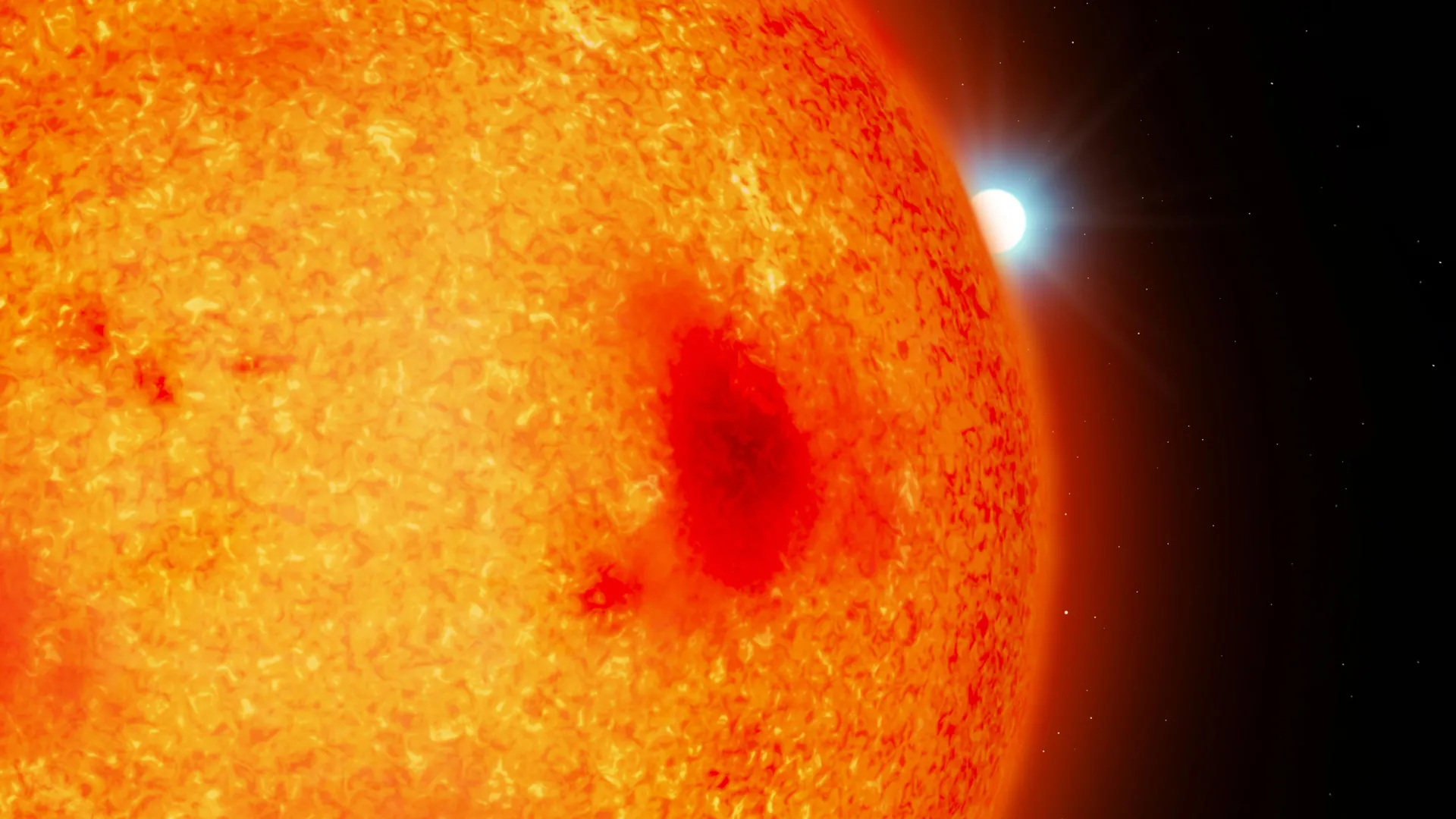
The signal, first detected roughly a decade ago, pulses with metronome-like regularity every two hours — far slower than the millisecond beats of typical pulsars, and long enough to defy easy explanation. Researchers tracked it to a tight binary system containing a white dwarf, the burned-out core of a star like our Sun, and a red dwarf companion, a small, cool, long-lived star. As the two orbit closely, their powerful magnetic fields collide and reconnect, releasing bursts of radio energy that sweep toward Earth.
The finding, reported in early June, helps demystify a broader family of phenomena that includes "long-period radio transients" and offers fresh insight into the origins of fast radio bursts — brilliant millisecond flashes from across the cosmos whose sources remain hotly debated. For years, astronomers had struggled to explain how an object could emit such regular, long-interval pulses without tearing itself apart or quickly fading.
Crucially, the discovery shows that not every cosmic radio beacon requires an exotic, extreme object such as a magnetar — a neutron star with a monstrously strong magnetic field. Instead, a comparatively ordinary stellar pairing, given the right geometry and magnetism, can produce signals that once seemed inexplicable. A rare flare observed in the system, likely caused by plasma ejected from one of the stars, provided the smoking-gun evidence that the source is a binary rather than a lone object.
The result emerged from long-term monitoring with radio telescopes that watched the system across many cycles, allowing astronomers to model the orbital clockwork driving the pulses. By catching the system in the act of flaring, they pinned down both the binary nature of the source and the mechanism — magnetic interaction between the two stars — generating the emission.
Understanding these slow, repeating signals matters because they sit at the crossroads of several cosmic puzzles, from the life cycles of stars to the still-mysterious engines behind fast radio bursts. Each newly explained source narrows the field of possibilities and sharpens the tools astronomers use to interpret the next strange blip from the dark. For a signal that blinked unexplained for ten years, the answer turned out to be a celestial duet — two stellar corpses, bound in orbit, ringing out across the galaxy.