Caltech Study: Dying Sun Could Wreck Outer Planets in 1 Billion Years
New simulations show the Sun shedding its outer layers in bursts could destabilize Jupiter, Saturn, Uranus and Neptune far sooner than the quintillion years once assumed.

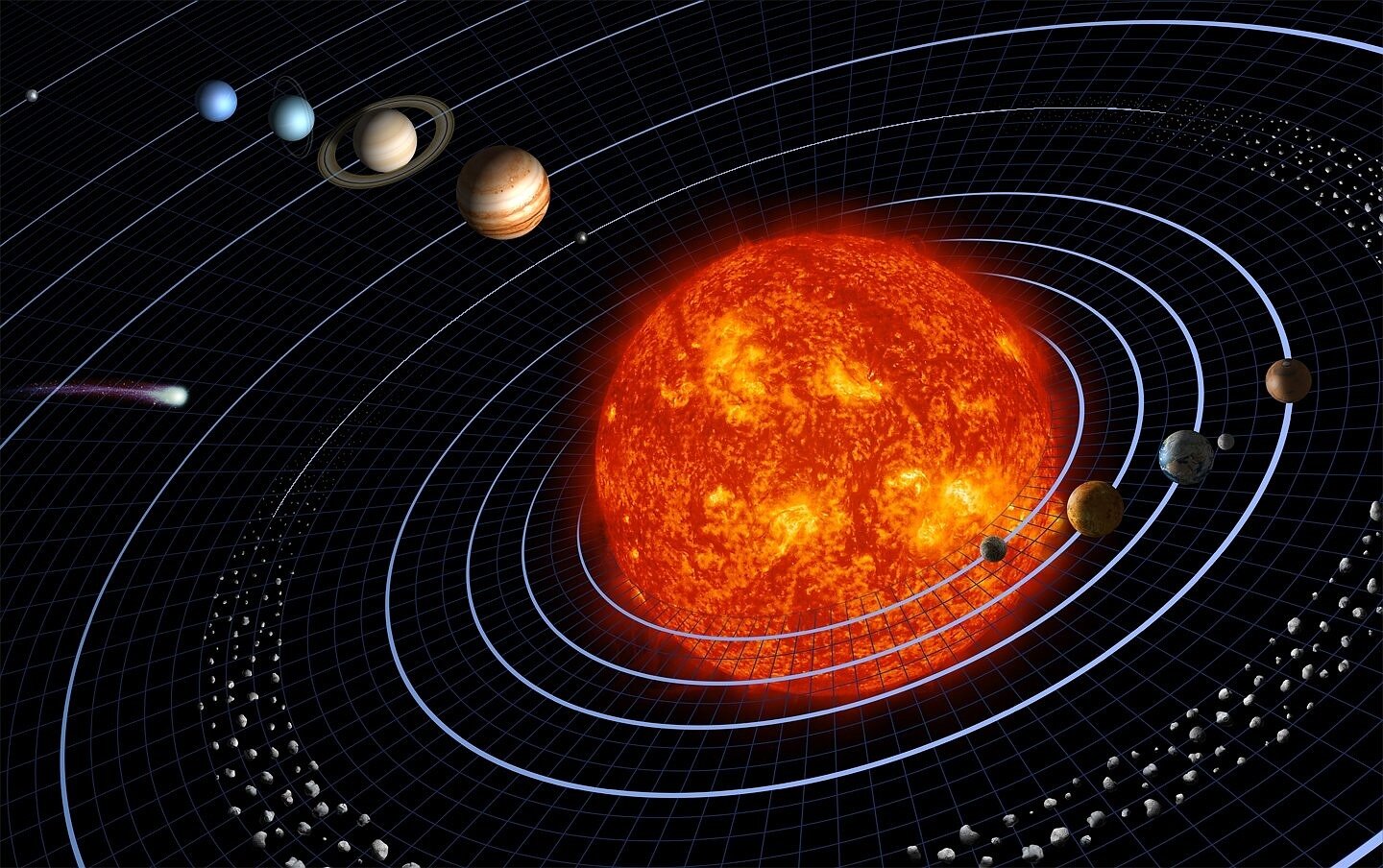
The fate of the outer solar system may be far more violent, and arrive far sooner, than astronomers thought. New research published in The Astrophysical Journal Letters finds that the final collapse of some of the outer planets could come in roughly 1 billion years, rather than the quintillion years earlier estimates allowed. Earth will probably be long gone by then. Jupiter, Saturn, Uranus and Neptune might not make it either.
Traditional models assumed the outer solar system would survive for billions of years until a passing star disturbed it. The new work, by theoretical astrophysicists Konstantin Batygin and Jim Fuller of the California Institute of Technology and Fred Adams of the University of Michigan, shows the dying Sun can trigger a relatively rapid and chaotic upheaval on its own.
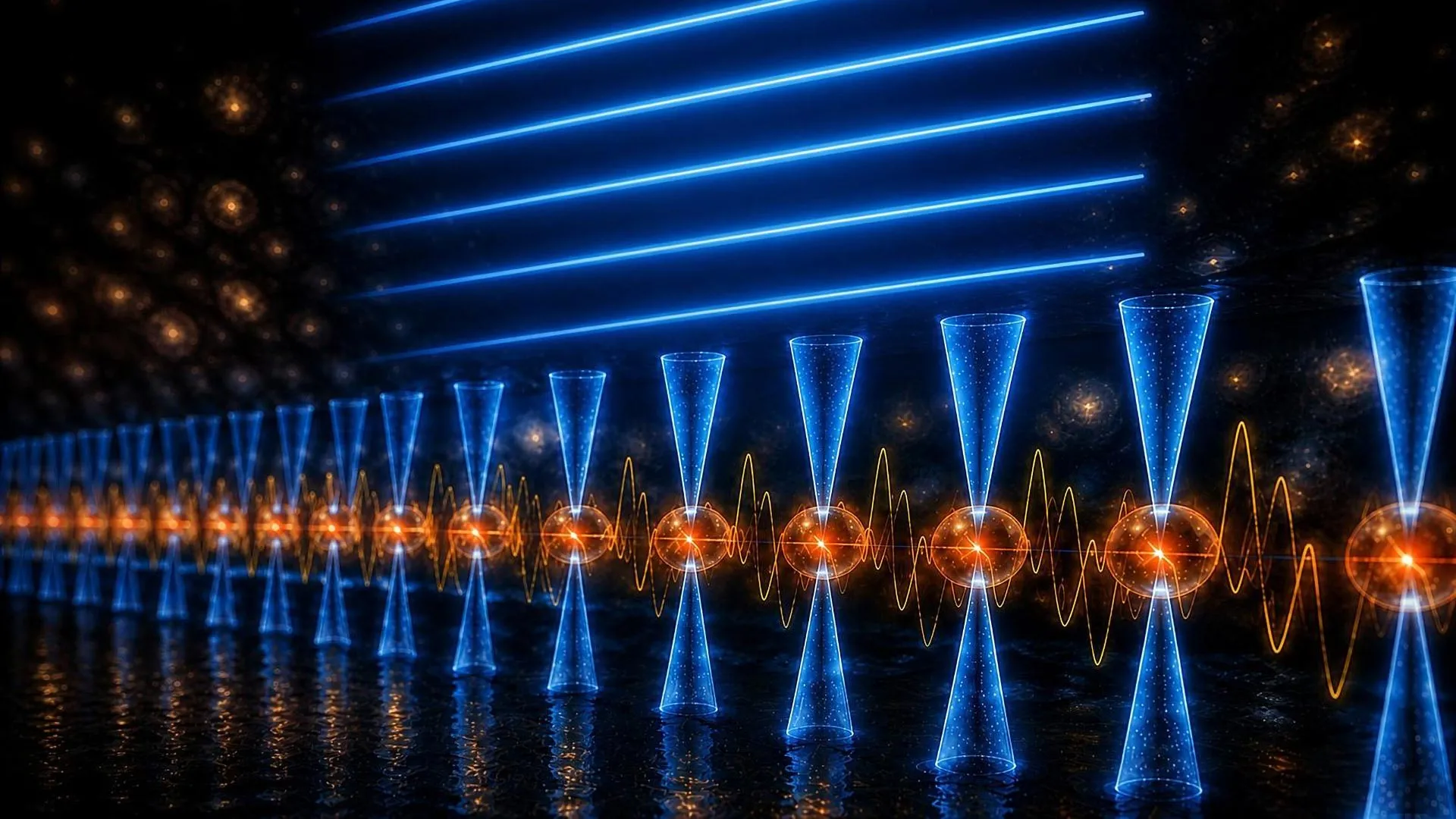
The team combined a detailed model of solar evolution with computer programs that track the orbits of the four giant planets as the Sun sheds mass in discrete bursts of stellar material. Earlier work typically treated mass loss as smooth and gradual. "Everything changes when the envelope departs in pieces," the authors wrote.
They tested 672 burst-driven scenarios, varying the size of the bursts. They also checked whether mass loss happened throughout the Sun's evolution into a giant star or only in the later stages, and ran comparison cases where the Sun shed mass smoothly. In each case they tracked the planetary systems for 3 billion years to see whether they stayed stable.
For the vast majority of simulations with larger bursts, the outcome was grim. Up to 96% of the planetary systems became unstable within 3 billion years of the Sun becoming a white dwarf, the dense, Earth-sized remnant a star like ours leaves behind. About 40% were disrupted or violently scattered even earlier, before the Sun had finished shedding its mass. In some runs planets were thrown out of the solar system entirely. In others, Uranus and Neptune swapped orbits.
The picture is not uniformly destructive. Gentler bursts of mass loss sometimes nudged pairs of planets into synchronized orbits, known as mean-motion resonances, and some of those arrangements stayed stable for the full 3 billion years. The authors note that capture into resonance is a subtler side effect of the random walk in planetary orbits that bursts create, and it cannot occur when mass loss is perfectly smooth.
That the solar system's end is tied to the Sun is no surprise. What the study changes is the timeline and the style of the ending. If the predictions hold, the final act will be faster and much more chaotic than the long, quiet decay once expected. The result is a simulation-based prediction about events billions of years away, and it depends on how realistic the assumed bursts of solar mass loss are. The study is titled "Terminal Instability of the Solar System Triggered by Stochastic Solar Mass Loss."