Scientists Map the Sun's Outer Magnetic Field in 3D for the First Time
By decoding waves in light already collected at Hawaii's Mauna Loa Solar Observatory, researchers produced global estimates of the corona's field strength and direction, a step toward forecasting solar eruptions.

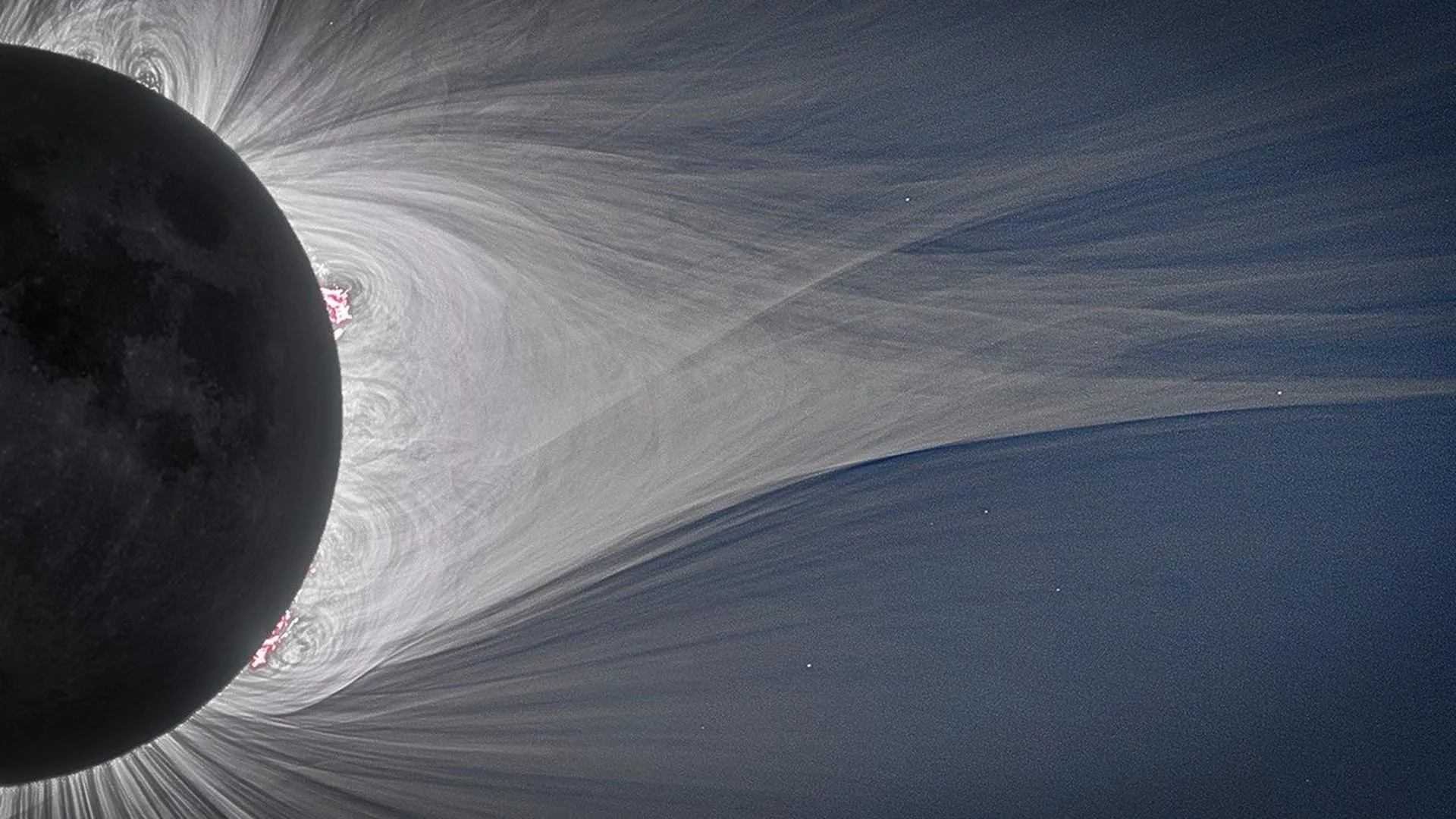
For decades, scientists have been able to photograph the Sun's corona, its glowing outer atmosphere, but not to measure the full magnetic field that shapes it. A team of researchers has now produced the first global, three-dimensional estimates of that field, including the area beyond the Sun's visible edge.
The result, published Wednesday in The Astrophysical Journal Letters, marks a step toward more accurate models of solar activity and, ultimately, better predictions of solar magnetic eruptions. Those eruptions are the root cause of extreme space weather that can disrupt critical infrastructure technologies on Earth.
The team did not build a new telescope or fly a new spacecraft. Instead, it applied a novel method to existing observations from the Mauna Loa Solar Observatory in Hawaii, which is operated by the US National Science Foundation National Center for Atmospheric Research. The group built on two earlier efforts: a study that made the first 2D global maps of the coronal magnetic field using data from an instrument called the Upgraded Coronal Multi-channel Polarimeter, and a technique known as the IQUD inversion, which has shown promise in theoretical and statistical tests.
Combining the two, the researchers analyzed data from the original Coronal Multi-channel Polarimeter on Oct. 14, 2016, and from its upgraded successor on June 1, 2022. The method pulls out information encoded in waves traveling through the corona to reconstruct the 3D field.
"For the first time, we can begin to see the sun's hidden magnetic architecture in three dimensions not by building a new type of ground or space instrument, but by decoding the light and waves already coming from the sun's corona," said Alin Paraschiv, a researcher at the NSF National Solar Observatory and the study's lead author. "For a star whose magnetic activity influences everything from the solar wind to the auroras dancing across Earth's skies, being able to measure more of that hidden architecture could transform our understanding of how the sun works."
Daniela Lacatus, a co-author at NSF NCAR, said the work produced "the first determinations of the coronal magnetic field's strength and 3D direction across the regions where MLSO observations are available." She said the results help overcome "a major bottleneck in measuring the coronal magnetic field that has persisted for decades."
The authors are open about the limits. The maps represent the transition of a technique from theoretically demonstrated to observationally demonstrated, but they need more development and validation before becoming routine. The team released its analysis software and data sets so other scientists can test and refine the approach, and the observatory's polarimeter data are publicly available, so in theory similar maps could be made for any day with suitable observations.
Tom Berger, director of the Mauna Loa observatory, called the work a pathfinder for the planned COSMO coronagraph network, the follow-on to the current facility, which he said will fill "a critical gap in our observations of space weather drivers."