Astronomers Pick Up Radio Waves From an Exoplanet's Auroras for the First Time
South Africa's MeerKAT telescope traced repeating radio bursts to the giant planet Beta Pictoris b, 64 light-years away. The signal shows its magnetic field is at least 1,250 gauss, far stronger than Jupiter's.

For the first time, astronomers have detected radio waves coming directly from a planet outside the solar system. The signal comes from auroras on Beta Pictoris b, a massive young gas giant about 64 light-years from Earth, and it has given scientists the first direct measurement of an exoplanet's magnetic field.
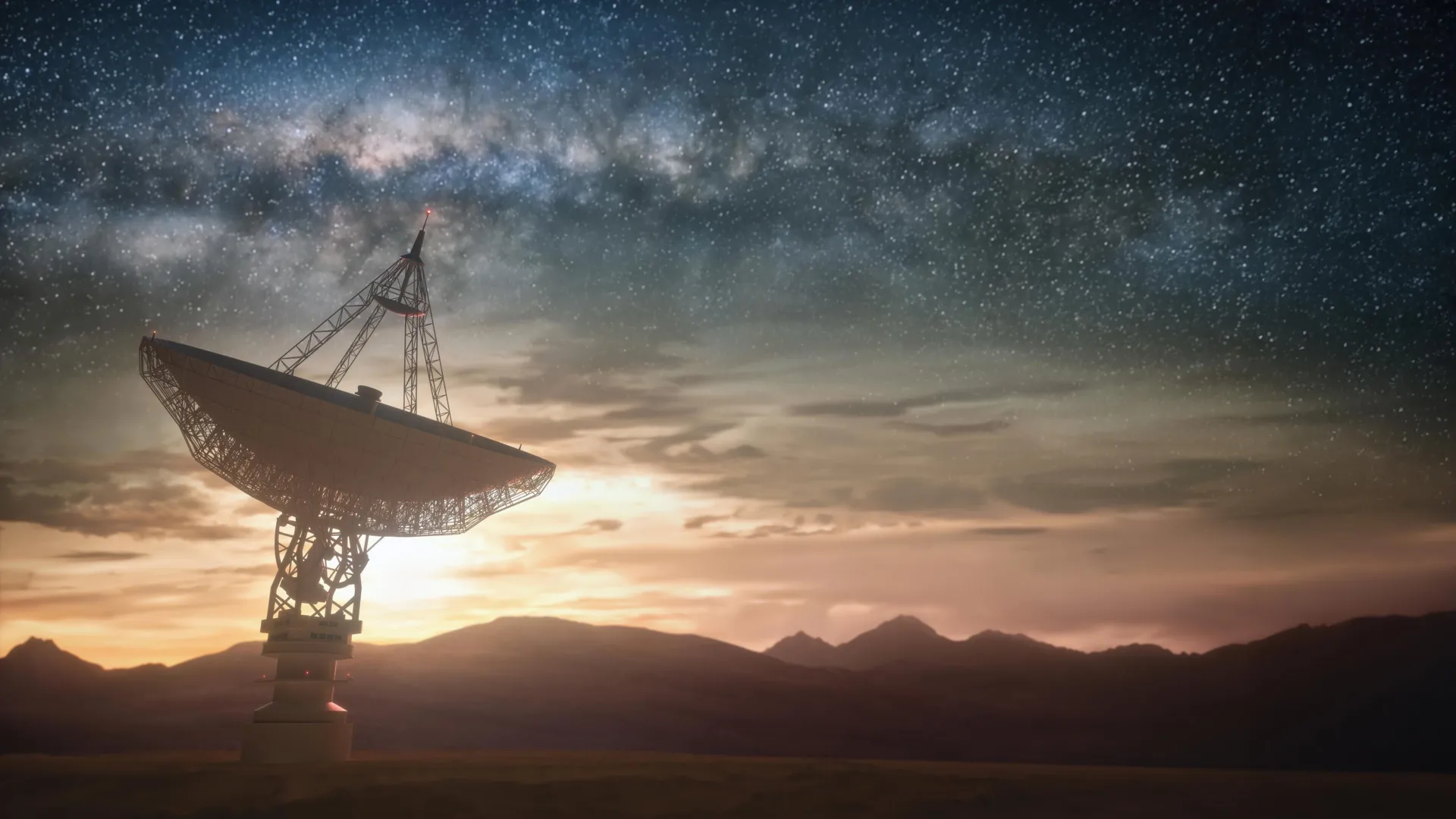
A team led by Kevin Ortiz Ceballos of the Center for Astrophysics | Harvard & Smithsonian used South Africa's MeerKAT radio telescope array to watch the Beta Pictoris system over several observing sessions in 2025 and 2026, in two frequency bands. They picked up faint, repeating bursts of radio emission. "Here, we report the first direct detection of auroral radio emission from an exoplanet, the giant planet β Pictoris b, with the MeerKAT array," the team wrote in a paper posted to the arXiv preprint server.
Astronomers have seen hints of radio emission from planetary systems before, but they could never rule out the host star as the source. A planet sits so close to its star on the sky that the two usually blur together. To separate them, the team compared their radio images with the precise positions of very distant quasars, which act as fixed reference points. That let them map exactly where the star and the planet were. When they laid the radio images over that map, the signal lined up with Beta Pictoris b, not its star.
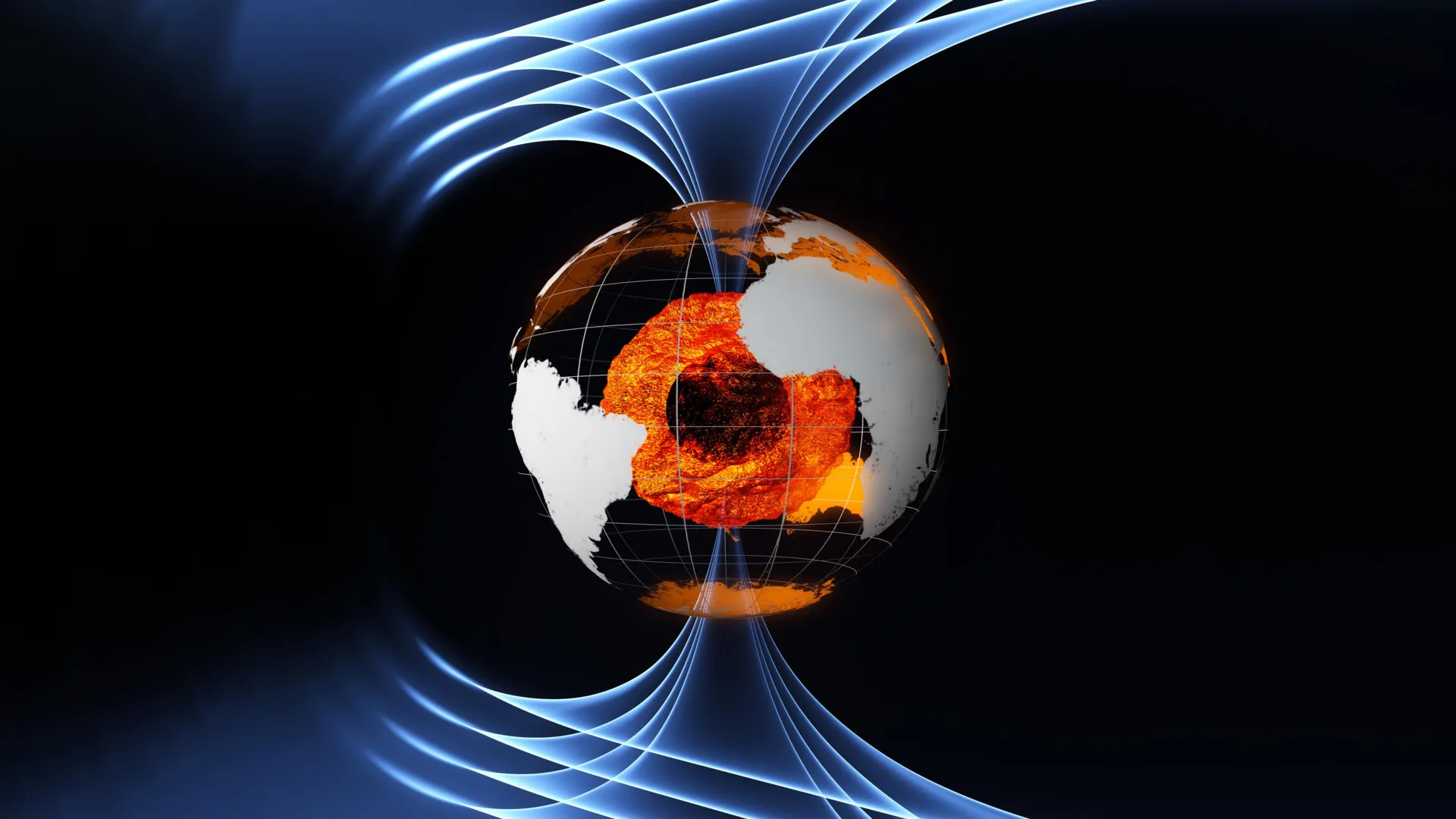
The radio waves are not a message from anyone. They are produced the same way Jupiter's powerful radio emissions are. Charged particles spiral along a planet's magnetic field lines into its upper atmosphere, lighting up auroras like Earth's northern lights and giving off radio waves at a frequency set by the field's strength. That link let the team work backward. They calculated that Beta Pictoris b's magnetic field is at least 1,250 gauss where the radio waves are produced. That is far stronger than Jupiter's. "This constitutes the first direct measurement of magnetic field strength for an exoplanet," the authors wrote.
The number matches theoretical predictions for young, massive giant planets. Such planets are still hot from their formation, and theory says they should churn out intense magnetic fields from their deep interiors. Beta Pictoris b, discovered in 2008, is several times the mass of Jupiter. It is one of the best-studied directly imaged planets, orbiting a star only about 20 million years old that is still surrounded by a dusty debris disk.
Magnetic fields matter well beyond giant planets. On Earth, the field shields the atmosphere and surface from the solar wind, and astronomers consider magnetic protection one factor in whether a rocky planet could stay habitable. Until now, exoplanet magnetic fields could only be inferred indirectly or modeled. The new method gives researchers a way to measure them directly and test models of what goes on deep inside planets. The results have not yet been peer reviewed. Future radio telescopes such as the Square Kilometre Array, which is being built partly in South Africa alongside MeerKAT, are expected to extend the search to many more worlds.