Astronomers Detect the Most Distant Fast Radio Burst Ever, From 10 Billion Years Ago
The flash, FRB 20240304B, left a tiny star-forming galaxy when the universe was only about 3 billion years old, more than doubling the previous distance record.

Astronomers have detected and traced the most distant fast radio burst ever recorded, a powerful flash of radio waves that traveled for more than 10 billion years across the cosmos before reaching Earth. The burst, designated FRB 20240304B, left its source when the universe was only about 3 billion years old, more than doubling the previous distance record.
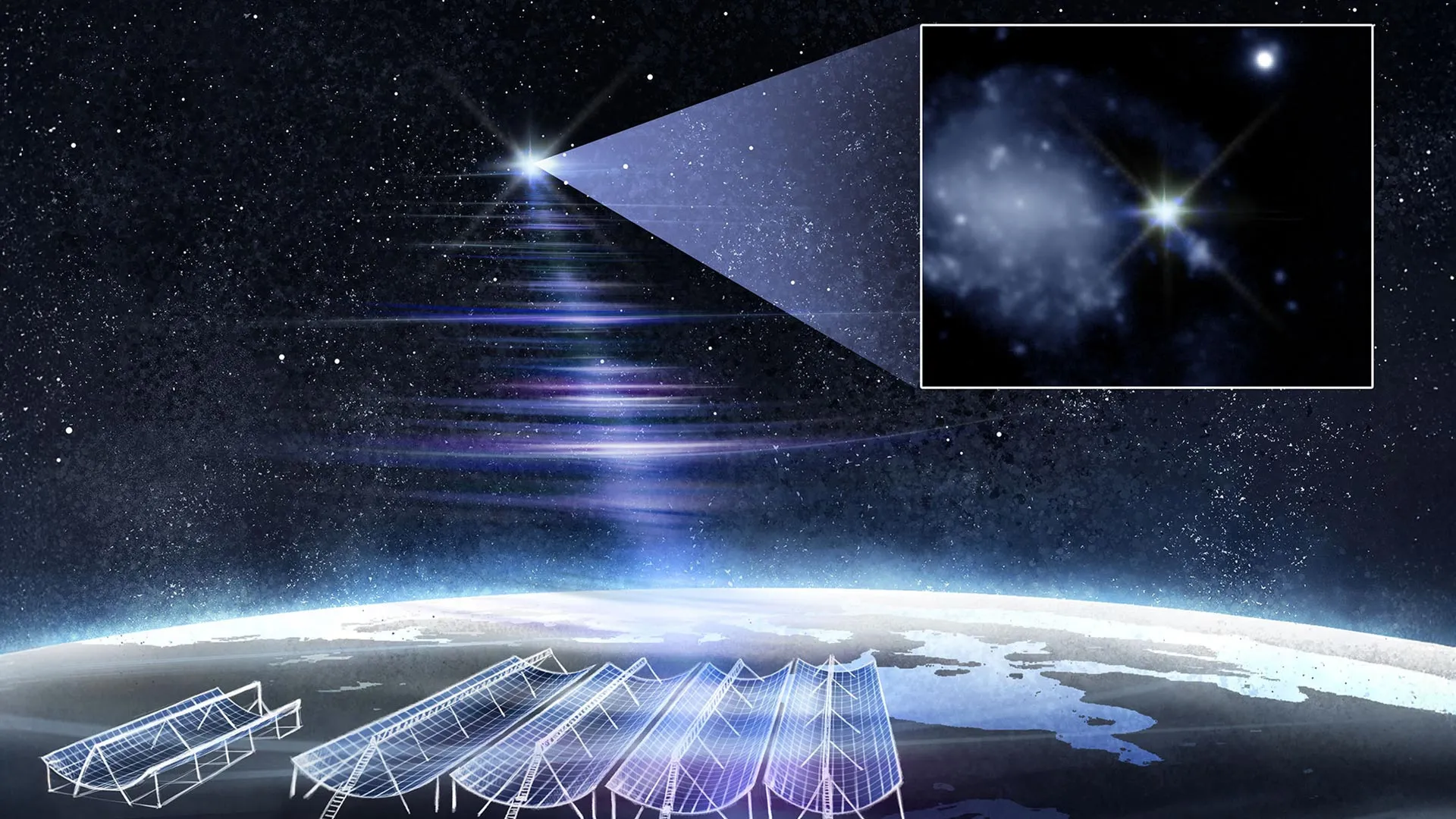
Fast radio bursts are among the most mysterious phenomena in astronomy. They last only milliseconds but release enormous amounts of energy, and their origins remain uncertain. The discovery was led by Dr. Manisha Caleb and Dr. Themiya Nanayakkara at the University of Sydney, and it was published this week. The team used radio observations to detect the burst and then identified its host galaxy with NASA's James Webb Space Telescope.
The galaxy was invisible to the largest ground-based telescopes, which is why Webb's infrared imaging and spectroscopy were needed to pin it down. "This is an extraordinary glimpse into the distant universe," said Caleb, of the Sydney Institute for Astronomy in the School of Physics. "We have caught a fast radio burst from a time when the universe was only about 3 billion years old, and we have used that brief flash of radio light to learn about the matter it has traveled through over billions of years."
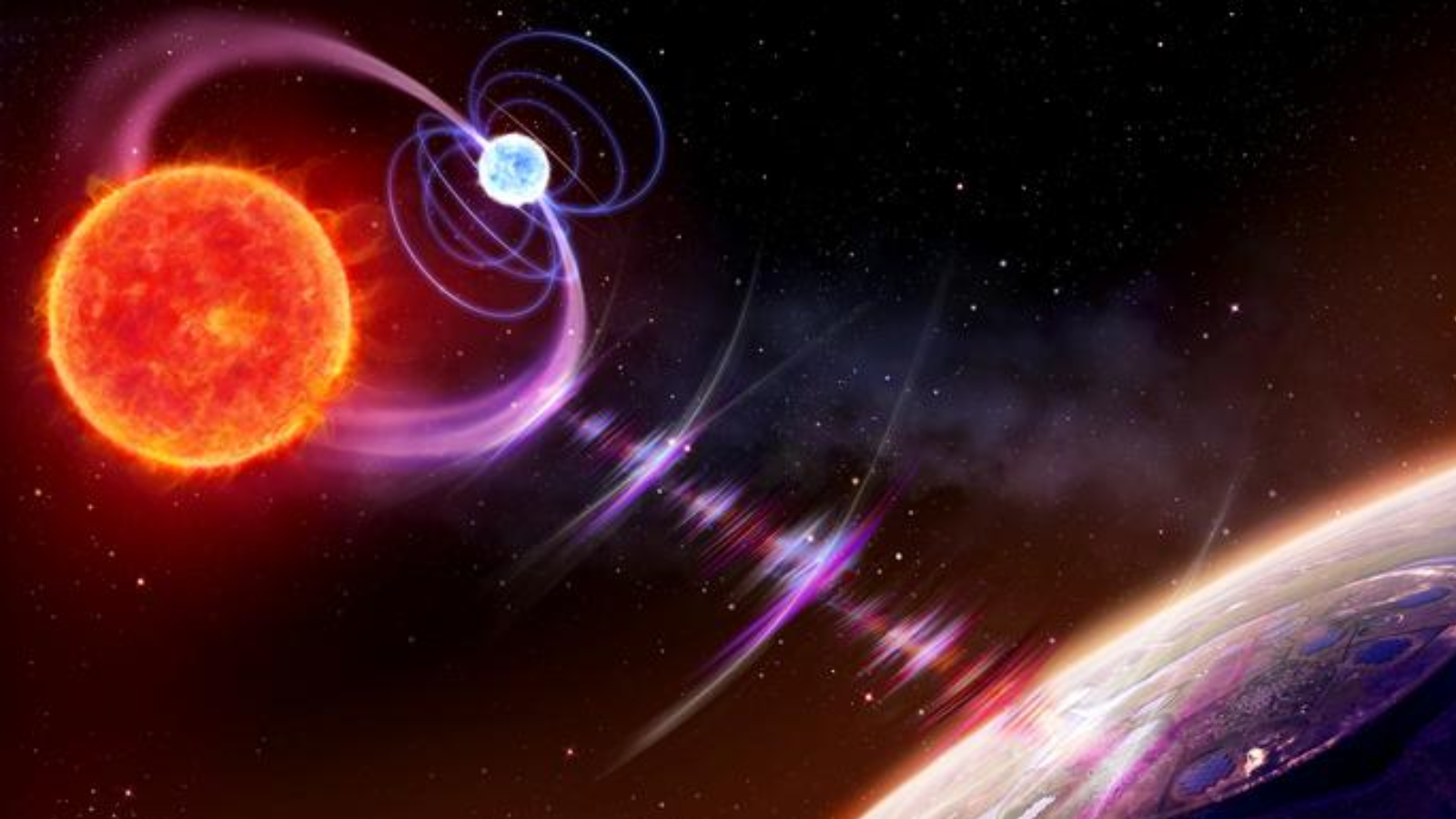
The host galaxy turned out to be small, low in heavy elements and in the middle of a very active burst of star formation, according to co-author Dr. Laura Driessen of the University of Sydney. That offers a clue about where these flashes are born. The result gives fresh support to the idea that at least some fast radio bursts come from young magnetars, which are highly magnetized neutron stars left behind when massive stars explode as supernovae. A galaxy that is young and rapidly forming stars fits magnetar formation better than theories in which the bursts come from mergers of older neutron stars.
The burst also served as a cosmic beacon. As its radio signal crossed most of cosmic history, it picked up information about the material it passed through, which lets researchers study the vast reservoirs of gas between galaxies that are otherwise very hard to observe directly. That makes distant bursts a tool for studying both how galaxies evolve and where the universe's ordinary matter is hiding.
Co-author Kavya Shaji, a doctoral student at Sydney, said that in principle sufficiently powerful bursts could be detectable from the very early universe. Professor Ben Stappers of the University of Manchester, principal investigator of the MeerTRAP project at South Africa's MeerKAT telescope, said the next step is to push the frontier further and see how close astronomers can get to the first generations of stars.
Nanayakkara, who recently joined the University of Sydney, said the results show what Webb can do. "Our results further show the amazing capability of the Webb space telescope where we can push boundaries beyond what was previously possible," she said. The burst surpasses an earlier record holder, a flash seen at a redshift of 2, about three billion years after the Big Bang, that was itself announced as the most distant burst when it was found.