Chinstrap Penguins Collapse 63% on the World's Largest Colony Island, and Macaronis Take Over
Drone and satellite counts show Zavodovski Island lost more than 680,000 breeding chinstraps since 2011. Researchers blame climate change reshaping krill supplies, not the volcano.
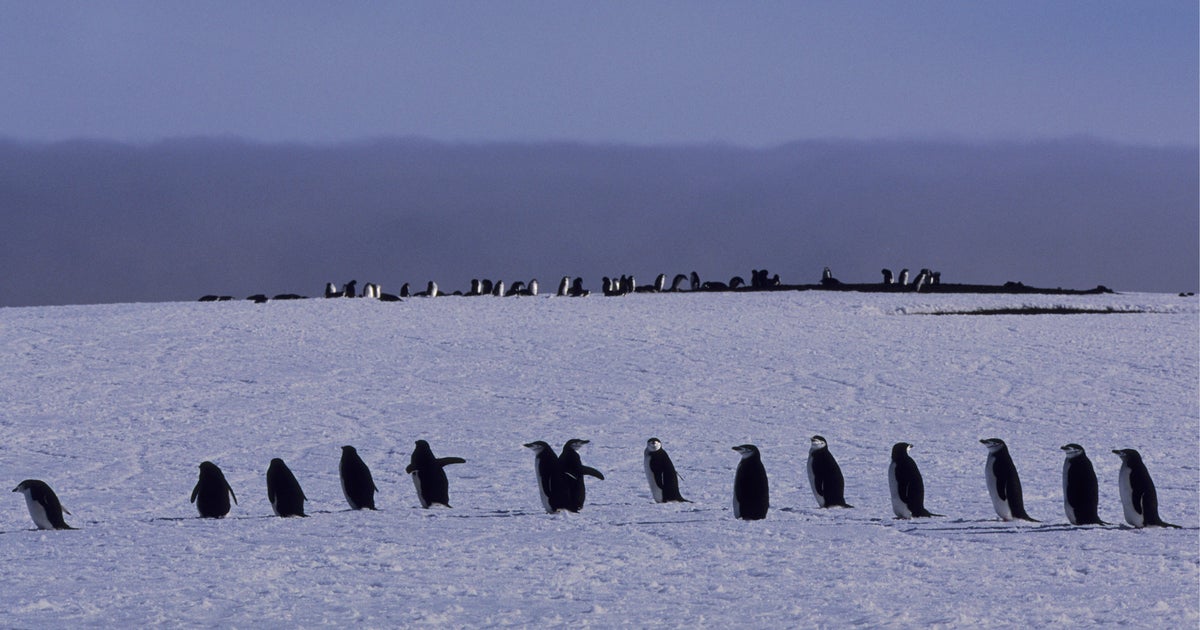
Zavodovski Island, a volcanic speck in the South Sandwich Islands near Antarctica, is no longer home to the world's largest penguin colony. A new study finds the island's chinstrap penguins have undergone a population collapse, which researchers attribute to climate-driven changes in the ocean food chain.
Drone and satellite images show Zavodovski lost more than 680,000 chinstraps between 2011 and 2025, nearly two-thirds of its birds, according to the British Antarctic Survey. Breeding chinstraps fell from about 1.09 million in January 2011 to 402,000 in 2025, a 63% decline, or roughly 7% a year. "That's a very rapid loss," lead author Norman Ratcliffe told AFP.
The research was published in the journal Current Biology. Its authors say the declines should prompt the International Union for Conservation of Nature to reclassify chinstraps from "least concern" to "endangered." Chinstraps across the South Sandwich Islands, which hold 38% of the species, may also be declining. Surveys in 2011 had considered those populations stable.
Another species moved in as the chinstraps shrank. Macaroni penguins on Zavodovski grew from about 338,000 in 2011 to 433,000 in 2025 and now outnumber chinstraps. Together the two species total more than 835,000 birds. Macaronis eat a wider range of prey, which likely helped them adapt. The study calls the shift "the most striking change in penguin community composition" observed at a single Antarctic site.
The volcano is not the main cause, the researchers say. Mount Curry erupted in 2016, prompting fears for the colony, but the ash cloud drifted northeast over an area without penguins. The study states that the decline began before the eruption and continued at a steady rate afterward. Ratcliffe said the pattern is linear, so the volcano is not the main driver.
Instead, the team links the loss to reduced krill, the small shrimp-like crustaceans that chinstraps depend on. Warming oceans push krill south into colder waters that chinstraps do not tolerate. "We think that climate change operating through food webs is probably the main driver," Ratcliffe said. The authors describe a climate-induced regime shift that harmed maritime Antarctic chinstraps while favoring subantarctic macaronis.
The finding adds to a run of bad news for the continent's penguins. Adélie penguins at Cape Adare, on the opposite side of Antarctica, now form the largest colony, with more than a million birds as of 2018. Earlier this year, a study found warming forces chinstrap, Adélie and gentoo penguins to breed earlier, which may leave chicks short of food. About six months ago the emperor penguin was declared endangered, and a 2025 report found emperor numbers fell 22% between 2009 and 2024.