Emperor Penguins Declared Endangered as Record Antarctic Sea Ice Loss Accelerates
The IUCN upgraded the iconic species from Near Threatened to Endangered on April 9, projecting the population will halve by the 2080s without major emissions reductions.

The International Union for the Conservation of Nature formally upgraded the emperor penguin from Near Threatened to Endangered on April 9, 2026, citing accelerating climate-driven sea ice loss as the primary threat to the world's largest penguin species. The reclassification, published in the IUCN's authoritative Red List of Threatened Species, projects that the emperor penguin population will decline by more than 50 percent by the 2080s if greenhouse gas emissions continue on their current trajectory.
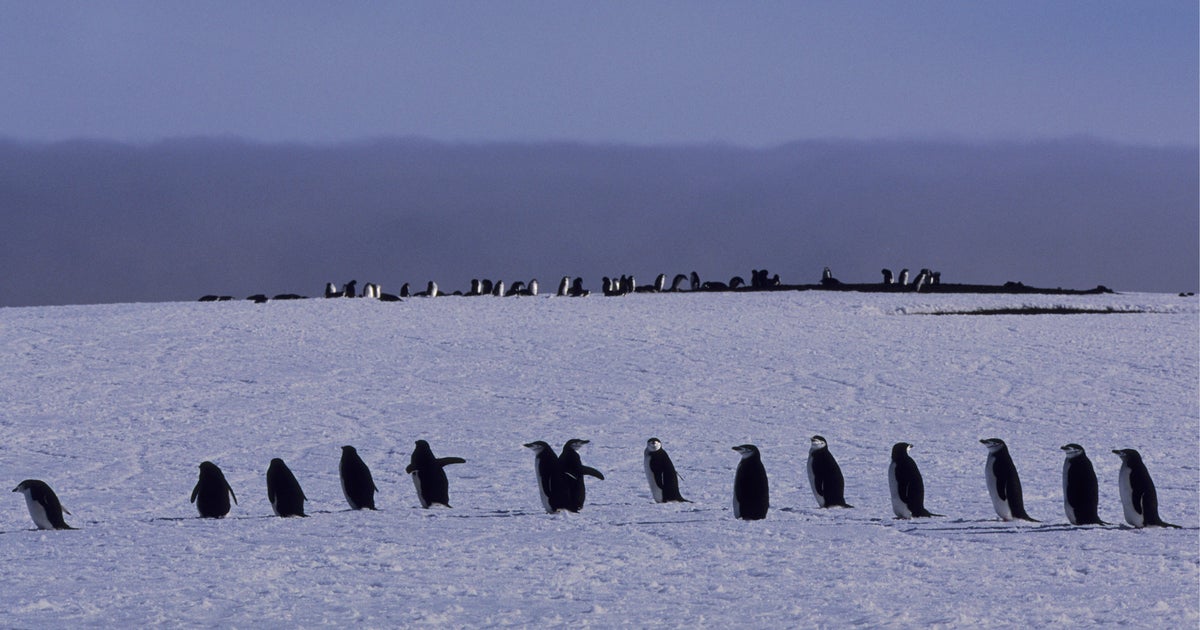
Emperor penguins are uniquely dependent on fast ice—sea ice firmly anchored to coastlines, ocean floors, or grounded icebergs—for breeding, raising chicks, and molting. Colonies gather on this stable platform during the Antarctic winter, where males incubate eggs through temperatures that can drop to minus 60 degrees Celsius. When sea ice breaks up earlier than usual in spring, chicks that have not yet developed waterproof feathers are forced into the frigid ocean before they can survive, often causing catastrophic breeding failures at affected colonies.
Satellite analysis of penguin breeding sites across Antarctica shows that 10 percent of the adult population—more than 20,000 birds—disappeared between 2009 and 2018. Since 2016, Antarctic sea ice extent has reached record lows in multiple consecutive years, and nearly half of known emperor penguin colonies have experienced at least one catastrophic breeding failure tied to sea ice loss. Dr. Philip Trathan, a member of the IUCN assessment team, said the evidence clearly pointed to human-induced climate change as the "most significant threat" the species faces. "For emperor penguins, sea ice is their primary habitat. They breed on fast ice," Trathan said.
BirdLife International's Martin Harper described the listing in stark terms. "The emperor penguin's move to Endangered is a stark warning: climate change is accelerating the extinction crisis before our eyes," he said. Harper called on governments to accelerate emissions reductions and strengthen protections for Antarctic marine environments. The IUCN simultaneously upgraded the Antarctic fur seal, whose population has declined more than 50 percent since 1999 due to warming ocean temperatures reducing krill availability, from Least Concern to Endangered.
The U.S. Fish and Wildlife Service had already listed the emperor penguin as threatened under the Endangered Species Act in 2022, ahead of the IUCN's global reassessment. Emperor penguins stand up to 3 feet tall and can weigh up to 100 pounds, making them the most iconic residents of the Antarctic continent. Their species functions as a sentinel for climate health: how successfully the international community reduces carbon emissions will largely determine whether emperor penguins survive the century. Scientists now urge more aggressive protection of Antarctic marine areas and note that even optimistic emissions scenarios project significant further population declines before any stabilization occurs.