NASA Funds a Lunar Probe to Find Out Whether Marius Hills Pit Opens Into a Giant Cave
The GIMLI project, led by the Planetary Science Institute's Than Putzig, will carry radar, seismic sensors, a gravimeter and cameras to a skylight in a Moon lava plain. A cavern there could shelter future astronauts.

NASA has selected a mission to settle one of the Moon's biggest open questions: whether a deep pit in the Marius Hills volcanic region is a doorway to a vast underground cave. The project is called GIMLI, for Geophysical Instruments for Marius Lunar pit Investigation, and it was funded through NASA's Payloads and Research Investigations on the Surface of the Moon, or PRISM, program.
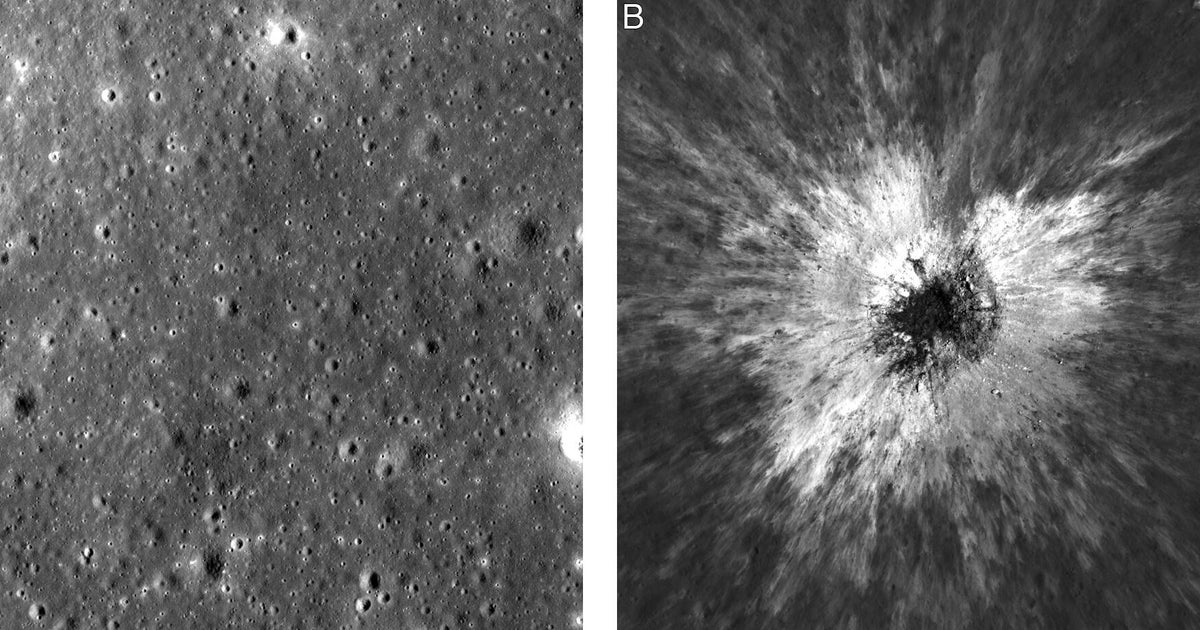
The Marius Hills Pit is a roughly circular hole that appears in orbital photographs as a dark void in a plain of ancient lava. Scientists have long suspected it is a skylight, a spot where the roof of a lava tube collapsed and exposed the empty channel beneath. Lava tubes form when the surface of a flowing lava river hardens into a crust while molten rock keeps flowing underneath. When the lava drains away it leaves a hollow tunnel. On the Moon, where gravity is weaker than on Earth, such tubes could be far larger than any found here.
GIMLI is led by Than Putzig, associate director of the Planetary Science Institute. His team includes Honeybee Robotics, a Blue Origin company, as the commercial partner, along with Boise State University, Johns Hopkins University, the Lunar and Planetary Institute, the University of Oslo and the Norwegian Space Agency.
The payload has four tools that work together. Ground-penetrating radar, supplied by the Norwegian Space Agency, would look for hollow space beneath the surface. Active-source seismic sensors would send vibrations into the ground and listen to how they echo. A gravimeter would measure tiny differences in the pull of gravity, which drop over empty space. High-resolution cameras would study the pit walls. The goal is to detect voids that extend away from the pit and to estimate how large they are.
The pit walls also hold a record. They expose layers of regolith and lava flows stacked over time, so cameras could read the Moon's volcanic history. Gareth Morgan, a senior scientist on the project, said finding a substantial lava tube would "give us an insight into how volcanism operated on the Moon."
The practical payoff is shelter. The lunar surface is battered by radiation, micrometeorites and swings of temperature from scorching day to freezing night. A natural cave offers protection from all of it, and could be a place to put a base without having to build one from scratch. That is why space agencies have been eyeing these pits for years.
The instruments will ride to the surface aboard a delivery from one of NASA's Commercial Lunar Payload Services providers. A launch date has not been set, and the mission still has to be built and tested. Until it flies, whether the Marius Hills Pit leads anywhere is an open question.