A City of a Million People on the Moon Would Drink Every Drop of Ice at the Poles in About a Century, Even Recycling Water as Well as the Space Station Does. With Today's Best Estimate, It Is Closer to a Decade.
A new feasibility study in Frontiers in Space Technologies finds power is easy at the lunar poles and water is the wall. A village of 1,000 could last for centuries; the 'self-growing cities' pitched by Musk and Bezos could not.
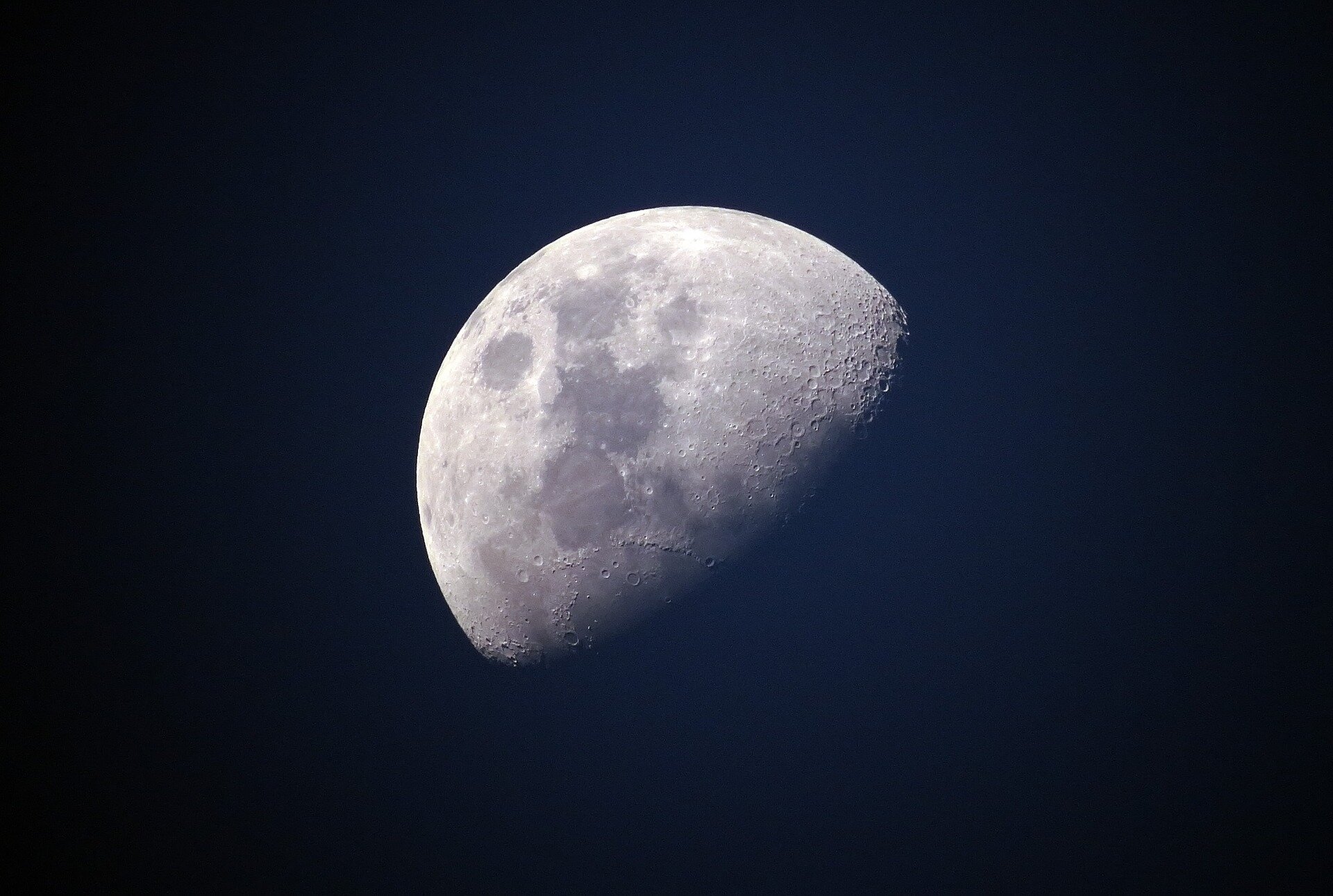
The plan for the moon, as sold by the people with the rockets, runs like this: land at the south pole, mine the ice in the permanently shadowed craters, and grow a base into a village, a village into a city, and a city into heavy industry. A new feasibility study published in Frontiers in Space Technologies does the arithmetic on the middle step and concludes that the cities do not survive it. There is not enough water.
The water itself is real. Since 2013, a succession of orbiting missions has mapped ice in dozens of crater floors near the lunar poles that have not seen sunlight in about four billion years. These "cold traps" sit below 110 kelvin, cold enough that ice loses less than a millimeter to sublimation over a billion years even in vacuum, and the asteroids that gouged the craters delivered water along with the damage. The most generous published estimate puts the total at about 1 billion tons. That figure is the study's starting point, and the authors are explicit that they chose it to give the moon city every possible break.
Power, it turns out, is the easy part. The rims of the same polar craters sit in near-permanent sunlight, and the authors calculate that kilometer-tall towers clad in photovoltaic panels on those rims could generate about 3 gigawatts, roughly the output of three large nuclear plants, without building a reactor. Lunar silicon is abundant enough that the panels could eventually be made on site, and the authors note that the sunny ridges would even make AI data centers on the moon plausible, the seed of a real lunar economy.
Then they model the taps. A city of 100,000 or 1 million people using water at Earth-like rates, with no recycling, exhausts a billion tons in a few years. With recycling at 98% efficiency, the level the International Space Station actually achieves, a million-person city runs dry in just over a century. And the billion-ton figure is the optimistic case: today's best estimates of accessible polar ice are roughly 30 times smaller, which shortens every timeline by the same factor. On those numbers, even a small city drinks the poles dry in about a decade. A village of 1,000, or a town of 10,000, is a different story; either could be sustained for several centuries or more. The difference between a settlement and a metropolis, in other words, is a factor of a hundred to a thousand in population, and the moon's water budget lands squarely on the small end.
The authors list the ways out. Recycling could improve by a factor of five or more over the station's performance. Vertical farming and other closed-loop techniques could cut demand. Water could be imported from accessible asteroids. Or there could simply be more of it than anyone has measured: current surveying techniques probe only the top few meters, while the rubble-like regolith of the crater floors typically extends tens of meters down and may hold ice all the way through. That last possibility is the one the authors call most promising, and their conclusion is a practical one. If the ambitions of the space billionaires are to be realized, the first job is not to build the city. It is to find the water.
Originally reported by Phys.org / Frontiers.