Listening for Moonquakes Could Find the Ice Buried Under the Lunar South Pole Before Anyone Drills
Ice-rich lunar soil carries seismic waves two to three times faster than dry soil, a University of Maryland-led team reports. China's Chang'e-7 lands a seismometer near Shackleton Crater later this year, and it can test the idea.
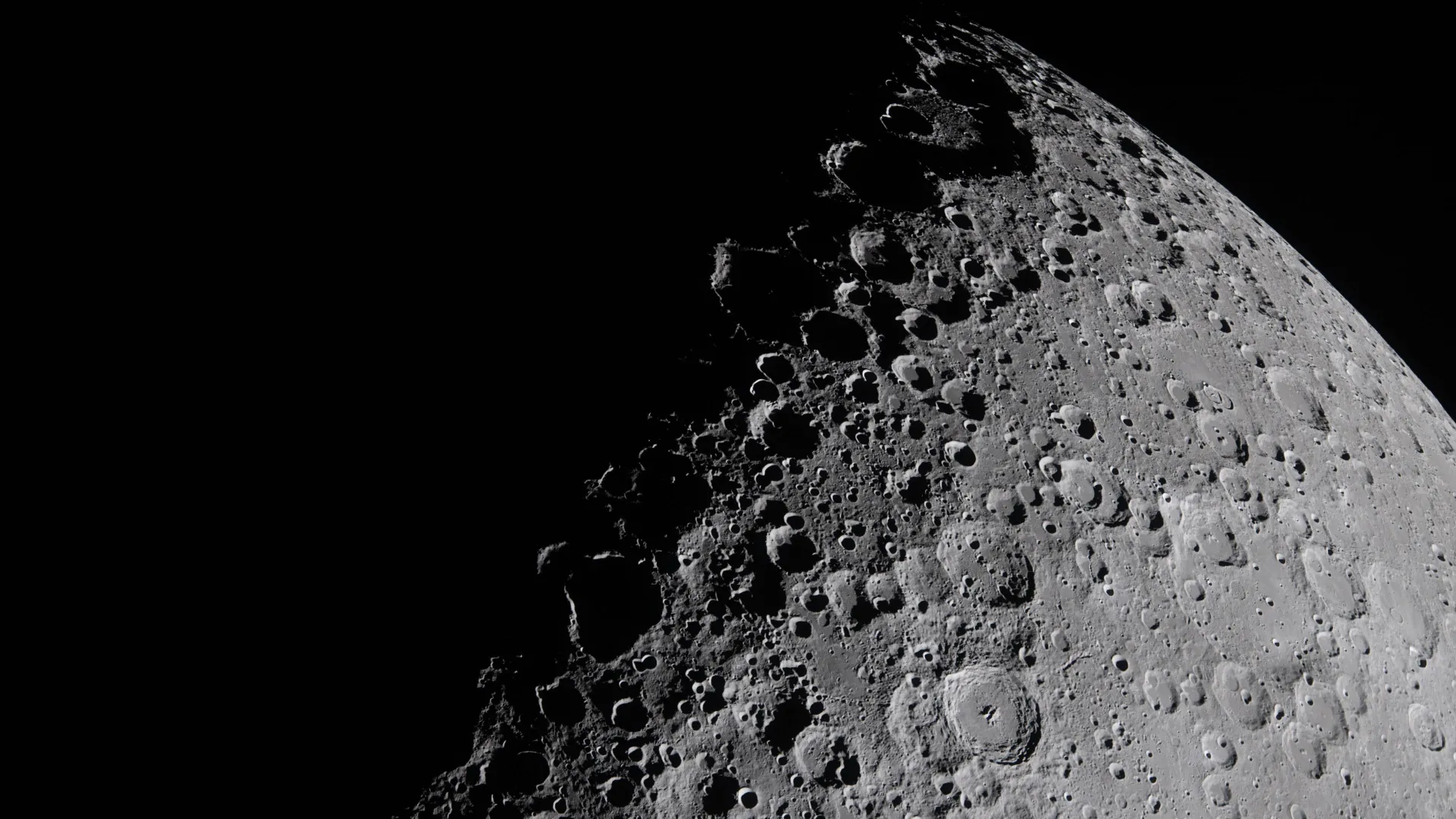
The most valuable thing an astronaut could find on the moon is frozen water, and nobody knows how much of it is there or where most of it sits. A team led by the University of Maryland says the way to find out is to stop looking and start listening.
Writing in Science Advances on July 31, researchers from Maryland, Lawrence Berkeley National Laboratory and the University of Hawaii report that seismic waves — the same vibrations geologists use to map the interior of the Earth — can locate and roughly quantify ice buried under the lunar surface. The physics is straightforward: ice-rich soil transmits vibrations about two to three times faster than dry soil, and boundaries between icy and dry layers reflect seismic energy rather than passing it through. Both effects leave signatures a seismometer on the surface can read.
"We can use seismic waves to not just see whether ice is present but also roughly how much of it there is," said Nicholas Schmerr, an associate professor in Maryland's Department of Geological, Environmental, and Planetary Sciences and a co-author of the study.
That capability fills a real gap. Spacecraft in lunar orbit have been hunting for water for years, but their instruments read only the uppermost layer of soil — centimeters, not meters. Any substantial ice deposit is expected to lie deeper, protected from sunlight and the solar wind, potentially hundreds of meters down. Orbiters simply cannot see it.
The team built its case three ways. In the laboratory, they froze volcanic rock ground to mimic lunar regolith and studied how ice distributed itself through the pore space and how that changed the material's seismic properties. Separately, thermal models identified which craters near the lunar south pole stay cold enough, permanently enough, to have preserved ice for billions of years. Finally, computer simulations modeled how moonquakes — driven by tidal stress from Earth and by the extreme thermal cycling of the lunar day — would interact with those buried deposits.
The timing is not accidental. China's Chang'e-7 mission, which carries a seismometer, is expected to land near Shackleton Crater at the lunar south pole late this year. In 2028, NASA's Artemis astronauts are scheduled to deploy the Lunar Environmental Monitoring Station, an instrument Schmerr helped develop, in the same general region. Either could put the predictions to a direct test.
The payoff for exploration is obvious: melted and purified, lunar ice is drinking water; run through an electrolyzer, it is breathable oxygen and rocket propellant, none of which would have to be hauled up from Earth at enormous cost. But the science case runs deeper. The composition of that ice — the ratios of hydrogen isotopes locked inside it — records where the inner solar system's water came from in the first place, which is the same question as how Earth got its oceans.
Originally reported by ScienceDaily.