Ancient Martian Meteorite Is at Least 4.1 Billion Years Old, the Oldest Lava Rock From Mars Ever Found
A Sahara find called Teghaza 001 carries manganese oxide and water-altered minerals, and may come from the southern highlands no rover has visited, researchers report in Science.

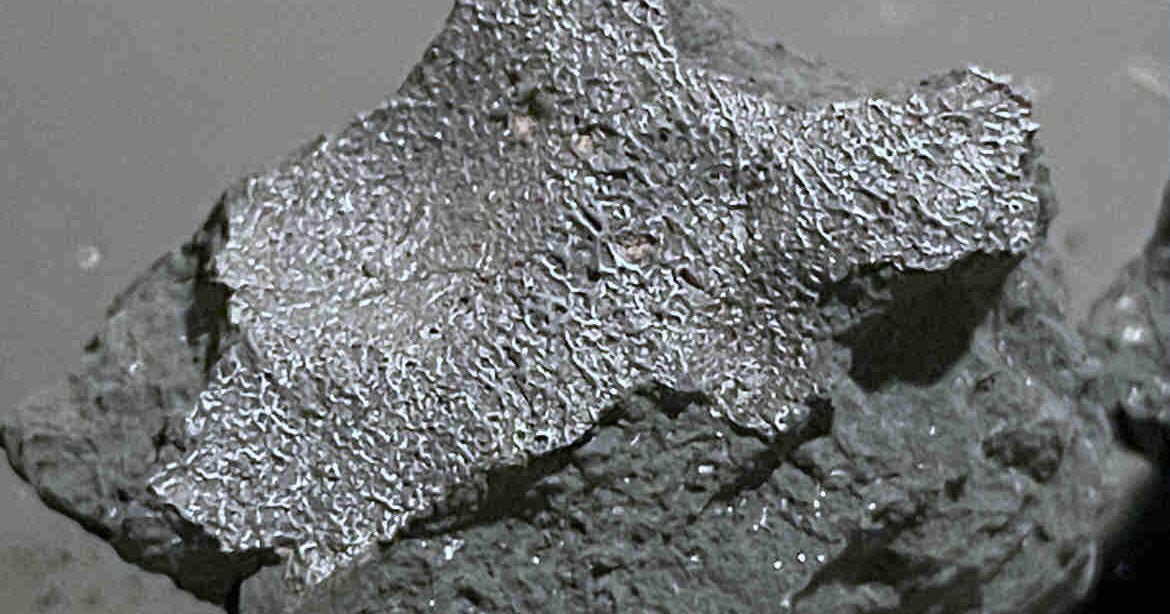
A meteorite found in the Sahara Desert is the oldest known piece of Martian lava, and it may carry traces of the water that once shaped the planet. The rock, named Teghaza 001 or Teg 001, formed at least 4.1 billion years ago, researchers report in the journal Science. Most Martian meteorites on Earth are only about 200 million years old.
"By a huge margin" is how Carl Agee, director and curator of the University of New Mexico's Institute of Meteoritics, describes its status as the oldest Martian igneous rock known. Agee first noticed the sample's unusual features. The study, led by Yang Liu of NASA's Jet Propulsion Laboratory, is titled "A Martian meteorite that formed greater than or equal to 4.1 billion years ago samples Mars' early crust and mantle."
The age came from uranium-lead dating of tiny zircon crystals in the rock, work Liu performed. The team also used electron microprobe analysis and oxygen isotope measurements at UNM's Center for Stable Isotopes, and collaborators at Caltech, UCLA and the University of Maine contributed. Karen Ziegler, a research professor at the institute, was also part of the effort. Teg 001 is a single rock type, unlike the mixed-composition meteorite known as Black Beauty.
The chemistry points to a wet past. The rock contains high levels of manganese oxide, a compound that can form through microbial activity and that Mars rovers look for as a sign of habitable environments. It also has unusual oxygen isotopes and altered minerals, which suggest fluids moved through it early in the planet's history. Its oxygen isotope values resemble those of Black Beauty, a water-rich Martian meteorite.
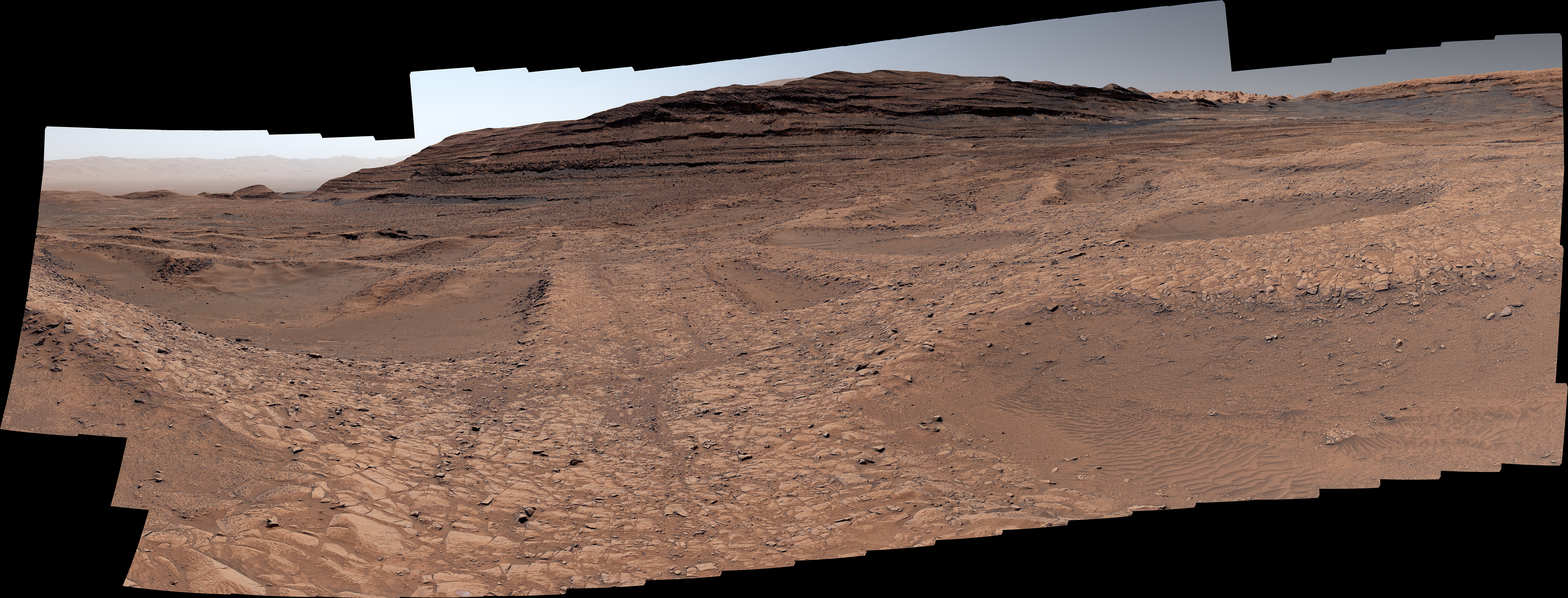
The findings point to the Pre-Noachian period, roughly 4.5 to 4.1 billion years ago. That is the era when Mars is thought to have had surface water and possibly a magnetic field and a denser atmosphere, and when life would most plausibly have arisen on the surface if it ever did. The results support the idea of a wetter, warmer and more Earth-like early Mars.
To locate the rock's home, the researchers compared its properties with orbital remote-sensing data. Several matches place its likely origin in Mars' ancient southern highlands, a region no rover has explored. The team suggests that could help guide future landers, rovers and sample-return missions toward the oldest terrain.
The meteorite is also a rarity on its own terms. Agee says another sample like it is unlikely to turn up soon, which makes Teg 001 especially valuable to scientists trying to read Mars' earliest chapter. Manganese oxide is not proof of life, and the study does not claim to have found any. It shows that the early crust interacted with water, which is a precondition researchers watch for.