Our Nearest Single-Star Neighbor May Host Four Tiny, Water-Starved Worlds Unlike Anything in Our Solar System
A chemical analysis of Barnard's Star suggests its four sub-Earth planets are packed with a rare deep-Earth mineral, stripped of atmospheres and locked in eternal day and night — utterly hostile to life just six light-years away.

The four small planets circling Barnard's Star — the Sun's nearest single-star neighbor — may be strange, bone-dry rocky worlds packed with a mineral normally buried hundreds of kilometers beneath Earth's surface, and far too hostile to host life, a new analysis finds.
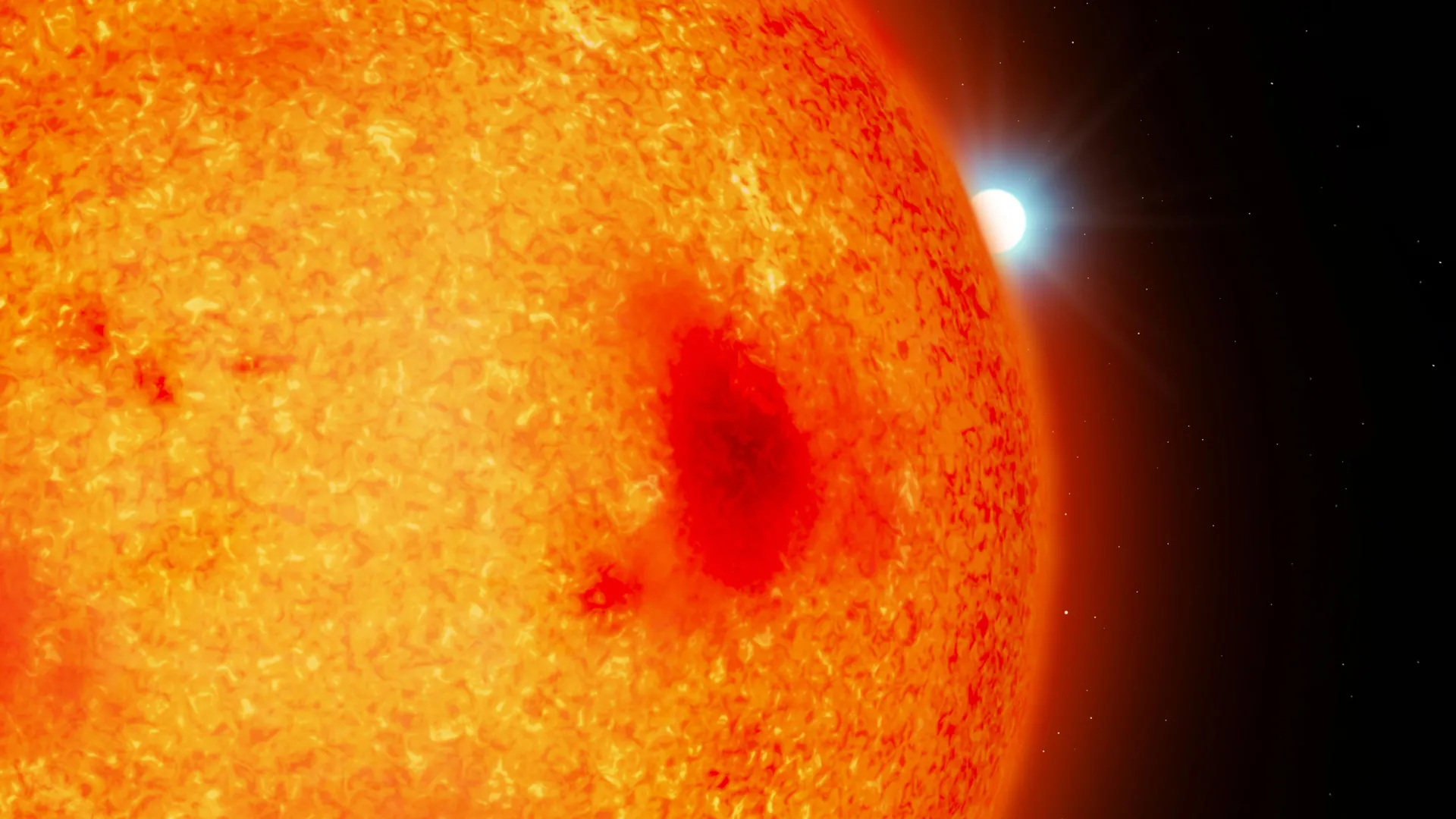
Barnard's Star is a 10-billion-year-old red dwarf just six light-years away in the constellation Ophiuchus, making it the closest star to the Sun after the Alpha Centauri triple system. In 2025, astronomers detected four rocky planets orbiting it, each smaller than Earth and Venus but larger than Mars — a compact family of sub-Earth worlds practically on our cosmic doorstep.
To probe what those planets are made of, University of Cambridge astronomer Xander Byrne and colleagues studied the chemical composition of the star itself, since a star and its planets form from the same cloud of material. They found the planets are likely rich in periclase, a magnesium-bearing mineral that on Earth exists only deep within the mantle.
“Barnard's Star has an enormous amount of the element magnesium compared to other stars, so its planets are likely to be rich in magnesium too,” Byrne said. That abundance skews the planets' makeup toward magnesium-rich ferropericlase, which is poor at retaining water — giving the worlds less than half of Earth's water capacity and hinting they may have started out dry.
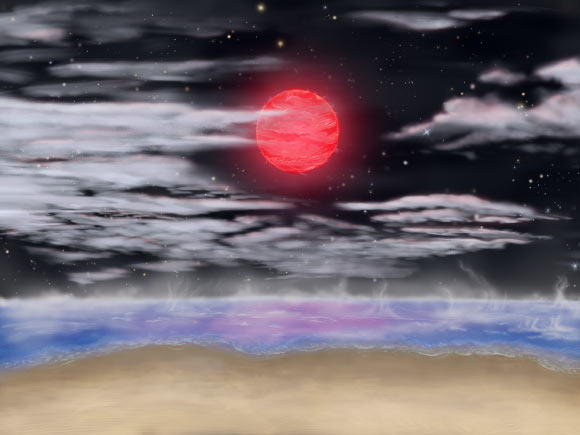
The setting compounds the inhospitality. Even the outermost of the four planets orbits about ten times closer to its star than Mercury does to the Sun, and each is likely tidally locked, showing only one face to Barnard's Star. That leaves one hemisphere in perpetual scorching daylight and the other in permanent frozen night, with atmospheres almost certainly stripped away by the star's radiation.
Published in the Monthly Notices of the Royal Astronomical Society, the study is a reminder of how alien even our closest neighbors can be. The nearby planets are “small, strange, and utterly uninhabitable,” as one summary put it — a cautionary note for a field eager to find Earth-like worlds, and a sign that proximity is no guarantee of familiarity.
Because the planets are so close and their star so well studied, the Barnard's Star system offers astronomers a rare natural laboratory for testing how the chemistry of a star shapes the worlds born around it. The findings feed a broader debate over whether the small, rocky planets that commonly orbit red dwarfs — by far the most abundant stars in the galaxy — could ever be hospitable, or whether they tend to form dry and airless. If even our nearest single-star neighbor hosts only scorched, water-starved rock, researchers say, it tempers hopes that the countless red dwarfs across the Milky Way are dotted with Earth-like refuges for life.