Fermi's 14-Year Map Finds 450 Gamma-Ray Sources in Astronomy's Long-Standing 'MeV Gap'
A new catalog from NASA's Fermi telescope covers the 20-200 MeV range, where gamma rays are hardest to track, and includes 60 sources never seen before.

Astronomers have long had a blind spot in the gamma-ray sky, and a new catalog built from NASA's Fermi Gamma-ray Space Telescope just filled in part of it. An international group working with the Fermi Large Area Telescope collaboration pinpointed 450 cosmic sources in the 20-200 megaelectronvolt (MeV) range, giving what the researchers describe as the clearest view yet of low-energy gamma rays. The work was published in The Astrophysical Journal Supplement Series.
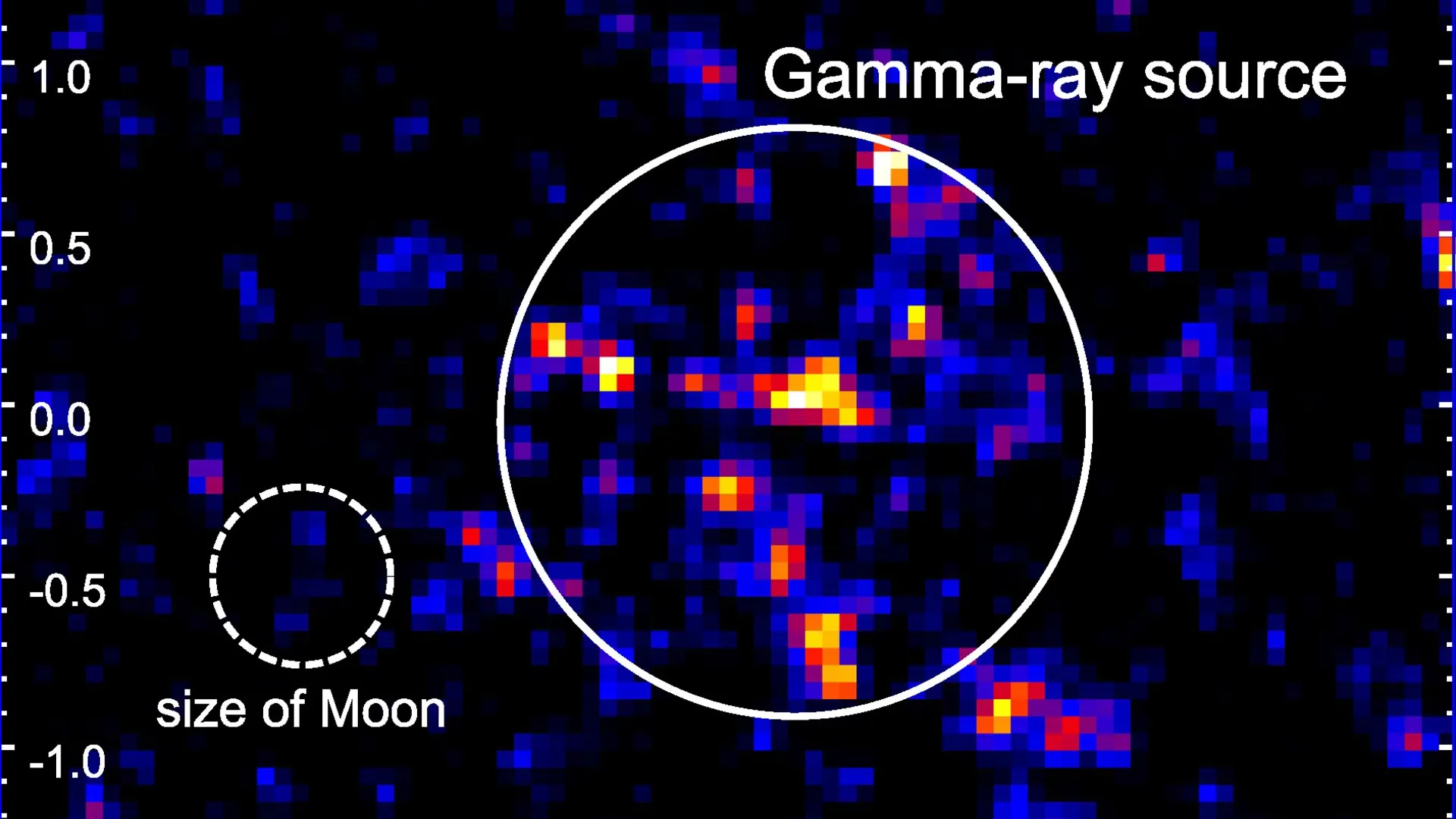
The "MeV gap" exists because of how gamma-ray detectors work. Gamma rays pass through mirrors, so instruments like Fermi-LAT act more like particle detectors in orbit than traditional telescopes. They track what happens when a photon strikes layers of tungsten and silicon inside the instrument. At energies near 1 gigaelectronvolt, the resulting spray is clear enough to trace back to a source. At 20 MeV the photons scatter far more randomly, and a single photon can only be traced to a patch of sky about 20 degrees wide, more than 40 times the size of the full moon.
The team's answer was patience and statistics. They combined 14 years of Fermi data with advanced statistical modeling to produce the Second Catalog of Low-Energy Fermi-LAT Sources, known as 2FLE. Cross-checks against radio, optical and X-ray data turned up known counterparts for 377 of the 450 objects. Of those, 325 lie far outside the Milky Way, and almost half of the whole group are flat-spectrum radio quasars, an extreme type of active galaxy.
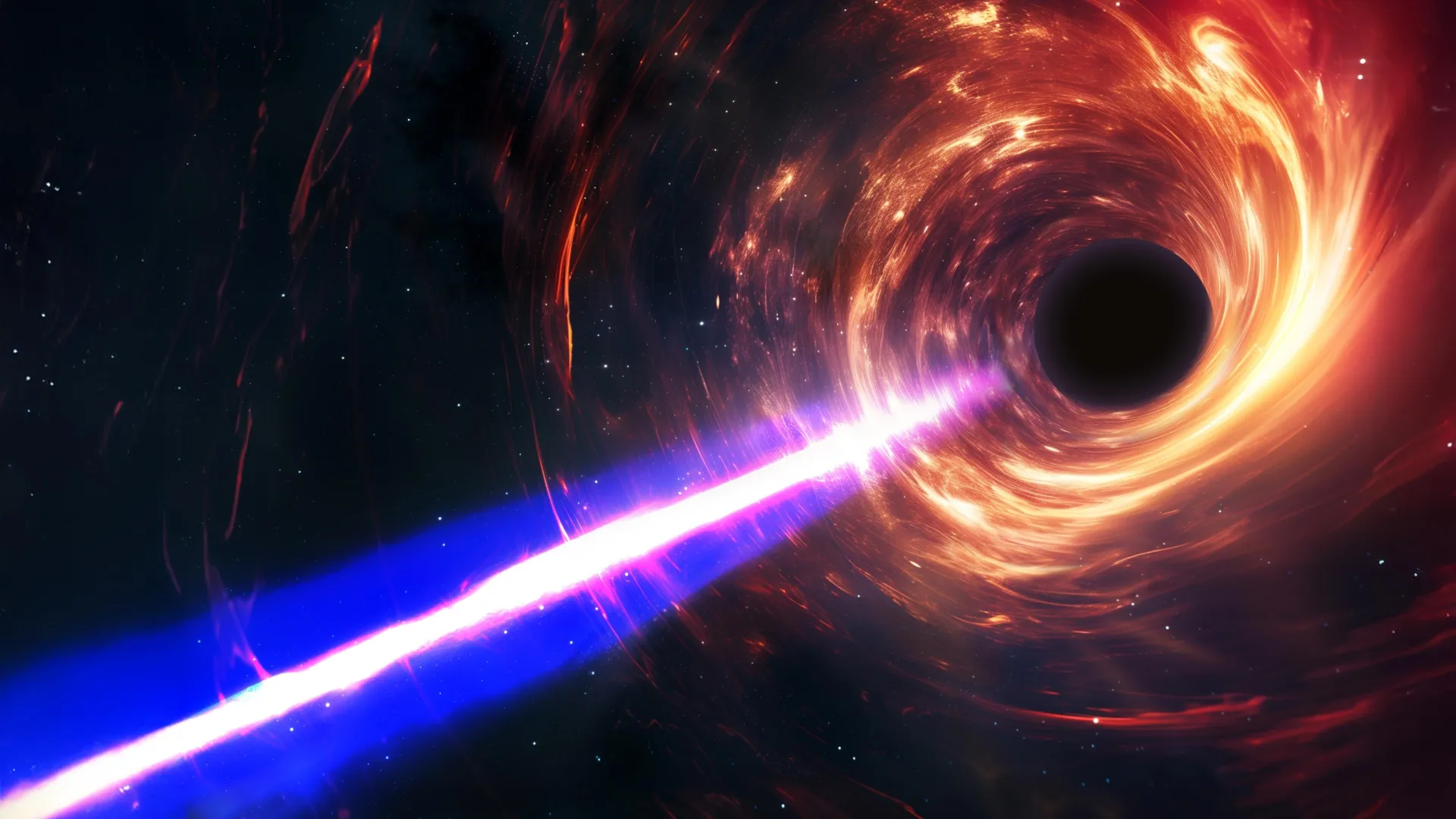
Those quasars are a kind of blazar, a supermassive black hole aiming one of its twin plasma jets almost straight at Earth. The catalog confirms that these objects release most of their energy in the 20-200 MeV window, which helps explain why the gap has hidden so much of the sky's brightest activity.
Closer to home, 52 of the sources sit inside the Milky Way, and most of them are pulsars, the spinning remnants of exploded massive stars. One outlier is gamma-ray emission that appears to come from M2, a globular cluster, which would be the first time it has been seen at gamma-ray energies.
The most intriguing group is the 73 sources with no clear counterpart at other wavelengths. Sixty of them look like brand-new gamma-ray discoveries. Some may turn out to be overlapping signals from neighboring objects, but the authors say it is likely that at least some are truly new cosmic accelerators. One mystery source, 2FLE J0340.8+5258, appears to match an object also detected by an observatory in China and seems able to produce light across nine orders of magnitude in energy.
Fermi, launched in 2008, appears to have reached its limit with this data set. The next step is NASA's Compton Spectrometer and Imager, or COSI, which is designed to search for gamma rays in the 0.2-5 MeV range using germanium detectors that only recently became available. Combining COSI's data with Fermi's decades of observations could finally close one of the longest-standing blind spots in high-energy astronomy.