A Man Outside La Paz Found a Kitten, Fed It Noodles and Eggs, and Took It to a Shelter When It Wouldn't Stop Acting Wild. Its Genome Says It Split From Every Other Cat 1.4 Million Years Ago. Leopardus Tilcayo Is the First New Wild Cat Species in 103 Years.
The tilcayo weighs about three pounds, lives in Bolivia's Yungas cloud forest and has never been found anywhere else. The Current Biology study that names it also carves the tiger cats of South America into five distinct species, all of them, one author says, 'in habitats that are vanishing fast.'
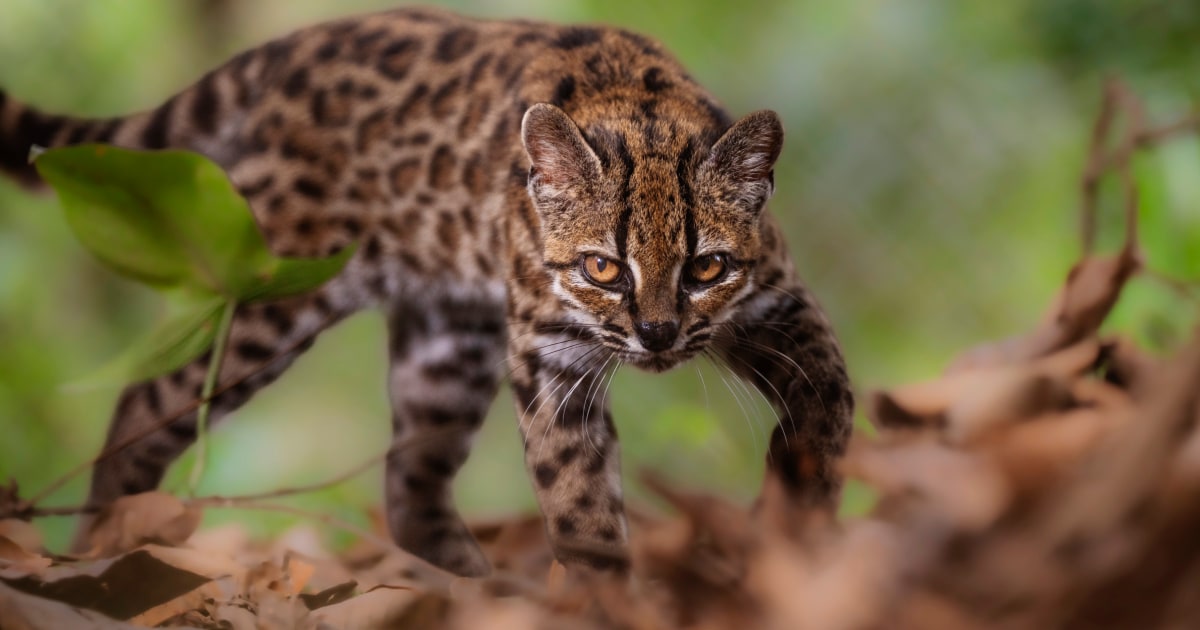
For the first time since 1923, scientists have named a new species of wild cat. It is called the tilcayo, Leopardus tilcayo, a spotted animal slightly smaller than a house cat that lives in the cloud forests of Bolivia's Yungas, where the eastern slope of the Andes drops toward the Amazon basin. The description was published Thursday in the journal Current Biology, and it came about because a family near La Paz took in what they thought was a stray kitten.
The man who found the animal fed it noodles, rice and eggs before realizing it was not domestic and bringing it to the Senda Verde Wildlife Sanctuary. Paola Nogales-Ascarrunz, a biologist who leads the Bolivian Felid Research and Conservation Program and a National Geographic explorer, went to see it. "It was really, really small, and I couldn't believe how small it was," she said. An adult tilcayo measures about 45 to 46 centimeters, roughly 18 inches, and weighs about 1.4 kilograms, or three pounds. Its coat is light brown with irregular rosettes, its ears are rounded, and its spot and tail patterns differ from those of every other tiger cat.
Local people had a name for it long before science did. Communities in the Yungas have called the animal tilcayo for generations, and the research team kept the word as the species name rather than inventing one. "So far, it's only been detected in Bolivia" and not "anywhere else on the planet," Nogales-Ascarrunz said. She called the discovery "a remarkable event, because a new wild cat species hasn't been described in 100 years." The last was the Uruguayan pampas cat, described in 1923.
Only two tilcayos have ever been examined. The male from the shelter now lives at a facility in the Yungas. A female was rescued after being attacked by villagers and released back into the forest. Tissue from both animals was subjected to whole-genome sequencing, and the results showed the lineage separated from other tiger cats about 1.4 million years ago, far more than enough genetic distance to count as a separate species. There were no museum specimens to compare against, because no museum had ever collected one.
The paper, led by Jonas Lescroart with co-authors including Eduardo Eizirik and titled "Phylogenomics and museomics reveal five distinct species of tiger cats in South America," does more than add one name. Tiger cats, the small spotted felines of the genus Leopardus that range from Central America to Argentina, have long been lumped into one or two species under the label Leopardus tigrinus. By combining new genomes with DNA recovered from old museum skins, the team found the group actually comprises five species, four of which had been proposed before and one, the tilcayo, that had never been seen. The work began in 2021.
The conservation math is unforgiving. The tilcayo's population size is unknown, its only known habitat is being cleared for farms and roads, and the researchers have already classified it as vulnerable to extinction while warning that its numbers may soon justify a more severe rating. "All of them are in habitats that are vanishing fast," said Tadeu de Oliveira, an ecologist at Brazil's State University of Maranhao and a co-author, referring to all five tiger cat species.
New mammals are not in themselves rare; taxonomists add roughly 65 a year, most of them bats, rodents and splits of existing species. New cats are. The family Felidae has about 40 species, all of them charismatic, all of them studied, and none of them new in a century until this week. Nogales-Ascarrunz said the discovery gives her country "a new reason to protect the world." It also gives the field a reminder that a three-pound predator can live within a day's drive of a national capital and be mistaken for a pet.
Originally reported by NBC News.