Antarctica's Hektoria Glacier Collapsed at the Fastest Rate Ever Recorded in Modern History, Retreating 15 Miles in 15 Months, NASA Satellites Confirm
A new study published in The Cryosphere documents a two-month interval during which Hektoria's grounded ice line retreated more than five miles — a melt rate unprecedented since satellite tracking of polar ice began.
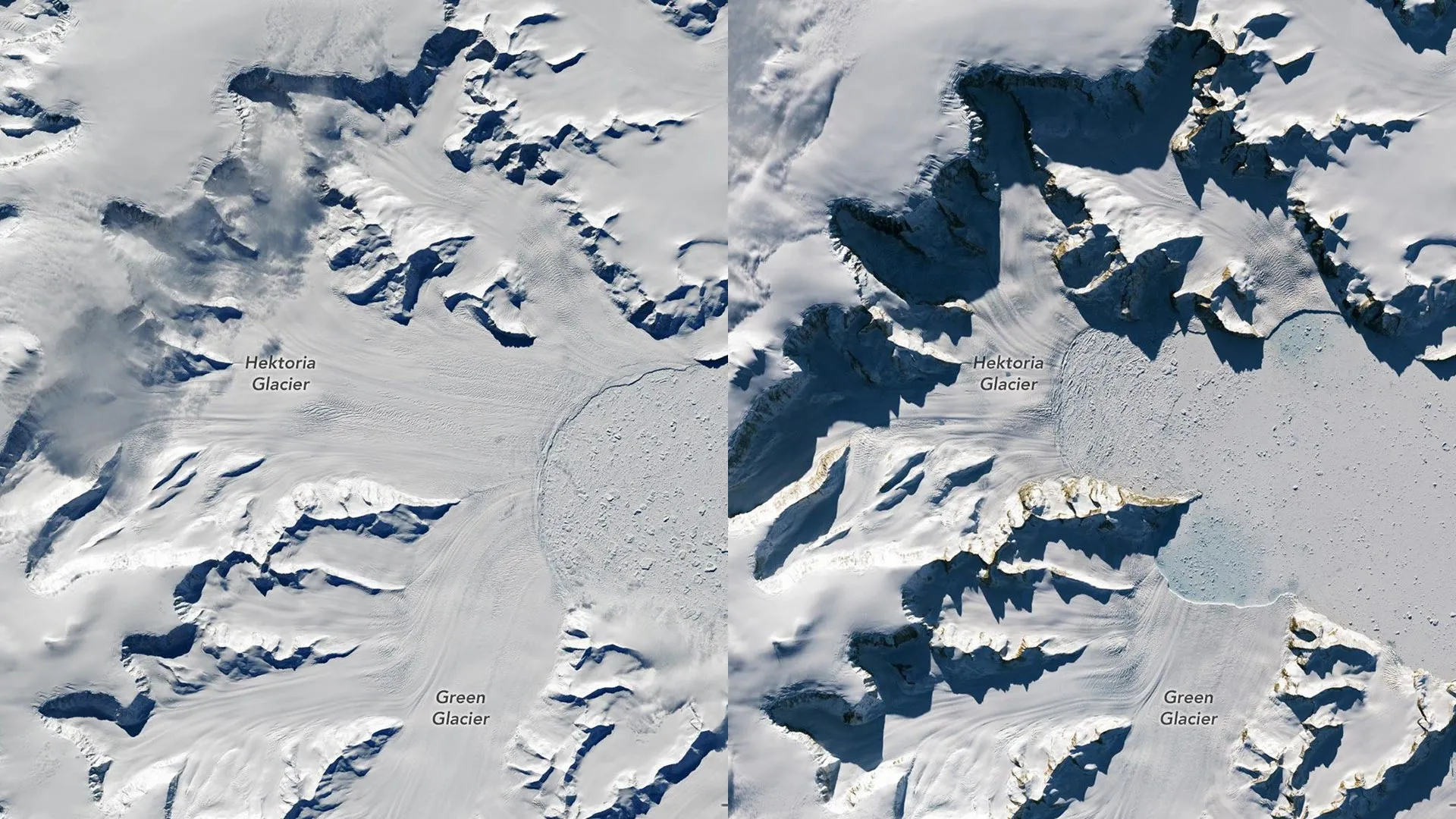
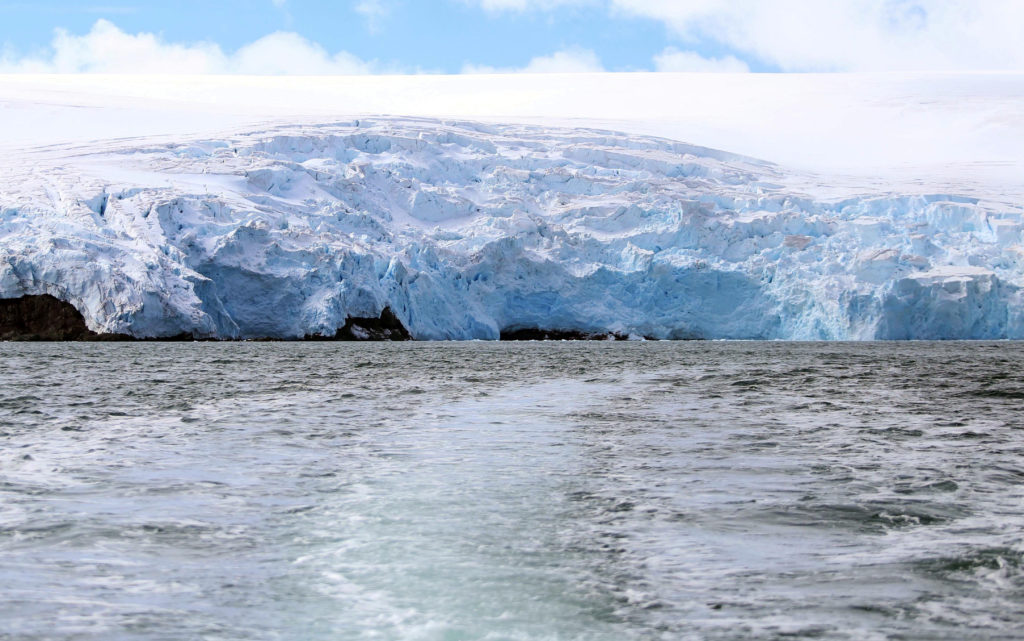
A small but unusually exposed glacier on the eastern side of the Antarctic Peninsula has set what glaciologists are calling the fastest grounded ice retreat in modern recorded history, with NASA satellite imagery confirming that the Hektoria Glacier shed roughly 25 kilometers — nearly 15 miles — of its terminus between January 2022 and March 2023. The findings, published Monday in the journal The Cryosphere by a team led by glaciologist Naomi Ochwat of the University of Colorado Boulder and the Cooperative Institute for Research in Environmental Sciences, document a two-month interval in late 2022 during which the glacier's grounding line — the boundary where the ice last touches solid bedrock before floating — retreated more than 8 kilometers, or roughly 5 miles.
That eight-kilometer-in-two-months figure is the headline number, and it stunned the team. "We had to re-process the data three times because none of us believed what we were seeing," Ochwat said in a statement released by CIRES. "Eight kilometers in 60 days is faster than any grounded ice retreat that has ever been observed, anywhere, by any method we have." For context, the fastest retreats previously documented in West Antarctica's Pine Island and Thwaites systems — which together hold enough ice to raise global sea level by more than a meter — have averaged roughly 1 to 2 kilometers per year.
The collapse mechanism, the team argues, was an unusual combination of geometry and warming. Unlike most Antarctic glaciers, which sit on deeply grooved seabeds that physically buttress them as they thin, Hektoria flows down onto an unusually flat, shallow plain of bedrock just below sea level. As warmer Circumpolar Deep Water — pushed shoreward in 2022 by anomalously strong westerlies linked to a triple-dip La Niña — began to thin the ice from beneath, the glacier reached a threshold at which its grounded ice simply began to float. Once afloat, large sections fanned out and rapidly calved through what the team calls a "cascading" or "domino" tabular-iceberg release, producing a chain of bergs visible from space.
Hektoria itself is small: it drains a catchment of just 1,200 square kilometers, and its contribution to global sea level rise in 2022 was a barely measurable 0.06 millimeters. But the team's worry is the geometry. NASA's Operation IceBridge bathymetric surveys completed in 2018 showed that the much larger Thwaites and Pine Island glaciers in West Antarctica sit on broad, flat retrograde slopes very similar to Hektoria's, and that the same cascading calving mechanism — once thought to require dramatic surface-melt forcing of the kind seen in Greenland — could in principle be triggered there by sustained ocean warming alone.
"Hektoria is the warning shot," said co-author Ted Scambos, a senior research scientist at CIRES and one of the most cited authorities on West Antarctic glaciology. "If a small glacier on a flat bed can lose its grounded ice that fast, the assumption that the bigger systems must take centuries to do something similar deserves serious re-examination." The U.K.-led Thwaites Glacier Collaboration is now using the Hektoria event to recalibrate its ice-sheet models, and a separate research group at the British Antarctic Survey said Tuesday it will deploy three new sub-ice moorings off the Thwaites grounding line during the 2026-2027 austral summer to detect any analogous cascade in its earliest stages.