Two Humpback Whales Photographed in Both Australia and Brazil Shatter the Migration Record at Roughly 14,500 Kilometers, Crossing Three Oceans From One Tropical Breeding Ground to the Other
Researchers using AI-powered fluke-pattern recognition identified the same individuals at sites about 9,300 miles apart and traveling in opposite directions — a feat that beats the previous Colombia-to-Zanzibar record and rewrites textbook accounts of how rigid humpback breeding fidelity is supposed to be.
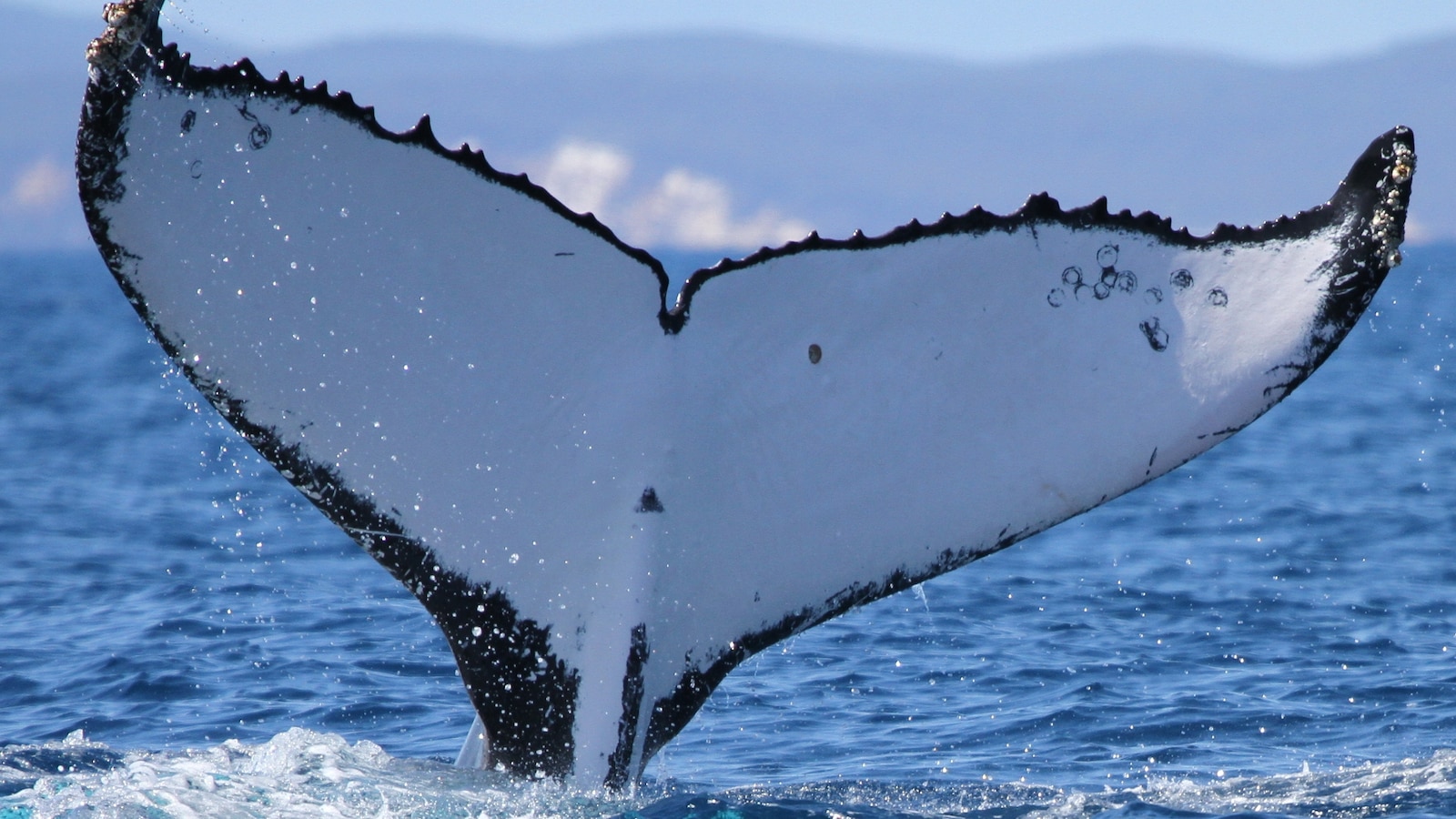
BRISBANE, Australia — Two adult humpback whales separately photographed on breeding grounds in both eastern Australia and the southwestern Atlantic off Brazil have shattered the known record for cetacean migration by roughly 14,500 kilometers — about 9,000 miles — according to a study published Tuesday in Royal Society Open Science. The whales, identified by the unique color patterns and trailing-edge silhouettes of their tails, traveled in opposite directions between two of the world's major humpback breeding populations, crossing three ocean basins to do it.
The work was led by Ekaterina Kalashnikova at the Australian Antarctic Division and Vanessa Pirotta of Griffith University's Whales and Climate Program in Queensland, in collaboration with colleagues at Brazil's Instituto Aqualie. The team used the Happywhale citizen-science database — an open archive of more than half a million whale-fluke photographs from researchers and tourists — together with a new convolutional neural network trained to match flukes across photos taken in different lighting and angles. Two of the matches that came back from the AI sent the researchers running back to the original images for manual confirmation: both whales had been photographed in Australian waters and in Brazilian waters years apart, but with the same trailing-edge notches and pigmentation patterns.
The previous record for humpback migration was held by a single male, nicknamed 'Magic,' that traveled from a breeding ground off Colombia to a second breeding ground off Zanzibar — a journey of roughly 11,500 miles documented in a 2010 paper. Until now, scientists believed that movement between major humpback breeding populations was largely off-limits to individuals because of strong matrilineal site fidelity: humpbacks learn breeding grounds from their mothers and rarely deviate. The new findings — covering two animals moving in opposite directions between Australia and Brazil — force a rethink of how rigid that fidelity actually is.
Because Happywhale only knows where the photos were taken, not the actual path the whales traveled between encounters, the precise route is unknown. The two most plausible options are around the southern tip of Africa, hugging the productive feeding waters of the Antarctic Convergence Zone for thousands of miles, or south of Cape Horn through the southern Pacific. Either path would take the whales through some of the planet's coldest, roughest open ocean and would require months at a time of essentially nonstop swimming on stored fat reserves, because humpbacks generally do not feed during the breeding season.
Pirotta said the team is unsure why the whales made the journey. Possibilities discussed in the paper include a search for mates after rejection in their original breeding ground, climate-driven shifts in the productivity of Antarctic feeding zones (which both populations exploit) and simple individual exploration. 'These are individuals doing things their populations are not supposed to do,' Pirotta told reporters. 'And we're finding them because tools like AI fluke matching let us search across hundreds of thousands of photos in ways we never could a decade ago.' She added that climate change is a leading hypothesis: shifting krill and small-fish distributions in the Southern Ocean may be pulling humpbacks farther afield than ever before.
The discovery has practical implications. International conservation regulations for humpbacks — listed under the Convention on Migratory Species — currently treat the Australian and Brazilian breeding populations as essentially separate management units. If individuals are crossing between them, ship-strike, fishing-gear and acoustic-disturbance regulations may need to be coordinated across oceans they had not previously been linked across. The Happywhale platform now contains roughly 105,000 individually identified humpbacks worldwide, and the authors expect additional inter-ocean matches to appear as more historical images are uploaded and rematched by the AI system. The two record-setters, the team noted dryly, have not been photographed again since.