Max Planck Scientists Decode the "Sugar Code" on Human Cells in a Breakthrough That Could Spot Cancers and Immune Disorders Years Before Symptoms
A new super-resolution imaging technique called Glycan Atlasing maps the dense forest of carbohydrate molecules coating every cell, and the patterns it reveals can distinguish early-stage tumors and activated immune cells with 94 percent accuracy.
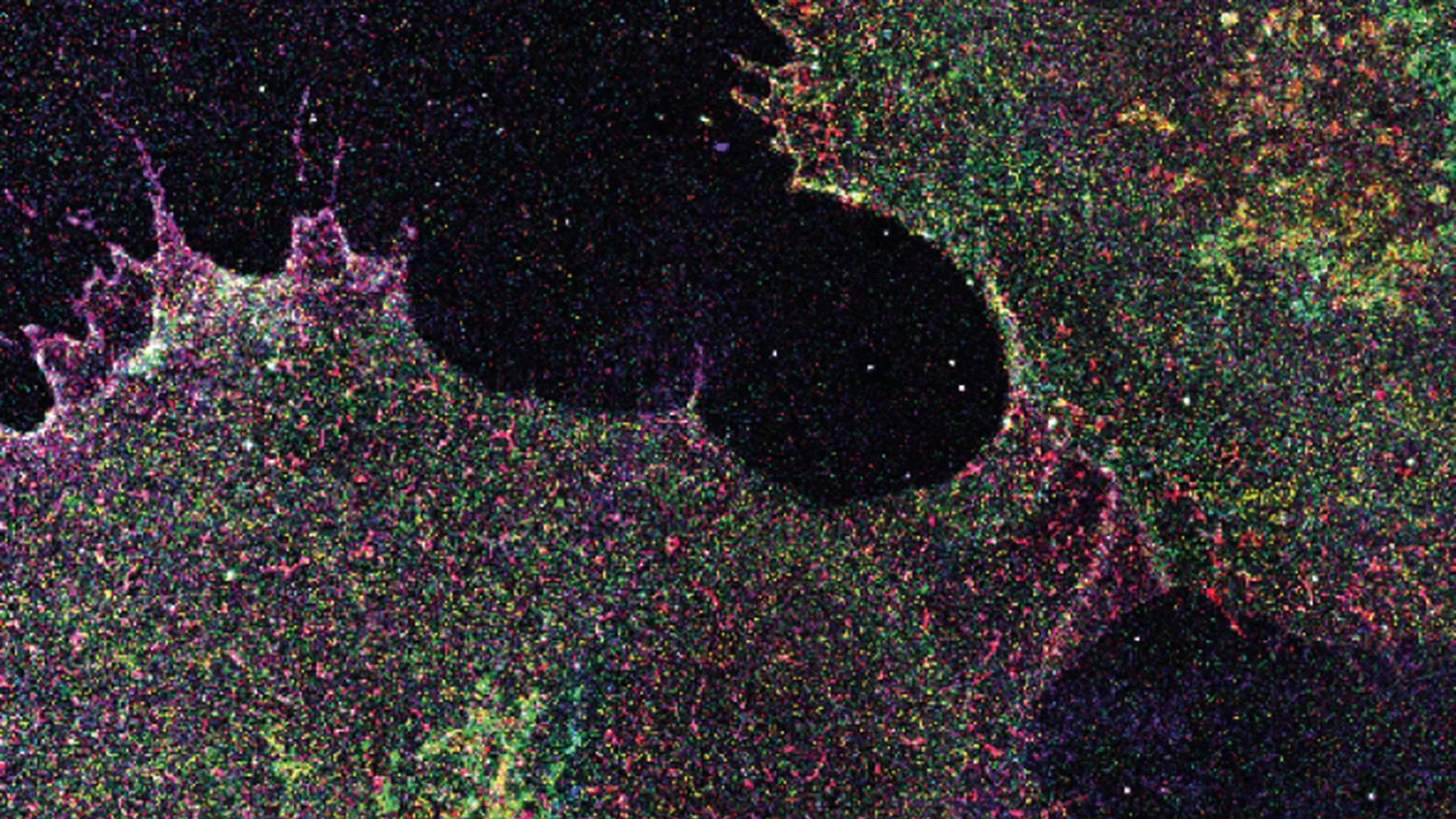
Scientists at the Max Planck Institute for Medical Research have mapped the so-called "sugar code" coating every human cell at near-molecular resolution for the first time, a feat that could give doctors a powerful new way to spot cancers, infections and immune disorders years before patients show symptoms. The breakthrough, reported this month in Nature Nanotechnology, uses a custom-built super-resolution microscopy technique the team is calling Glycan Atlasing to image the dense lawn of carbohydrate molecules — known collectively as the glycocalyx — that decorates the outer membrane of every cell in the body.
The glycocalyx has been understood since the 1970s, but it has long defied close inspection because its individual sugars are smaller than the wavelength of visible light and too crowded for traditional fluorescence microscopy to resolve. The Max Planck team, led by physicist-turned-biologist Leonhard Möckl, paired a custom set of fluorescent probes that bind selectively to different sugar groups with a STED-style depletion laser that beats the optical diffraction limit. The result is a map of individual glycan structures across the surface of a single cell at roughly 20-nanometer precision, made in roughly fifteen minutes per scan.
When the team turned the technique on human tissue, the patterns it produced read like fingerprints. Activated immune cells displayed glycan signatures sharply different from the same cells in their dormant state. Breast cancer tissue samples could be distinguished from neighbouring healthy tissue with a 94 percent classification accuracy, and the researchers were able to separate early-stage and late-stage tumors based on their sugar profiles alone. The diagnostic information, Möckl said, is in many cases visible weeks or months before it shows up in conventional markers like PSA, CA-125 or cell-surface receptor stains.
"The glycocalyx is the part of the cell that the rest of the body actually sees," Möckl told reporters at a Heidelberg briefing. "It is how immune cells decide what is friend, what is foe, what is dangerous and what is just background. Now that we can read it, we can ask the same questions the immune system asks — just earlier, and with higher resolution." Outside biochemists called the results a "watershed" for clinical glycomics. Carolyn Bertozzi, the Stanford chemist who won the 2022 Nobel Prize in part for her work on cell-surface sugars, said she expects to see early clinical trials of Glycan Atlasing-based liquid biopsies within two years.
The Max Planck group is already collaborating with university medical centers in Heidelberg, Cologne and Vienna to test the platform against archived patient tissue libraries to determine whether sugar signatures predicted later cancer progression in samples taken before any clinical diagnosis. If the look-back studies confirm the pattern, Möckl said, the next step is to miniaturize the imaging hardware to the size of a flow-cytometer cartridge that can sit beside a routine blood draw in a hospital lab.