Astronomers Catch a Magnetar Being Born, Hearing Its 'Chirp' in a Distant Supernova
A rising, bird-like pattern in an exploding star's light gave away the birth of one of the universe's most magnetic objects — and forced Einstein's relativity into the story of a supernova for the first time.

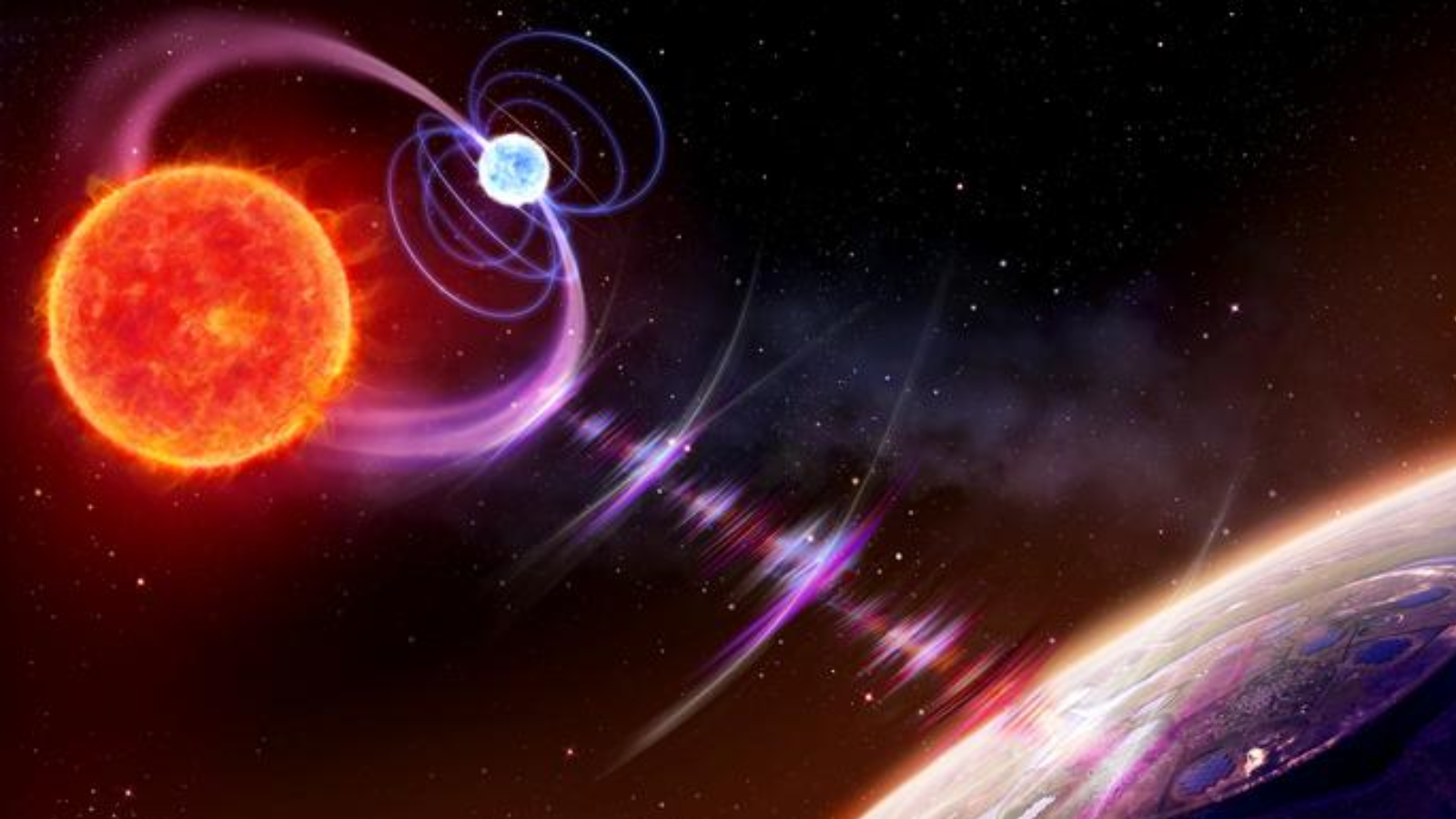
Astronomers say they have witnessed the birth of a magnetar for the first time, catching the newborn object give itself away through a strange, rising "chirp" buried in the light of a distant exploding star. The finding offers the first direct evidence that these fiercely magnetic neutron stars power some of the brightest stellar explosions in the universe.
The signal came from SN 2024afav, a supernova discovered in December 2024 roughly one billion light-years from Earth. A team using the Las Cumbres Observatory's global network of 27 telescopes monitored the blast for more than 200 days. After it peaked in brightness around day 50, the light curve did something no ordinary supernova does: it produced four distinct bumps, each arriving closer together than the last. Joseph Farah, a graduate student at UC Santa Barbara and Las Cumbres Observatory who led the analysis, compared the accelerating pattern to "the rising pitch of a bird's chirp." Previous superluminous supernovae had shown, at most, one or two such bumps.
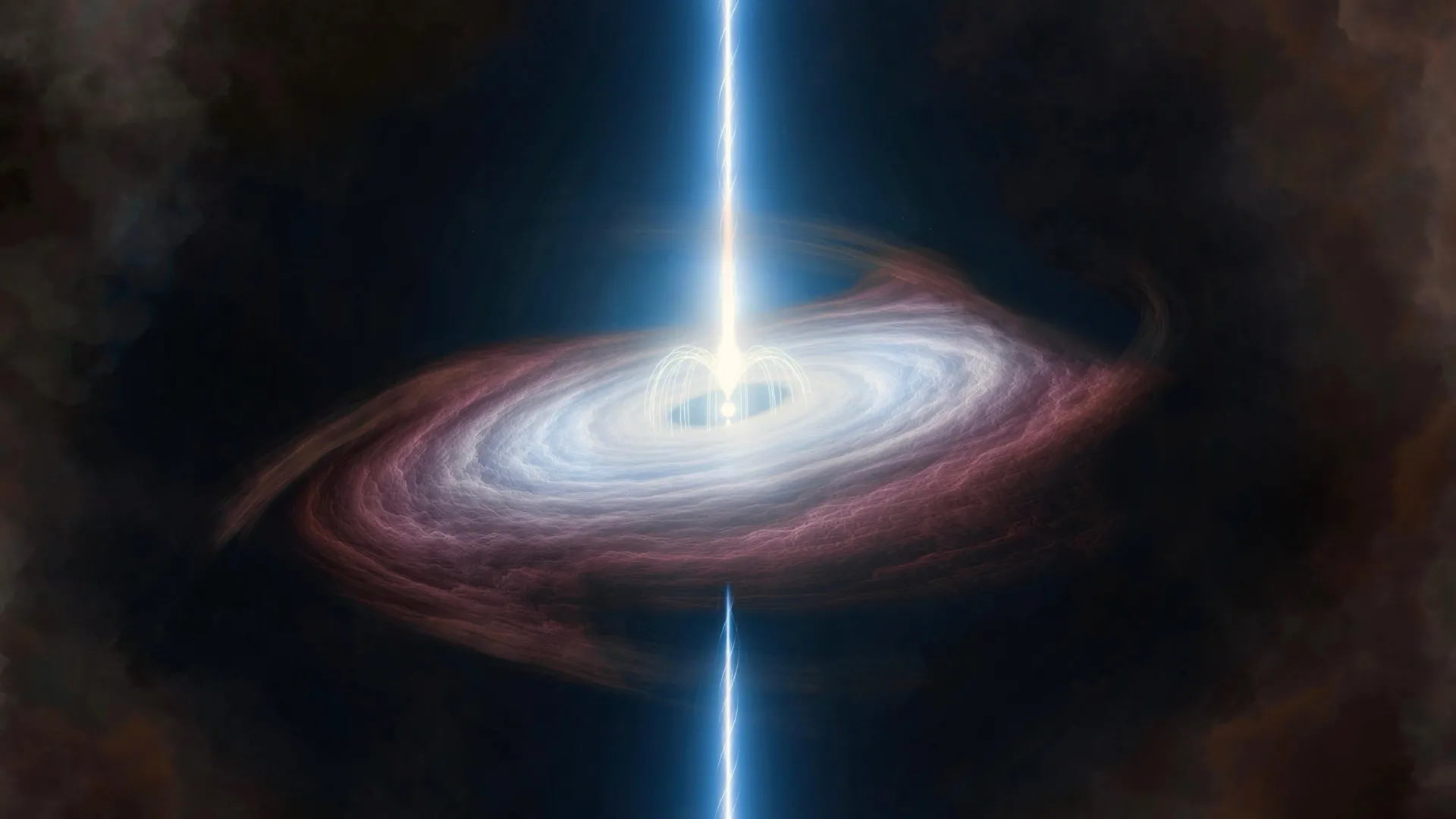
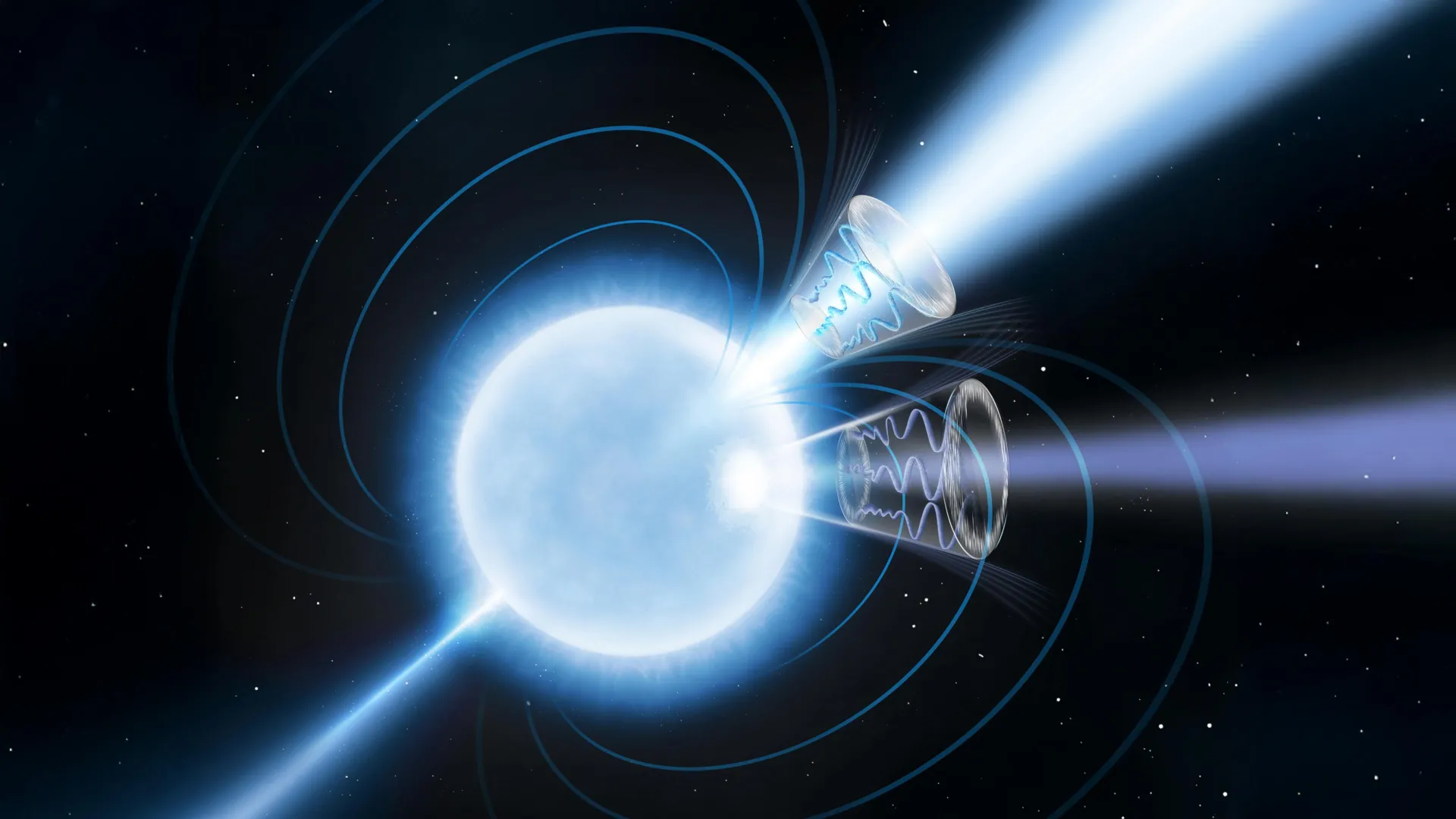
The explanation reaches straight into Einstein's general theory of relativity. Material blown out by the explosion fell back and formed a tilted disk swirling around the newborn magnetar. Because the neutron star spins so fast, it literally drags the fabric of spacetime around with it — an effect called Lense-Thirring precession — causing the disk to wobble like a top. As the disk spiraled inward, the wobble sped up, periodically blocking and reflecting the magnetar's light and producing the quickening flashes seen from Earth. Researchers say it is the first time general relativity has been required to explain the mechanics of a supernova.
The object at the heart of the blast is extreme even by cosmic standards. The team estimated the neutron star spins once every 4.2 milliseconds and carries a magnetic field roughly 300 trillion times stronger than Earth's — hallmarks that identify it as a genuine magnetar rather than an ordinary pulsar. Those numbers, drawn from the timing of the chirp, matched theoretical predictions for how a magnetar could dump enormous energy into an expanding shell of debris and light it up far beyond a normal supernova.
The work, published in the journal Nature, was carried out by Farah together with UC Berkeley's Alex Filippenko and Dan Kasen and UC Santa Barbara's Andy Howell. Beyond confirming a decades-old idea about what makes superluminous supernovae shine, the discovery hands astronomers a new tool: a rhythmic fingerprint in a dying star's light that can betray the presence of a magnetar being forged in real time. In plain terms, scientists watched a monster magnet switch on inside an exploding star — and heard it "sing" its own birth.