Scientists Crack Why the Sun's Thinnest Layer Stays Razor-Thin — a Clue to Space Weather
Refined simulations from a NASA science center suggest the Sun's own magnetic dynamo is what keeps the mysterious tachocline confined to a knife-edge, a key to forecasting solar storms.
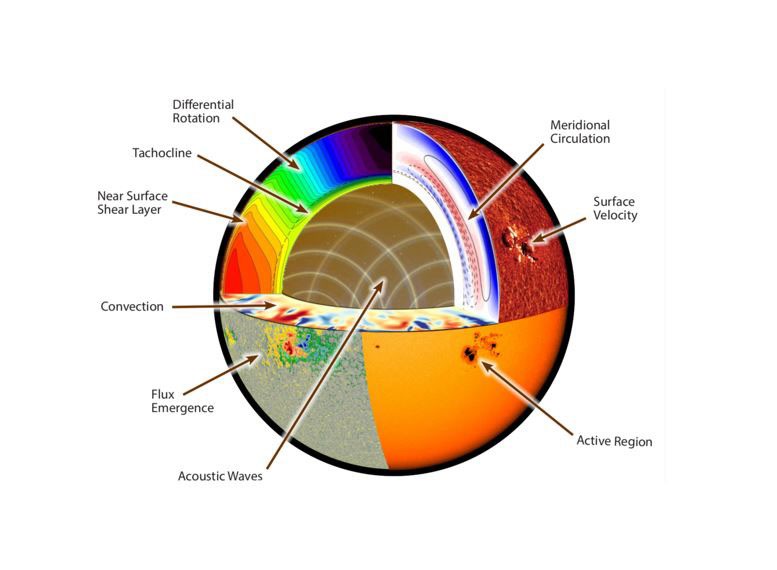
Researchers with one of NASA's DRIVE Science Centers say they have taken a major step toward solving a decades-old solar mystery: why an extraordinarily thin layer buried deep inside the Sun stays so improbably thin, and what that means for the storms it helps unleash on Earth.
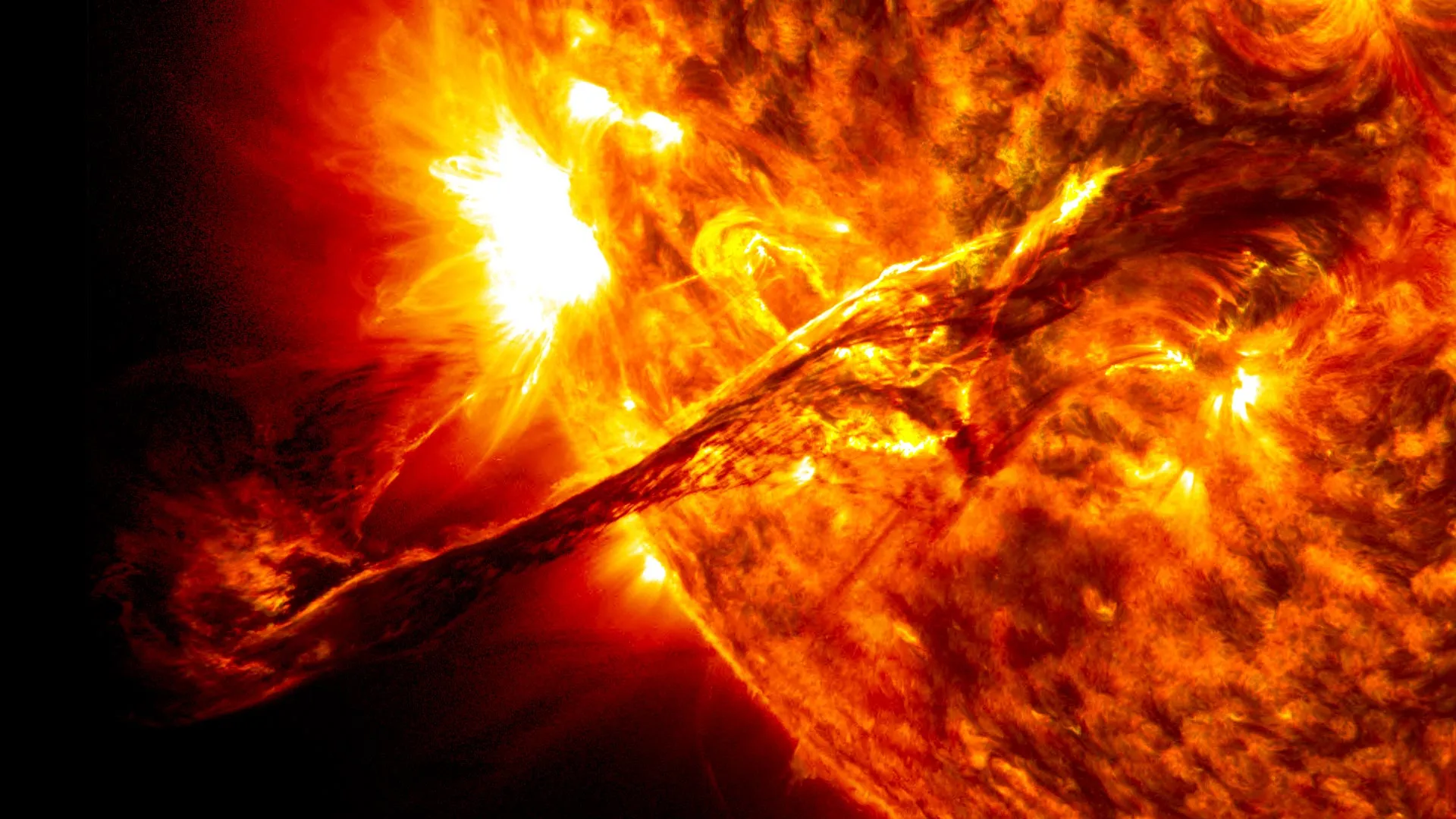
The layer is called the tachocline, a slender transition zone sandwiched between the Sun's inner radiative zone, where energy crawls outward as radiation, and its churning outer convective zone, where hot plasma boils and rises. Despite the violent motions around it, the tachocline remains remarkably narrow, and physicists have long suspected it plays an outsized role as the main amplifier of the Sun's magnetic field. That magnetic engine is what powers the roughly 11-year cycle of solar activity, spawning the flares and coronal mass ejections that drive space weather.
Using state-of-the-art computer models, the team behind the NASA-funded center known as COFFIES produced a scenario that reveals a self-reinforcing relationship: the tachocline is essential to driving the solar dynamo, while a fluctuating magnetic field generated by that same dynamo is, in turn, key to keeping the tachocline pinned to its signature thinness. In other words, the layer and the magnetism it feeds appear to hold each other in check, a feedback loop that could explain the confinement that has puzzled solar physicists for years.
The research was carried out by University of California, Santa Cruz applied mathematics professor Nicholas Brummell and postdoctoral scholar Loren Matilsky, who study the tachocline as part of the COFFIES collaboration, and the findings were published in The Astrophysical Journal. Their self-consistent global simulations represent the kind of high-resolution modeling that has only recently become feasible, letting scientists watch the interplay of rotation, convection and magnetism unfold across the solar interior.
The payoff is not merely academic. Space weather — the flares, particle storms and coronal mass ejections born of the Sun's magnetic activity — can threaten astronaut safety, disrupt satellite communications, degrade GPS navigation and even damage power grids on the ground. Understanding what governs the tachocline, and by extension the dynamo it drives, is central to any hope of forecasting those outbursts with more warning.
Much work remains before the models can reliably predict individual solar storms, and the researchers caution that the Sun still guards plenty of secrets. But by pinning down a mechanism that keeps its most enigmatic layer razor-thin, the team has tightened a crucial link in the chain of physics that connects the Sun's hidden interior to the technology-dependent world 93 million miles away.