New Cosmic Map Suggests the Universe Isn't the Same in Every Direction — and Cosmology May Need a Rethink
Data from the DESI survey point to a lopsided cosmos, with galaxy patterns stretching across billions of light-years that clash with a bedrock assumption behind modern cosmology.
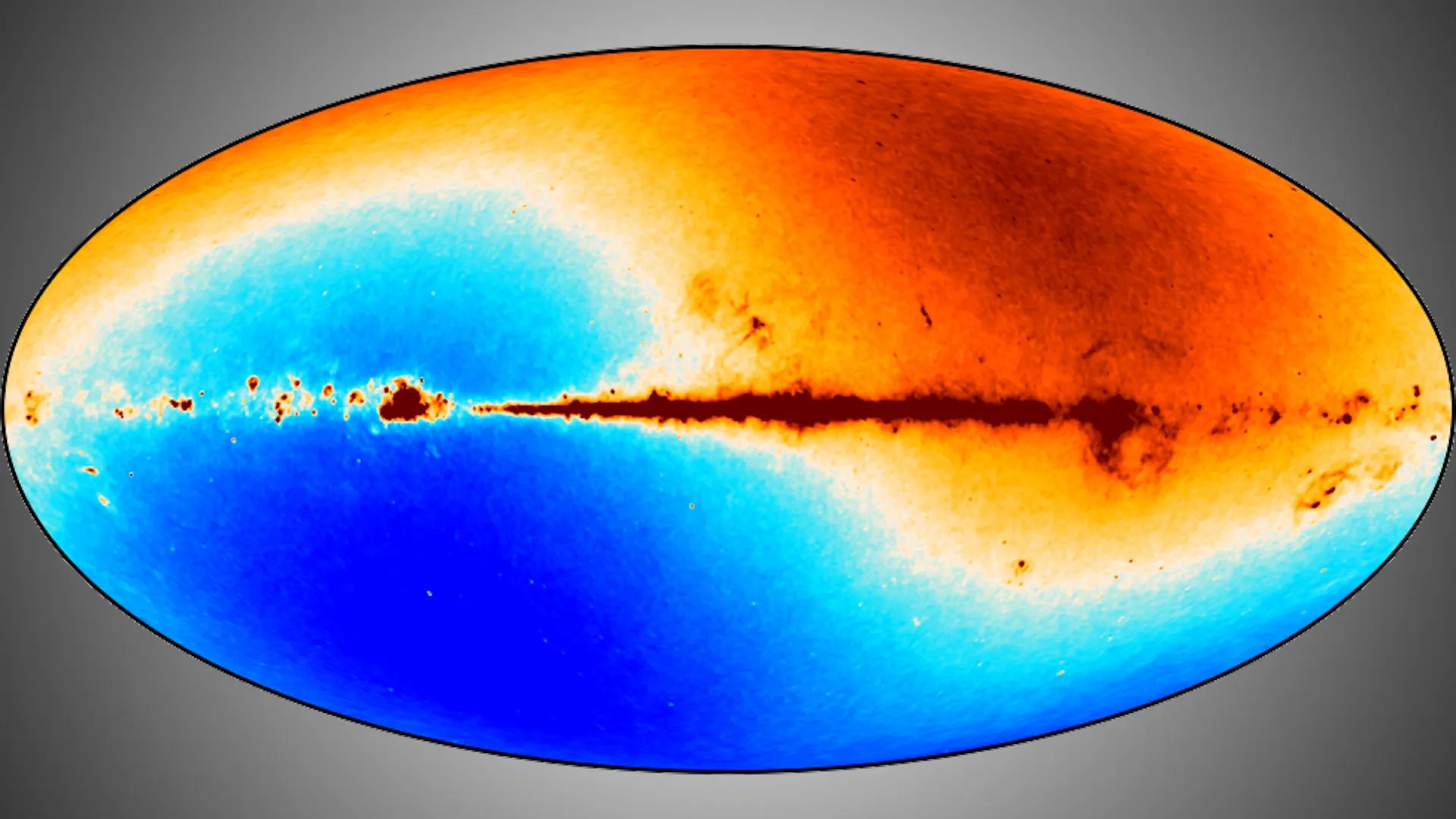
One of the load-bearing assumptions of modern cosmology is that the universe, viewed on a large enough scale, looks essentially the same in every direction — smooth, even and without a preferred axis. New evidence is now shaking that pillar, suggesting the cosmos may be subtly lopsided in ways that could force physicists to rethink some of their most basic ideas.
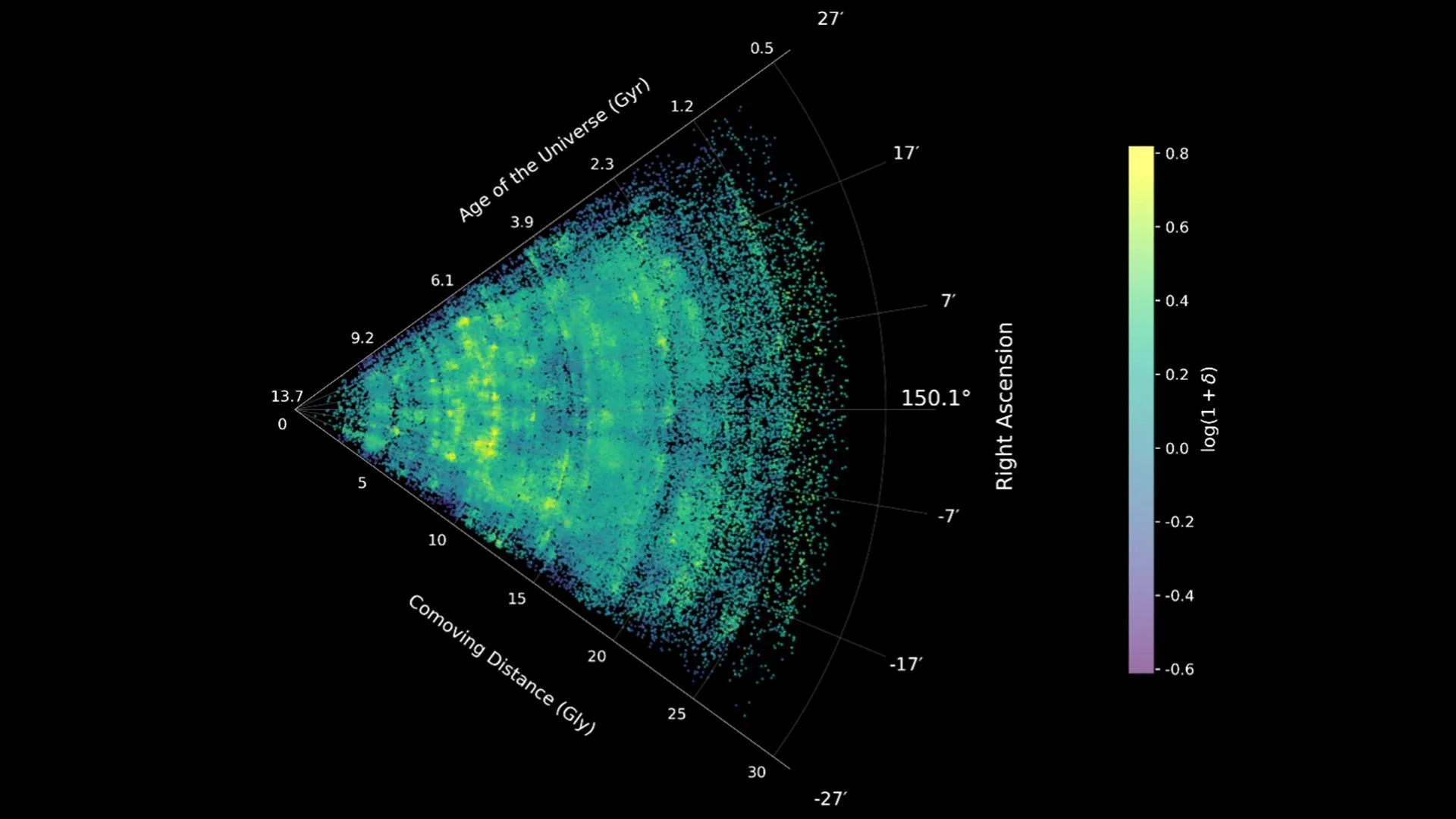
Using data from the Dark Energy Spectroscopic Instrument (DESI), researchers found that the distribution of galaxies does not appear to smooth out on the very largest scales as expected. Instead, they detected directional patterns — structure that seems to favor certain orientations — extending across distances of several billion light-years. If the universe truly obeyed perfect uniformity, no such large-scale directionality should exist.
At the heart of the puzzle is what scientists call the cosmic dipole anomaly. When astronomers map the distribution of distant galaxies and quasars, the pattern does not line up with the one seen in the cosmic microwave background, the faint afterglow of the Big Bang that blankets the sky. Those two maps should tell the same story about the universe's overall motion and structure. That they disagree hints at something missing from the standard picture, in which matter is assumed to be spread evenly with no special direction.
The stakes are high because the assumption under threat — known as the cosmological principle — underpins the mathematics used to describe the entire universe, from the expansion driven by dark energy to the gravitational scaffolding shaped by dark matter. If the cosmos really does have a preferred direction, physicists may have to revisit what dark matter is, how gravity molds matter on the grandest scales, and whether the models that have guided the field for a century need serious revision.
Researchers are quick to caution that the case is not closed. Subtle observational biases can masquerade as cosmic asymmetry, and extraordinary claims about the shape of the universe demand extraordinary scrutiny. But the results, drawn from a survey mapping millions of galaxies and echoed in analyses published in leading journals, are hard to dismiss outright. If they hold up under further data, they would mark one of the most consequential shifts in cosmology in decades — a hint that the universe is stranger, and less orderly, than the tidy equations have long assumed.