Harvard Turns a Silicon Chip Into a DNA Writer, Printing 64 Strands at Once
Using electric currents and water-based enzymes, a semiconductor chip synthesized 64 DNA sequences in parallel — a cleaner alternative to conventional DNA manufacturing.
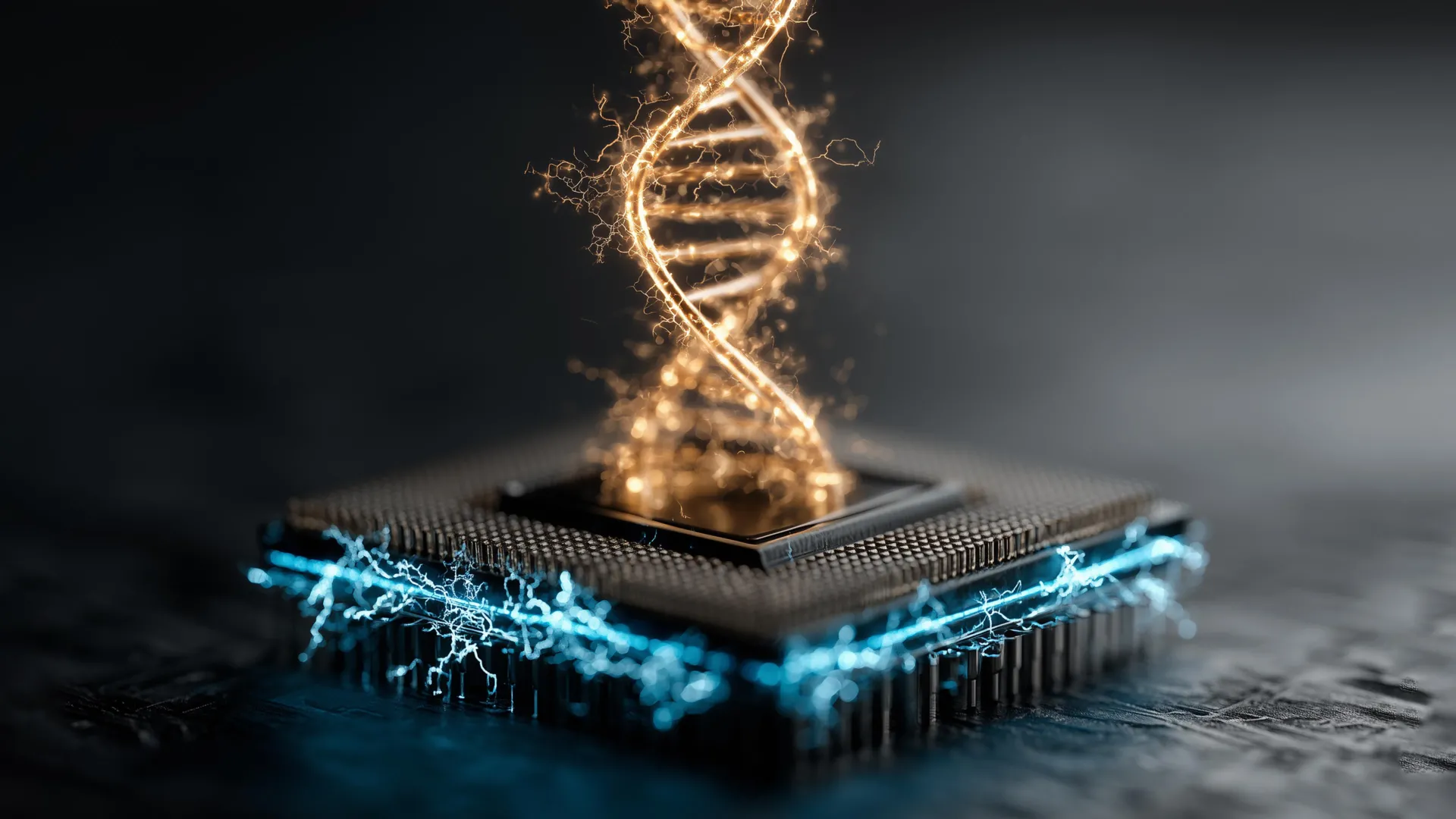
Harvard scientists have turned an ordinary silicon chip into a miniature DNA factory, using finely controlled electric currents to write 64 different strands of genetic code at the same time — a milestone that points toward cleaner, more compact ways of manufacturing DNA.
The chip performs what is known as enzymatic DNA synthesis, a gentler cousin of the chemistry that dominates today's DNA industry. Conventional manufacturing builds DNA one letter at a time using harsh solvents and reagents, a reliable but wasteful process. The enzymatic approach instead uses water and biological enzymes that more closely mimic the way living cells assemble DNA naturally, promising less toxic waste and greater compatibility with delicate biological materials.
The breakthrough is in the parallelism. The Harvard team's semiconductor chip choreographs many reactions at once, applying precisely tuned electric currents to trigger chemistry at individual sites across its surface. That allowed the device to synthesize 64 distinct DNA sequences simultaneously, each as long as 39 nucleotides — the individual chemical "letters" that spell out genetic information. Previous enzymatic demonstrations had been stuck at roughly a dozen sequences at a time, so the leap to 64 marks a significant new benchmark for the technology.
Making the process electronic rather than purely chemical is what unlocks that scale. Because the chip controls each reaction site with electric signals, the same semiconductor fabrication techniques that pack billions of transistors onto a fingernail-sized wafer could, in principle, be adapted to pack ever more DNA-writing sites onto a single surface. That marriage of biology and microelectronics is what has researchers excited about where the approach could lead.
The potential applications stretch well beyond the laboratory bench. Compact, chip-based DNA writers could one day put synthesis capabilities into portable devices, letting researchers or clinicians make custom DNA on demand rather than ordering it and waiting days for delivery. Further out, the same technology could feed the emerging field of DNA data storage, which aims to archive vast amounts of digital information in the extraordinarily dense medium of genetic molecules.
Significant hurdles remain before any of that arrives. The researchers note that new chemistry will be needed to build longer sequences and to push the number of parallel reactions higher still, and moving from a proof-of-concept chip to a manufacturable product is a substantial engineering challenge. Even so, by proving that a standard silicon platform can write dozens of DNA strands at once with electricity and water, the work sketches a plausible path toward DNA synthesis that is faster, greener and small enough to fit on a chip.