Dying Stars Kick Themselves Across the Galaxy by Firing Off Gas Blobs, Study Finds
A Caltech astrophysicist calculates that lopsided eruptions from bloated, dying sun-like stars act like thousands of tiny rocket thrusts, nudging the stars to speeds of about a kilometer per second.

Dying stars may not go gently. New research suggests that sun-like stars in the throes of death give themselves a slow, steady kick, hurling off asymmetric blobs of gas that act like thousands of tiny rocket thrusters and gradually shove the star across space.
The idea, put forward by theoretical astrophysicist Jim Fuller of the California Institute of Technology, addresses a long-standing puzzle about the corpses of stars. Astronomers have observed that white dwarfs — the dense, Earth-sized embers left behind when stars like the sun exhaust their fuel — often move a bit faster than the stars they came from, as if something had given them a push during their death throes. But the source of that push, or "kick," has been unclear.
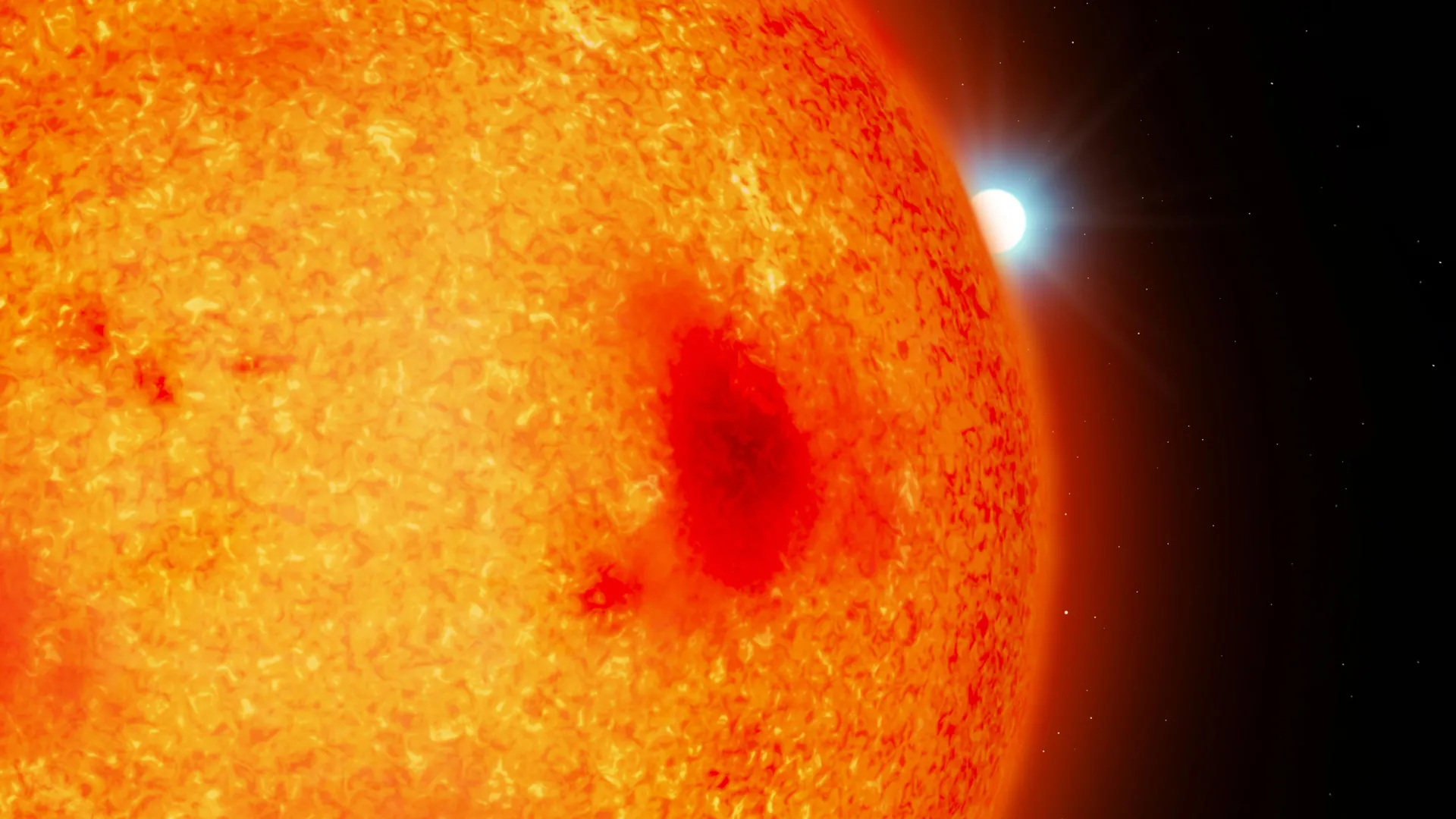
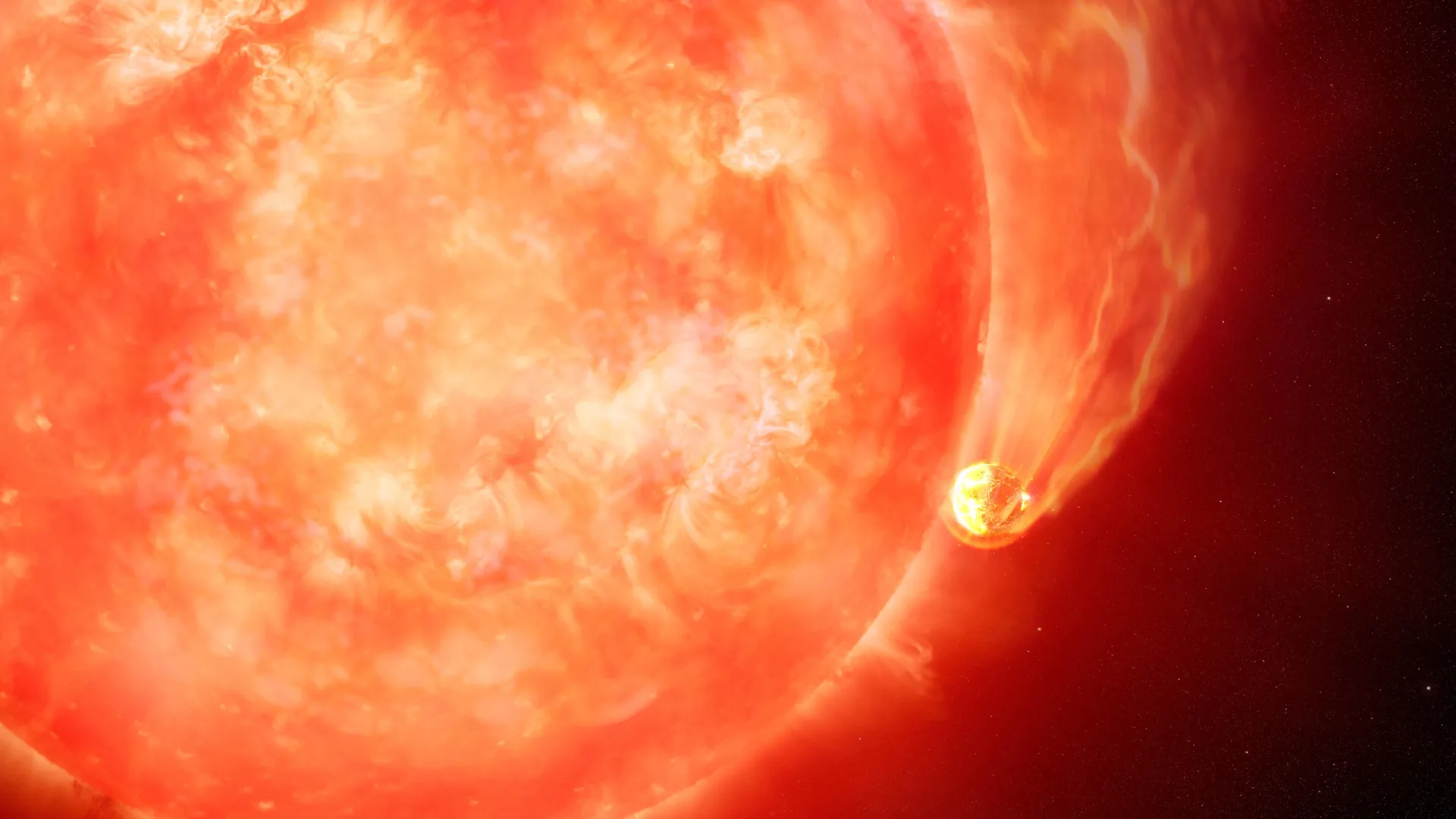
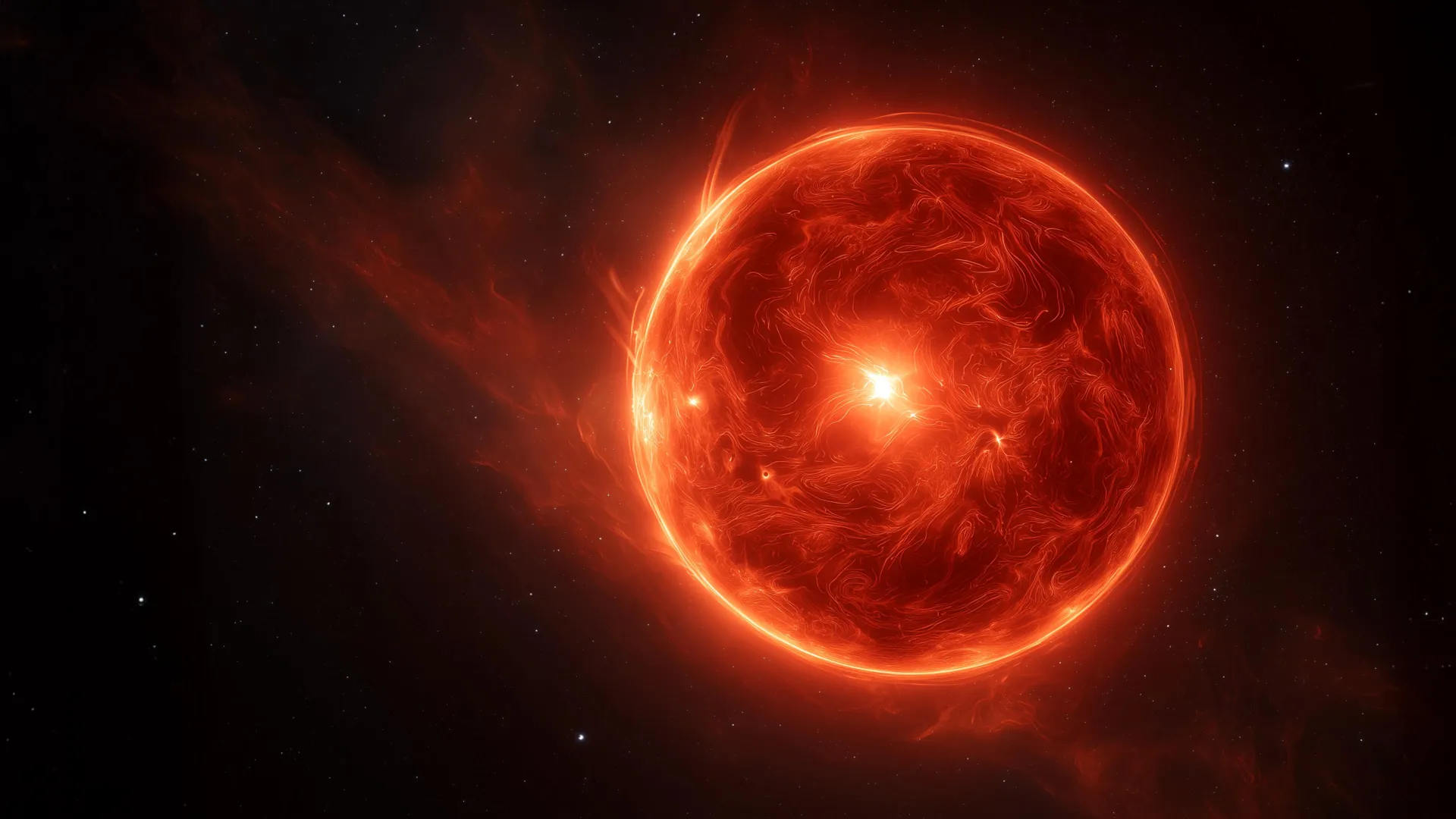
Fuller's answer lies in the messy way these stars shed their outer layers. As a sun-like star swells into a bloated red giant near the end of its life, it does not lose mass smoothly in all directions. Instead, "blobs of matter are chaotically being ejected from the surface ... in an asymmetric fashion," Fuller explained. Each lopsided burst of gas carries momentum away in one direction, and, by Newton's third law, the star recoils in the other. "For every action there is an equal and opposite reaction," he noted.
Individually, any single eruption points in a random direction, so at first glance the pushes might seem to cancel out. But they do not cancel perfectly. According to Fuller's calculations, over roughly 300,000 years a dying star unleashes on the order of 10,000 separate ejections. Through a statistical process akin to a random walk — where small, haphazard steps still add up to net movement — those countless little shoves accumulate into a coherent push. The result is enough to accelerate the star to about one kilometer per second, matching the extra speed seen in real white dwarfs.
The framework, which Fuller describes as producing "white dwarf kicks via episodic mass ejection," offers a tidy physical explanation for observations that had lacked one, tying together the violent, uneven death of a star with the motion of the remnant it leaves behind. The findings were submitted to the journal Publications of the Astronomical Society of the Pacific.
Because the sun itself will one day pass through this red-giant phase before collapsing into a white dwarf, the work also sketches a distant chapter of our own solar system's future. Billions of years from now, as the sun sheds its outer envelope in fits and spurts, it too may give itself a final, gentle kick — a parting nudge from a star at the end of its life.