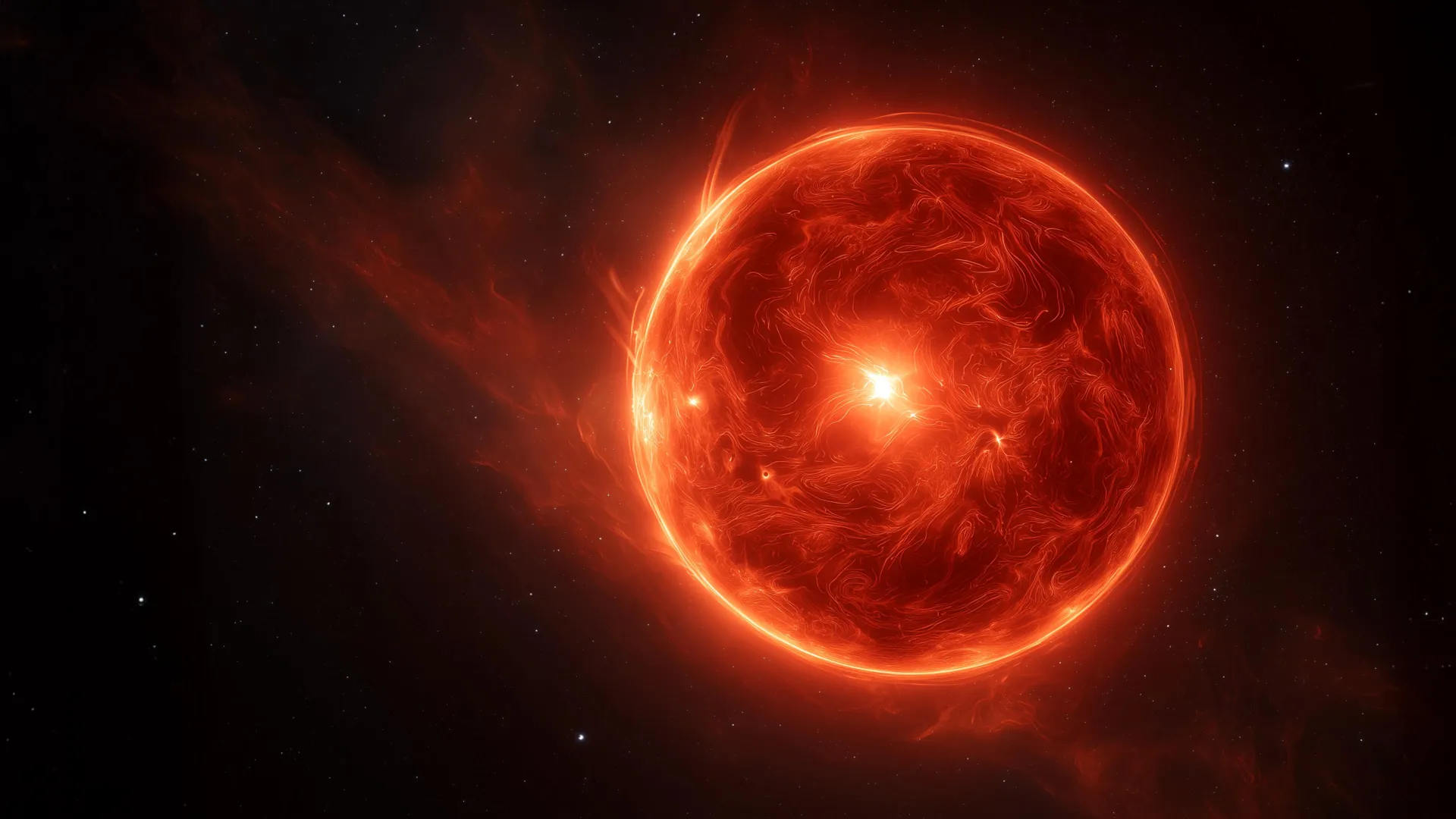
Dying Stars Are Devouring Their Planets: Survey of 500,000 Stars Confirms Tidal Destruction in Our Galaxy
UCL and University of Warwick astronomers found that close-in giant planets are three times rarer around evolved red giants than younger post-main sequence stars, providing the strongest statistical evidence yet that aging stars systematically consume nearby worlds.
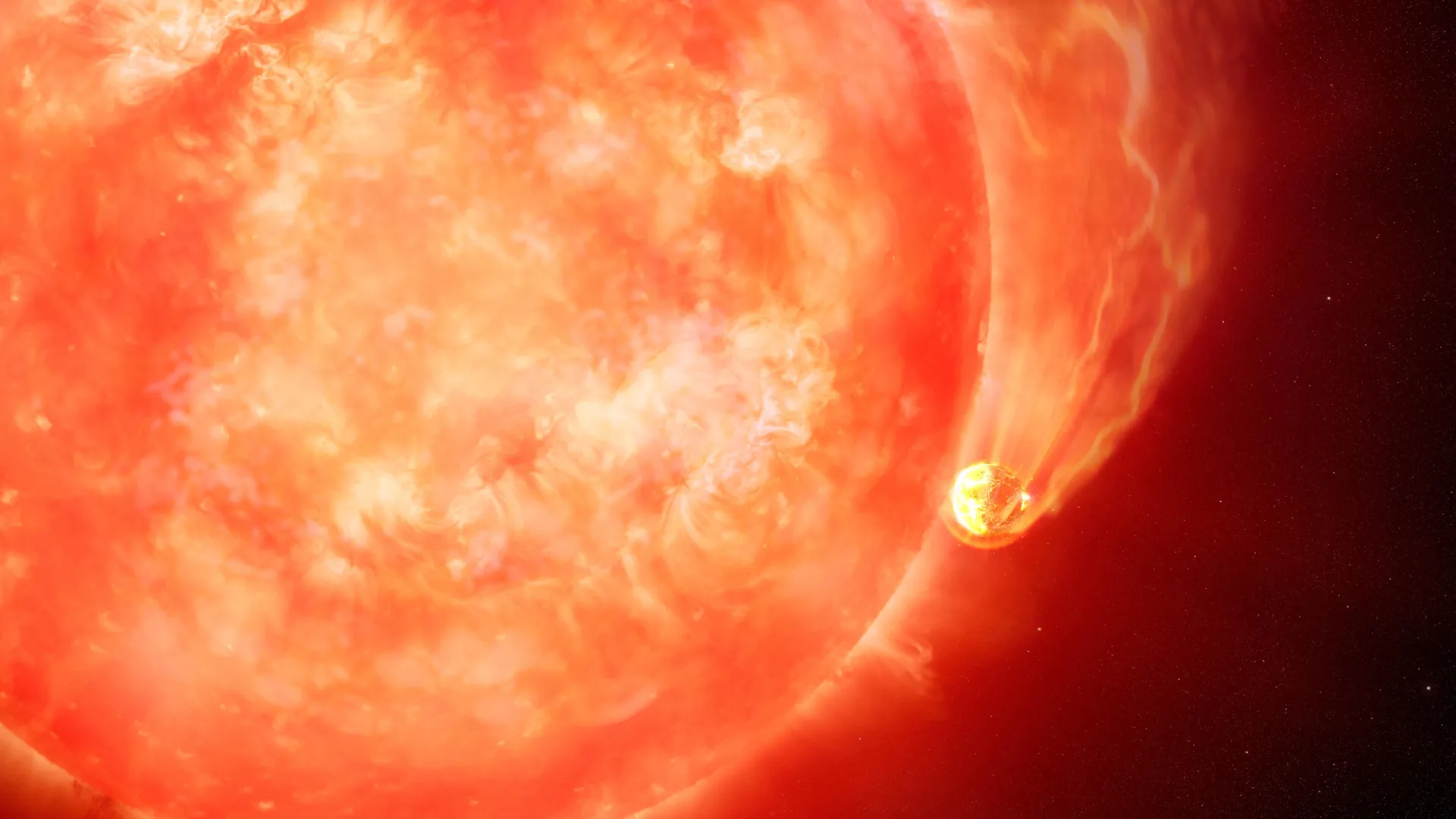
A comprehensive survey of nearly 500,000 stars in the twilight phase of their lives has revealed that massive planetary systems are being systematically consumed as those stars expand into red giants — a cosmic catastrophe that scientists say gives a chilling preview of what will eventually befall our own solar system in approximately 5 billion years.
The study, conducted by astronomers at University College London and the University of Warwick and published in the Monthly Notices of the Royal Astronomical Society, analyzed stars that have already completed the hydrogen-burning phase of their lives and are now in the early stages of evolving off the main sequence. Using data from NASA's TESS satellite and ground-based observatories, the team identified 130 giant planets and candidates orbiting dangerously close to these aging stars — including 33 previously unknown planetary candidates.
The research revealed a stark statistical decline. Younger post-main sequence stars host close-in giant planets at a rate of 0.35 percent of the stellar population. Among more evolved red giants, that figure drops to just 0.11 percent. The most straightforward explanation, the authors conclude, is that the missing planets have already been destroyed — drawn inward by tidal forces and ultimately consumed by their expanding parent stars.
"This is strong evidence that as stars evolve off their main sequence, they can quickly cause planets to spiral inward and be devoured," said Dr. Edward Bryant of UCL, the study's lead author. The mechanism responsible is tidal interaction — the same gravitational dance that the Moon uses to pull Earth's oceans into tides, but vastly more powerful at stellar scales. As a star expands, the gravitational tug it exerts on nearby planets strengthens, slowing their orbital velocity and causing their orbits to decay until the planets either disintegrate from tidal stress or plunge directly into the star's outer atmosphere.
The study focused specifically on giant planets with orbital periods shorter than 12 days — planets so close to their parent stars that they complete a full orbit in less than two weeks. These "hot Jupiters," as astronomers call them, are particularly vulnerable during the red giant phase because their tight orbits bring them within the expanding stellar envelope. The research analyzed observations from nearly half a million post-main sequence stars, making it one of the largest statistical studies of planetary populations around evolved stars ever undertaken.
Perhaps the most arresting conclusion of the paper is what it implies for Earth's long-term fate. Co-author Dr. Vincent Van Eylen of UCL noted that "unlike the missing giant planets in our study, Earth itself might survive the Sun's red giant phase," because Earth orbits at a distance the Sun's expanding envelope may not quite reach. Mercury and Venus, however, are almost certainly doomed by the same tidal mechanisms identified in the study.
The findings add to a growing body of evidence that planetary destruction during stellar evolution is not a rare or exotic occurrence but a near-universal feature of how solar systems end. Previous individual observations had captured stars in the act of consuming planets, but this study provides the first large-scale statistical confirmation that the rate of destruction accelerates systematically as stars age.
The research was funded by the UK Science and Technology Facilities Council. The team plans to extend the survey using data from the forthcoming European Space Agency's PLATO mission, which will monitor hundreds of thousands of stars for transiting planets and provide a far larger sample of evolved stellar systems to study.