Hubble Uncovers Four Hidden White Dwarfs Lurking Beside Red Dwarfs in Our Cosmic Backyard
Astronomers at Warwick and Colorado used Hubble's ultraviolet vision to pull four dead stars out of the glare of brighter companions — one just 25 light-years away, now the ninth-closest white dwarf to the Sun.
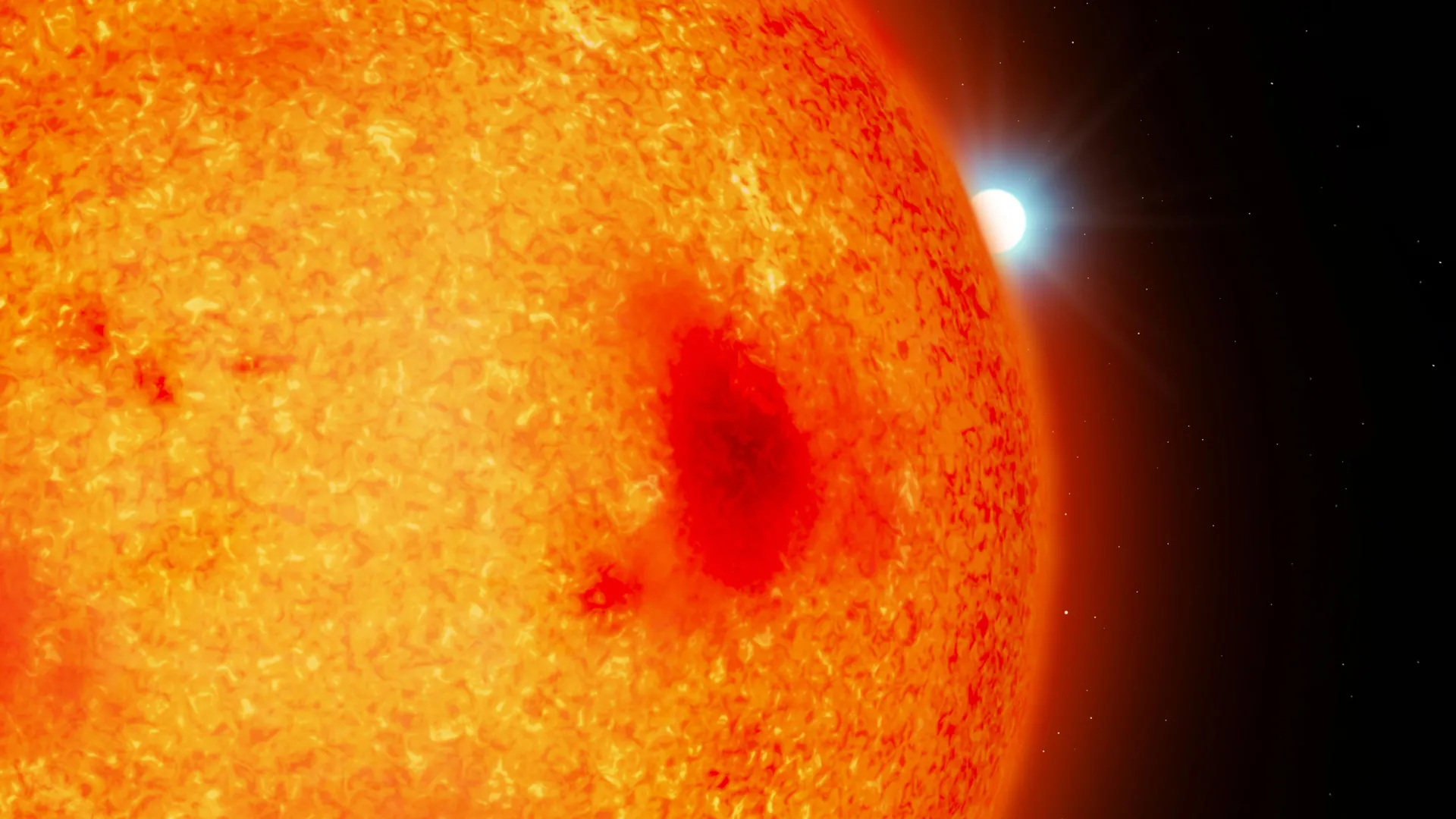
Astronomers have discovered four white dwarf stars hiding in plain sight in Earth's cosmic neighborhood, each concealed by the glare of a brighter red dwarf companion that had masked its presence for years — in one case, for nearly three decades.
White dwarfs are the dense, burned-out cores left behind when stars like the Sun exhaust their fuel and shed their outer layers. Roughly the size of Earth but packing the mass of a star, they are faint and easy to miss, especially when they orbit alongside a more luminous partner whose light drowns them out. That is exactly what happened with the four newfound systems: G 203-47, GJ 207.1, LHS 1817 and Wolf 1130.
Every one of the systems lies within 65 light-years of Earth, making them close neighbors in galactic terms. One of the white dwarfs sits just 25 light-years away and now ranks as the ninth-closest known white dwarf to the Sun — a striking find so near home that had gone unconfirmed for close to 30 years. The discovery, made by researchers at the University of Warwick and the University of Colorado Boulder, was published in the journal Monthly Notices of the Royal Astronomical Society.
The breakthrough came from an ultraviolet spectrograph aboard the Hubble Space Telescope. Because white dwarfs are extremely hot, they glow brightly in ultraviolet light even when they are dim in visible wavelengths. By training Hubble's ultraviolet instrument on the systems, the team was able to separate the faint signature of each white dwarf from the overwhelming light of its red dwarf companion and characterize the hidden star directly for the first time.
The work was not simply a matter of pointing and looking. Red dwarf stars are notoriously restless, unleashing energetic flares that can produce ultraviolet signatures closely resembling those of a white dwarf. To avoid being fooled, the researchers developed specialized calibration methods that could distinguish a genuine stellar corpse from a flaring companion, confirming that four hidden white dwarfs were really there.
Finding dead stars so close to home helps astronomers refine their census of the solar neighborhood and better understand how common such hidden systems may be. If four white dwarfs could escape detection within 65 light-years, many more may be lurking behind brighter partners across the galaxy — waiting for the right ultraviolet eyes to pick them out.