
Physics
Webb Spots a Possible Supernova Just Days After the Star Exploded
A transient called AT 2026abck, in a galaxy at redshift 5.017, was caught four to 10 days after its blast without help from a gravitational lens, astronomers report.
Topic
18 stories from Planck Standard. Latest: October 17, 2026.
A transient called AT 2026abck, in a galaxy at redshift 5.017, was caught four to 10 days after its blast without help from a gravitational lens, astronomers report.

GRB 220706A kept flaring in X-rays for about 51 days after detection, and its central engine stayed active roughly 20 days longer than any burst on record. No single explanation fits every detail.

In 195 simulated star deaths, adding neutrino 'flavor' changes flipped many stars between 16 and 30 solar masses from supernovae to silent black holes, which could explain why astronomers see fewer explosions than expected.

The Einstein Probe caught the faintest X-ray shock breakout ever seen from this class of supernova. Two independent teams found no jet, no burst, and a 20-solar-mass Wolf-Rayet star that should have made both.

The Jellyfish Nebula turns out to have a sibling. A Stanford-led team used 16 years of gamma-ray data to show the two remnants came from a single binary system — a pairing never seen before.
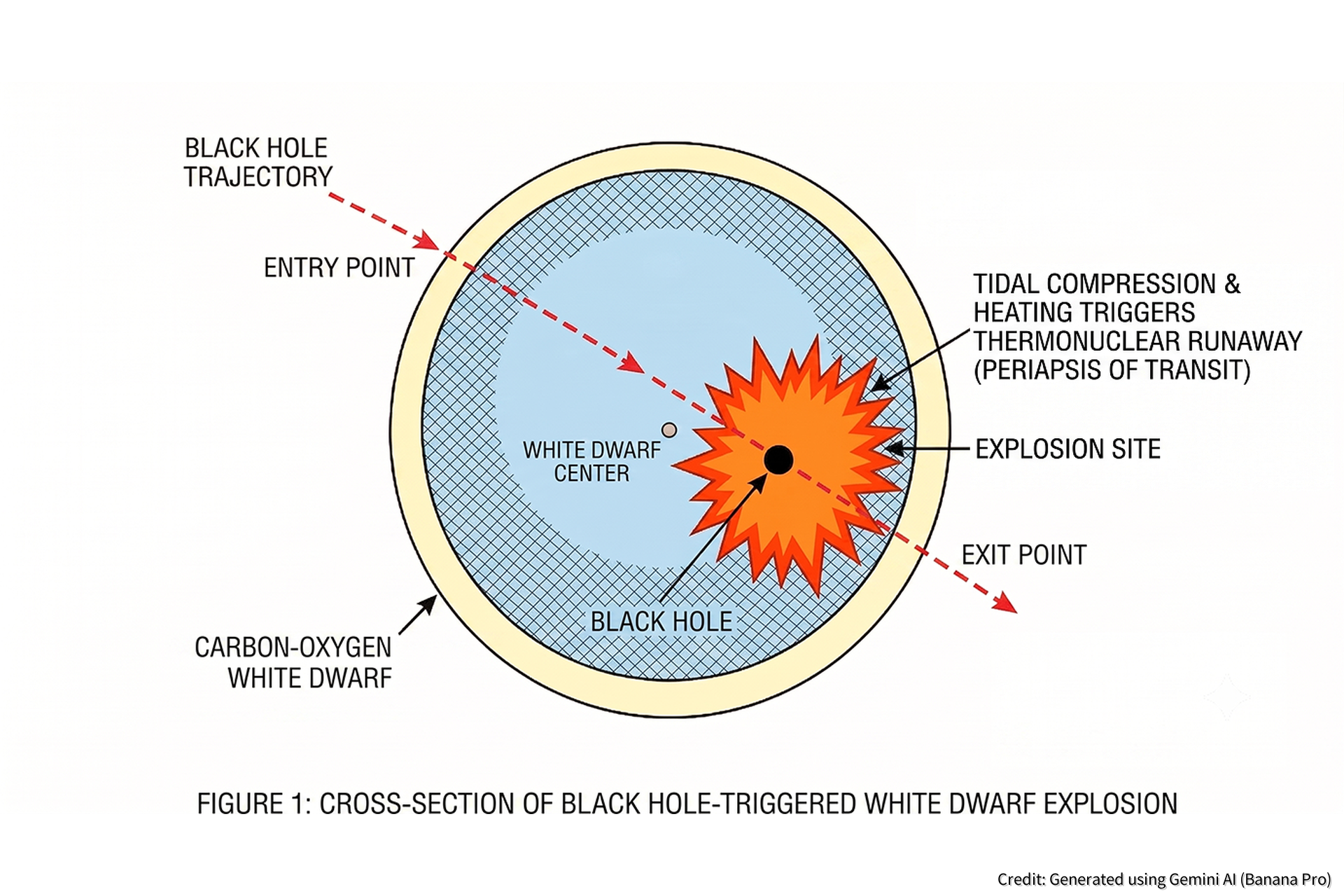
A team led by SUNY Poly and the Kavli IPMU finds that a primordial black hole passing through a white dwarf could tidally heat it into a thermonuclear runaway — and that the resulting explosions would leave a distinctive chemical signature already visible in the Milky Way.

A rising, bird-like pattern in an exploding star's light gave away the birth of one of the universe's most magnetic objects — and forced Einstein's relativity into the story of a supernova for the first time.
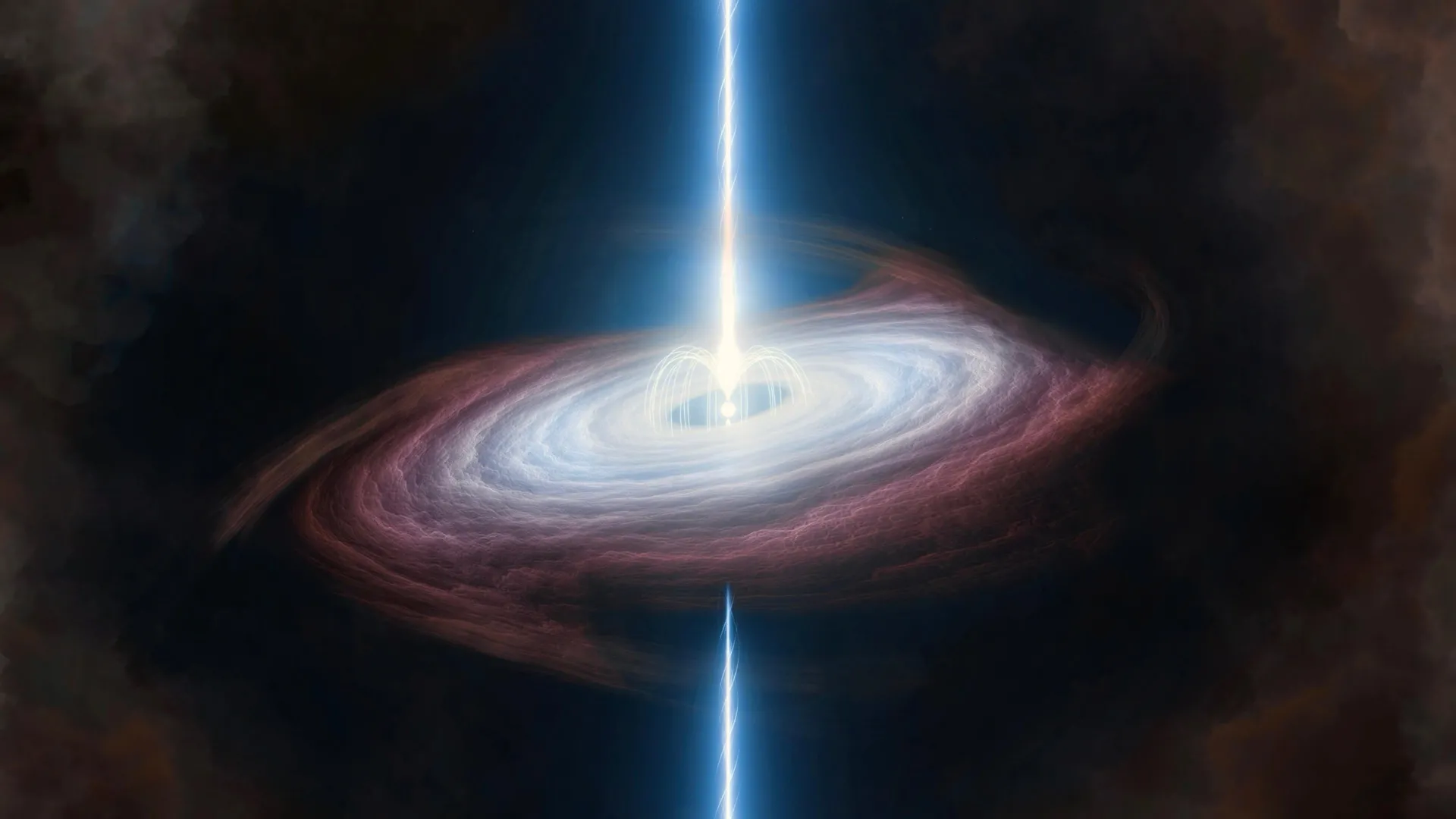
Watching a distant supernova flicker four times in a quickening rhythm, astronomers caught the moment an ultra-magnetic neutron star switched on — and saw Einstein's relativity at work in an exploding star.

Following a gamma-ray burst to its source, the James Webb Space Telescope caught a collapsing massive star from the cosmic dawn and, for the first time at such a distance, imaged its faint host galaxy.

Nearly two decades of NASA data revealed that a rapidly spinning magnetar powered superluminous supernova SN 2017egm, helping settle a long debate over what drives the universe's brightest stellar explosions.
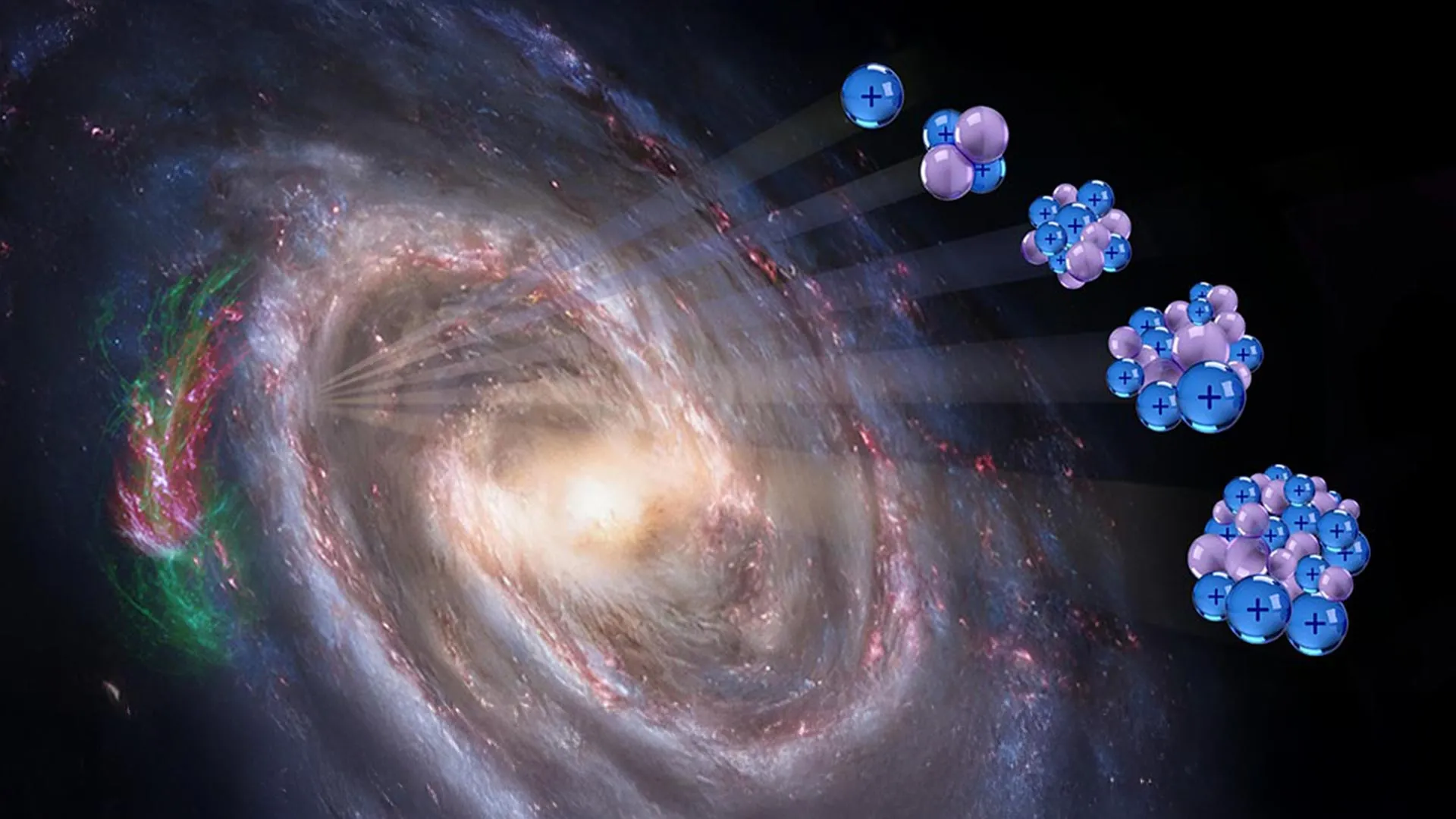
Researchers using the DAMPE space telescope uncovered a hidden rule governing ultra-powerful particles that travel across the galaxy, potentially solving one of physics' longest-standing puzzles.
Breakthrough experiment measures key reaction creating selenium-74, shedding new light on supernova nucleosynthesis while revealing gaps in current theories.

Breakthrough experiment directly measured how arsenic-73 captures protons to form selenium-74, shedding new light on the mysterious origin of proton-rich elements in supernovas.

International astronomers led by Stockholm University's Oskar Klein Centre discovered SN 2025mkn, a Type II supernova 9 billion light-years away whose light is bent and amplified by an entire foreground galaxy, creating a natural telescope of unprecedented power.

Breakthrough experiment directly measures key nuclear process that creates selenium-74 in supernova explosions, cutting uncertainty in stellar models by half.

A 45-scientist team at Michigan State's FRIB measured the arsenic-73 + proton reaction that occurs inside supernovae, cutting uncertainty in p-nuclei abundance predictions by 50% and advancing a 60-year-old astrophysics mystery.
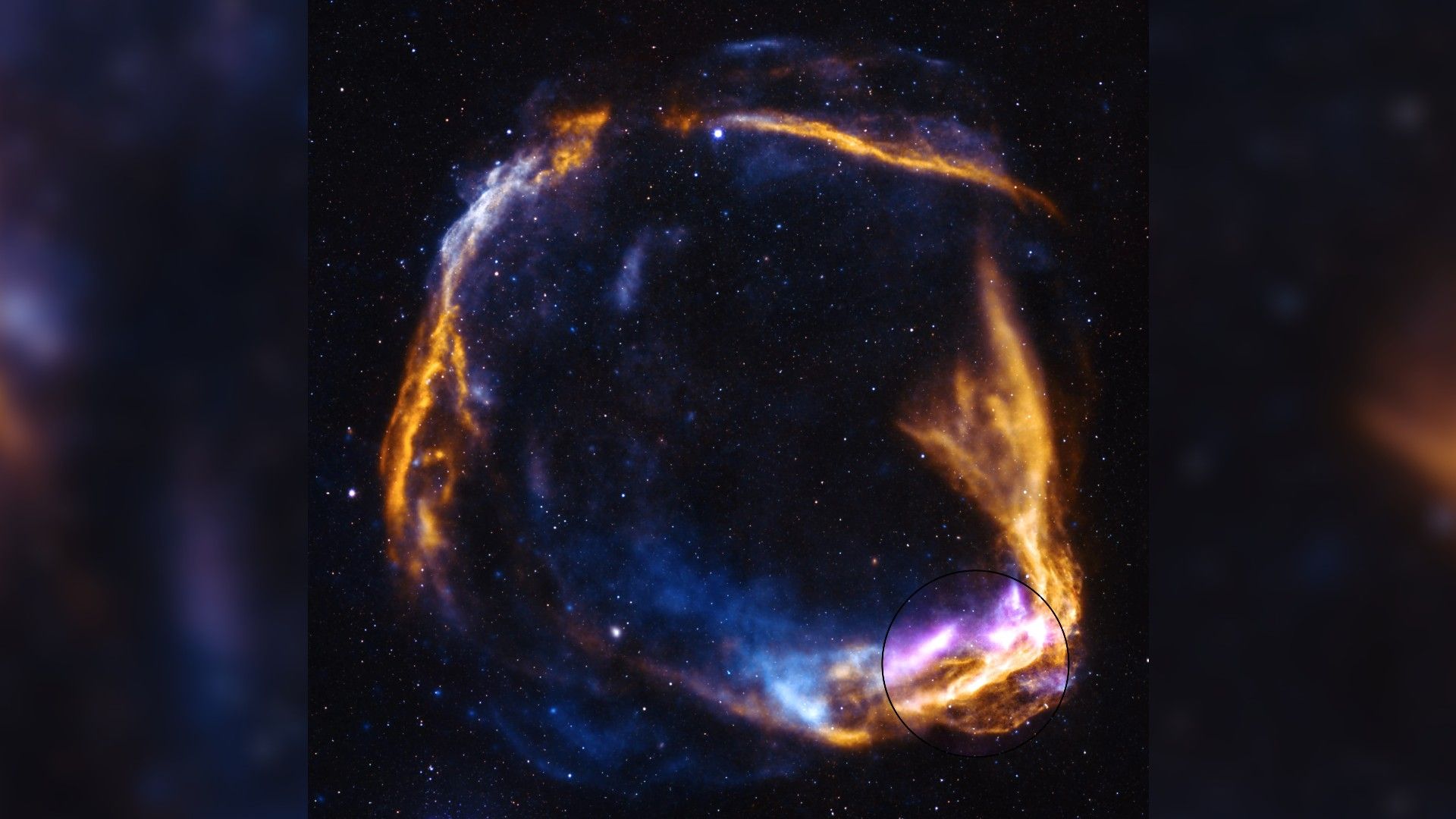
The Imaging X-ray Polarimetry Explorer spacecraft revealed new detail in the remains of a stellar explosion first recorded by Chinese astronomers in 185 AD, using polarized X-rays to map its magnetic fields.
An unprecedented superluminous supernova, split into multiple images by a foreground galaxy, may help resolve the Hubble Tension