A Black Hole 'Feeding Frenzy' May Solve the Mystery of Giant Black Holes in the Early Universe
New simulations suggest small 'seed' black holes gorged on gas faster than thought possible, explaining the monsters the James Webb telescope found just after the Big Bang.
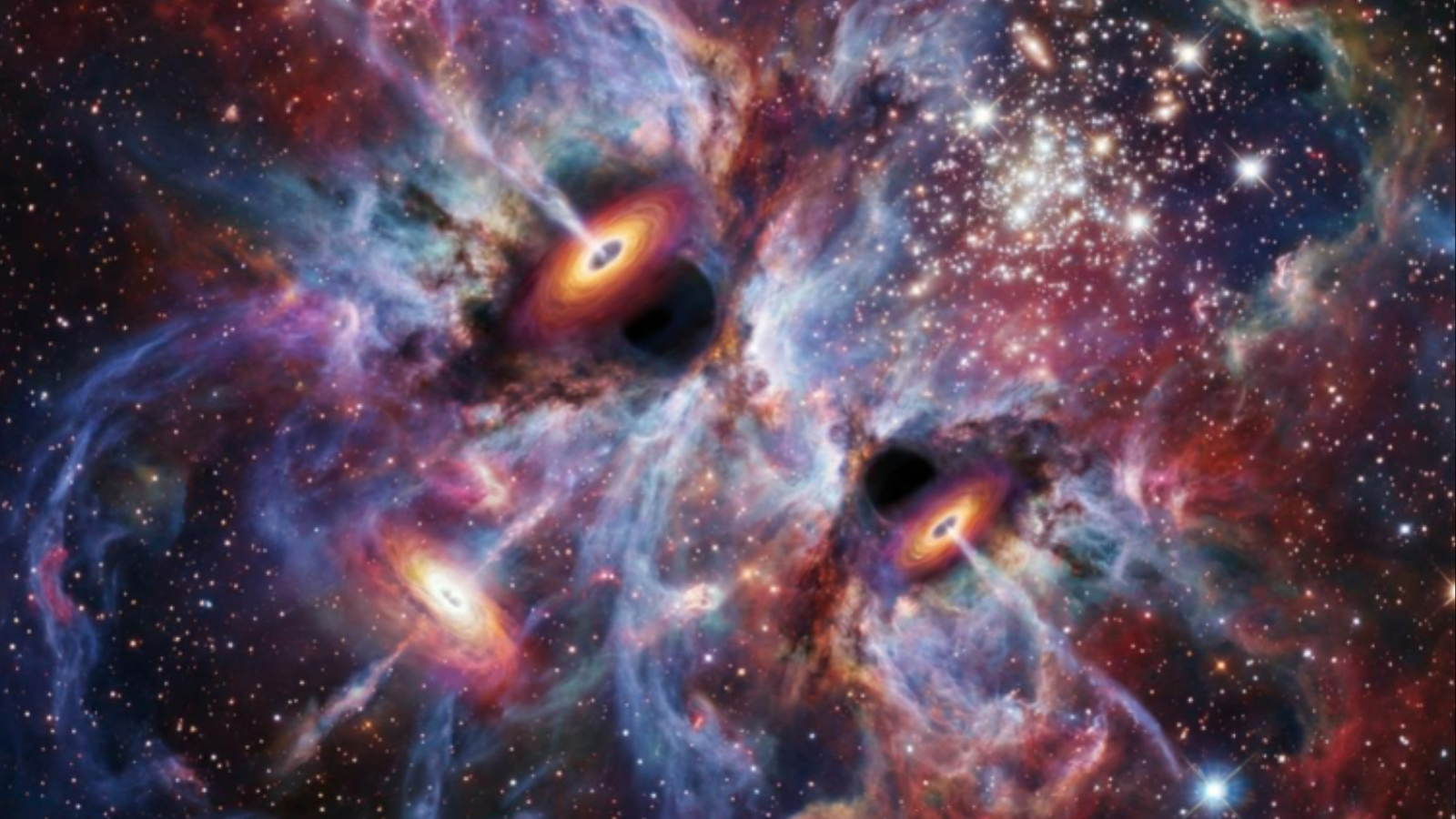
Astronomers may have cracked one of the most stubborn puzzles raised by the James Webb Space Telescope: how supermassive black holes managed to grow to enormous sizes when the universe was still in its infancy.
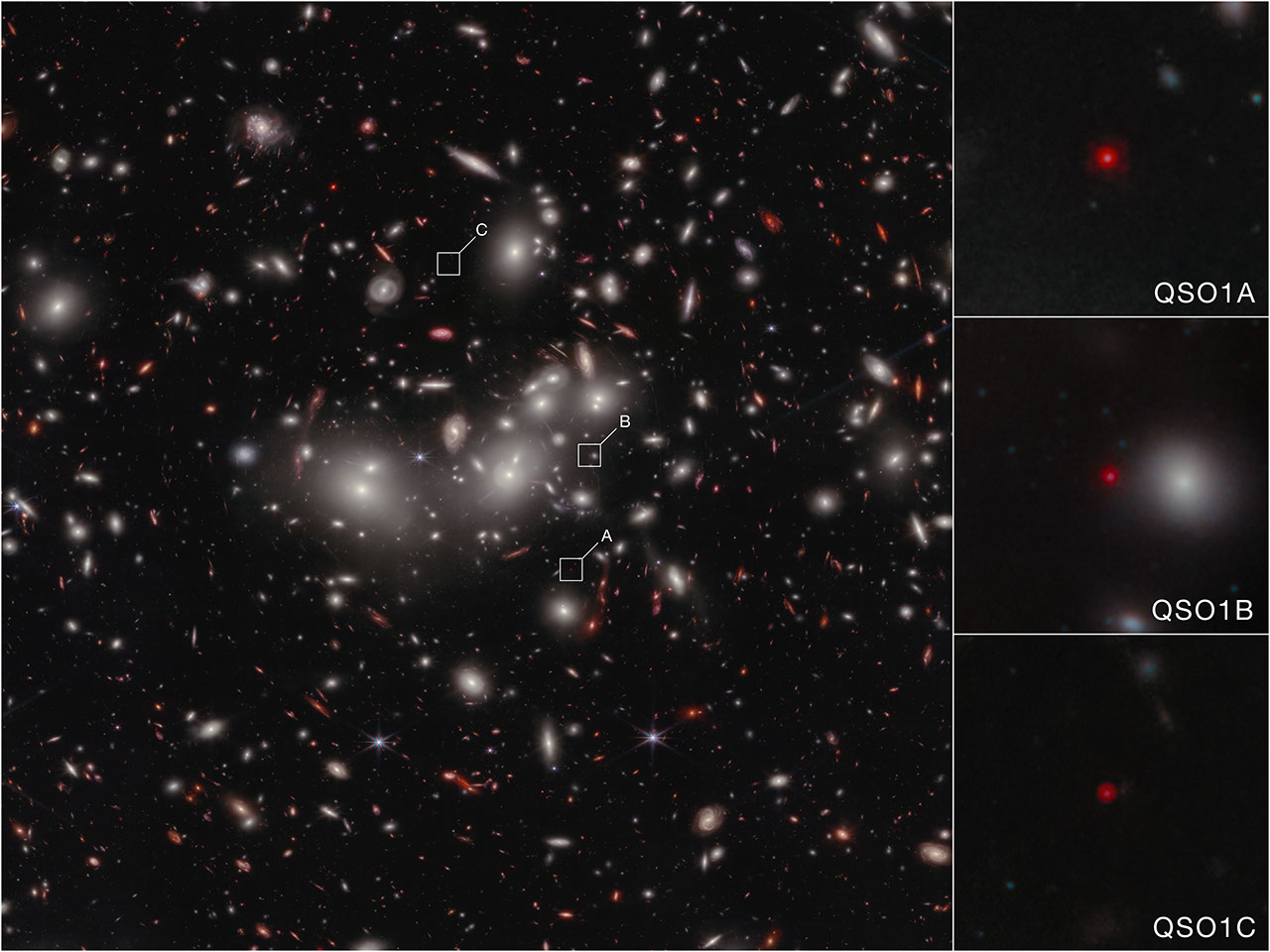
Since it began peering into the early cosmos, Webb has spotted supermassive black holes that existed just 500 million years after the Big Bang — far too early, according to standard theory, for them to have bulked up through the usual slow grind of mergers and steady feeding, which should take at least a billion years. The mismatch has forced cosmologists to ask whether something is missing from their picture of how these giants form.
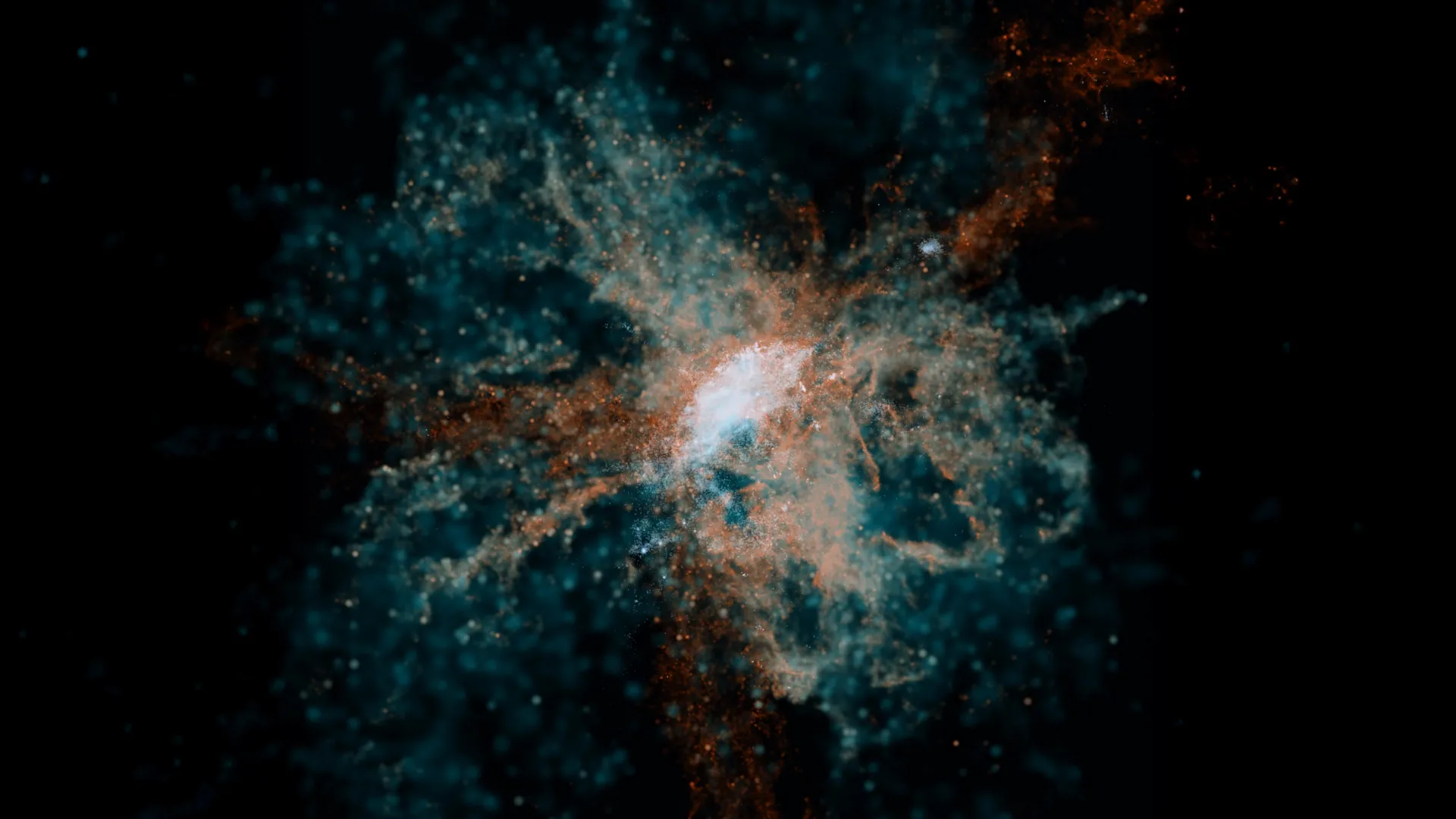
A new study from researchers at Maynooth University in Ireland offers an answer: a black hole "feeding frenzy." Using advanced computer simulations, Daxal Mehta and John Regan found that the turbulent, gas-rich conditions of early galaxies could let small black holes consume matter at rates far exceeding the so-called Eddington limit, the threshold at which radiation pressure from infalling material normally chokes off further feeding.
This process, known as super-Eddington accretion, would give modest "seed" black holes an explosive head start. "The first generation of black holes grew incredibly fast, into tens of thousands of times" the mass of the sun, said Mehta, the study's lead author. Once supercharged in this way, the seeds could merge and continue feeding to reach the supermassive scales Webb observes — all within the narrow window the early universe allows.
The findings, published in the journal Nature Astronomy, speak to a long-running debate over the origins of supermassive black holes. One camp favors "light seeds," the remnants of the first stars; another argues for "heavy seeds" born from the direct collapse of giant gas clouds. The Maynooth simulations suggest that even garden-variety, stellar-mass black holes can achieve extreme growth under the right conditions, potentially easing the need for exotic heavy seeds.
Crucially, the study reframes the Webb discoveries not as a crisis for cosmology but as a clue. Rather than demanding entirely new physics, the early giants may simply reflect how violently and efficiently matter fell together in the chaotic conditions following the Big Bang.
Confirmation will require new tools. Researchers say future gravitational-wave observatories — particularly the space-based LISA mission, slated to launch in the mid-2030s — could detect the ripples from early black hole mergers and test whether the feeding-frenzy scenario actually played out. For now, the work offers a physically grounded way to reconcile theory with the startling things Webb keeps finding in the dawn of the universe.