A Smiling Spider in the Himalayas Turns Out to Be a Doppelgänger of Hawaii's Famous 'Happy-Face'
Indian researchers found 32 color patterns in a single new species, Theridion himalayana, whose grinning markings evolved entirely separately from its celebrated Pacific look-alike.
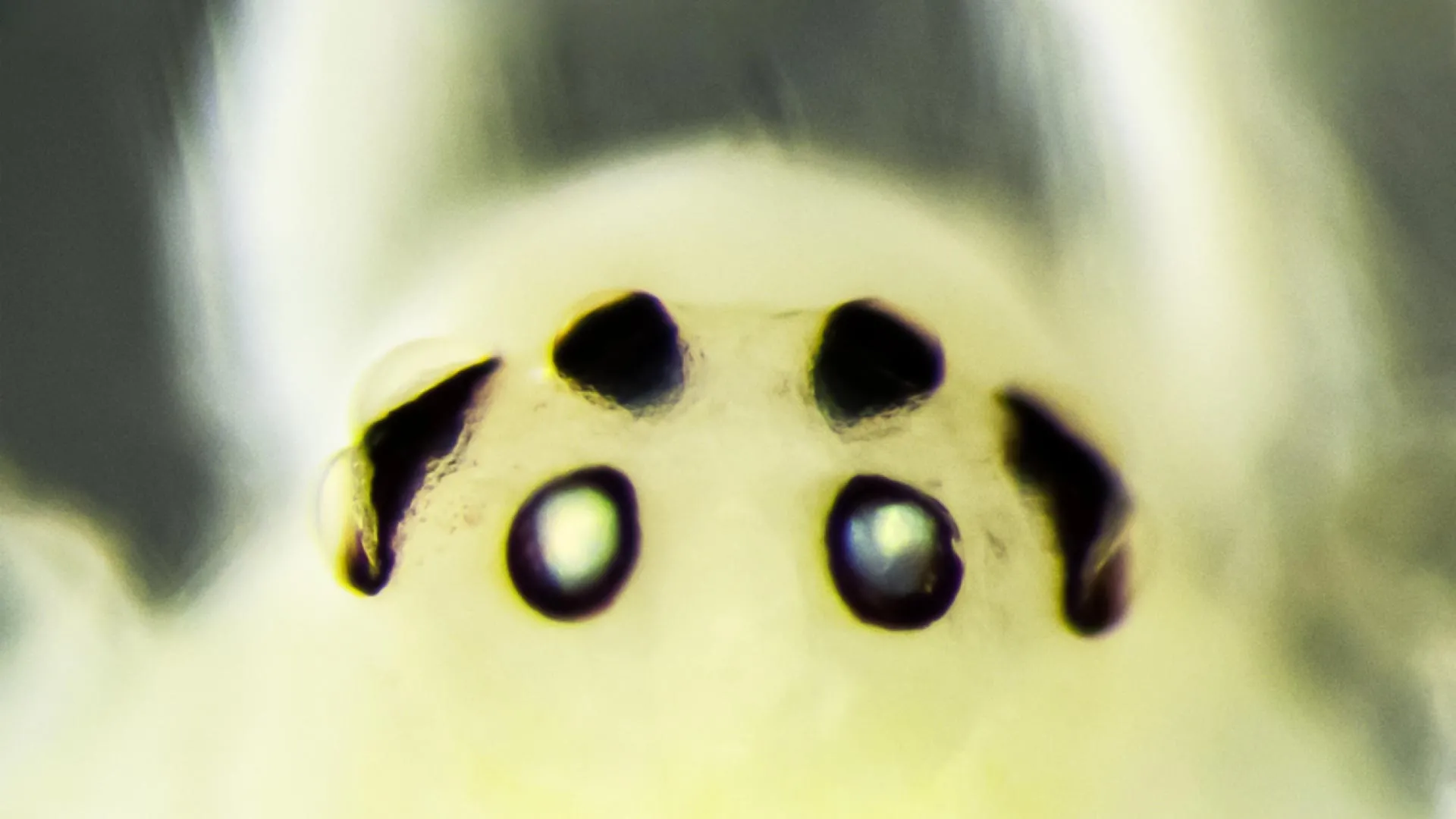
High in the Indian Himalayas, scientists have discovered a tiny spider with a grinning, mask-like pattern on its back that looks almost identical to Hawaii's beloved "happy-face" spider — even though the two evolved their smiles completely independently, an ocean and a hemisphere apart.
Researchers from India's Forest Research Institute and the Regional Museum of Natural History identified the new species in the mountains of Uttarakhand and named it Theridion himalayana. Their findings, published in the journal Evolutionary Systematics, describe an astonishing degree of variation: the team documented 32 distinct color patterns within the single species, a level of polymorphism rarely seen in any spider.
The resemblance to Hawaii's famous Theridion grallator is uncanny. That spider, a star of nature documentaries and conservation campaigns, is prized for the whimsical markings on its abdomen that can look like a smiling cartoon face. For a moment, the discovery raised the tantalizing possibility that the two were close relatives separated by a vast distance. DNA told a different story.
Genetic comparisons showed roughly 8.5% divergence between the Himalayan spiders and their Hawaiian look-alikes, far too much to be a single species or even recently related populations. Instead, the researchers concluded, the two lineages arrived at nearly the same appearance on their own — a textbook example of convergent evolution, in which unrelated organisms independently evolve similar traits, usually because they face similar pressures from predators or their environment.
One intriguing clue lies in where the spiders live. The team repeatedly found Theridion himalayana on ginger plants of the genus Hedychium, and the Hawaiian happy-face spider is likewise associated with ginger — even though ginger is not native to Hawaii. Whether the plants offer similar hiding spots, prey or light conditions that favor the same color patterns is a question the researchers say deserves further study.
The variety of morphs is itself a puzzle. In the Hawaiian species, scientists have long suspected that the shifting patterns help the spiders avoid birds by breaking up their outline or mimicking bits of debris. If the Himalayan species is playing the same evolutionary game, it would suggest that the "happy face" is not a quirk but a recurring solution that nature stumbles upon again and again.
Beyond the charm of a smiling spider, the discovery adds to a growing appreciation of the Himalayas as a reservoir of undescribed biodiversity, much of it vanishing before it can be catalogued. It also offers a vivid reminder that evolution, given similar problems, often reaches for strikingly similar answers — right down to a face that looks like it is grinning back at you.