Oaks Keep Soaking Up Carbon Long After They Stop Growing — and Climate Models May Be Off
A Science Advances study found up to a third of an oak's yearly carbon capture happens after its wood is done growing, decoupling two processes scientists long assumed moved together.
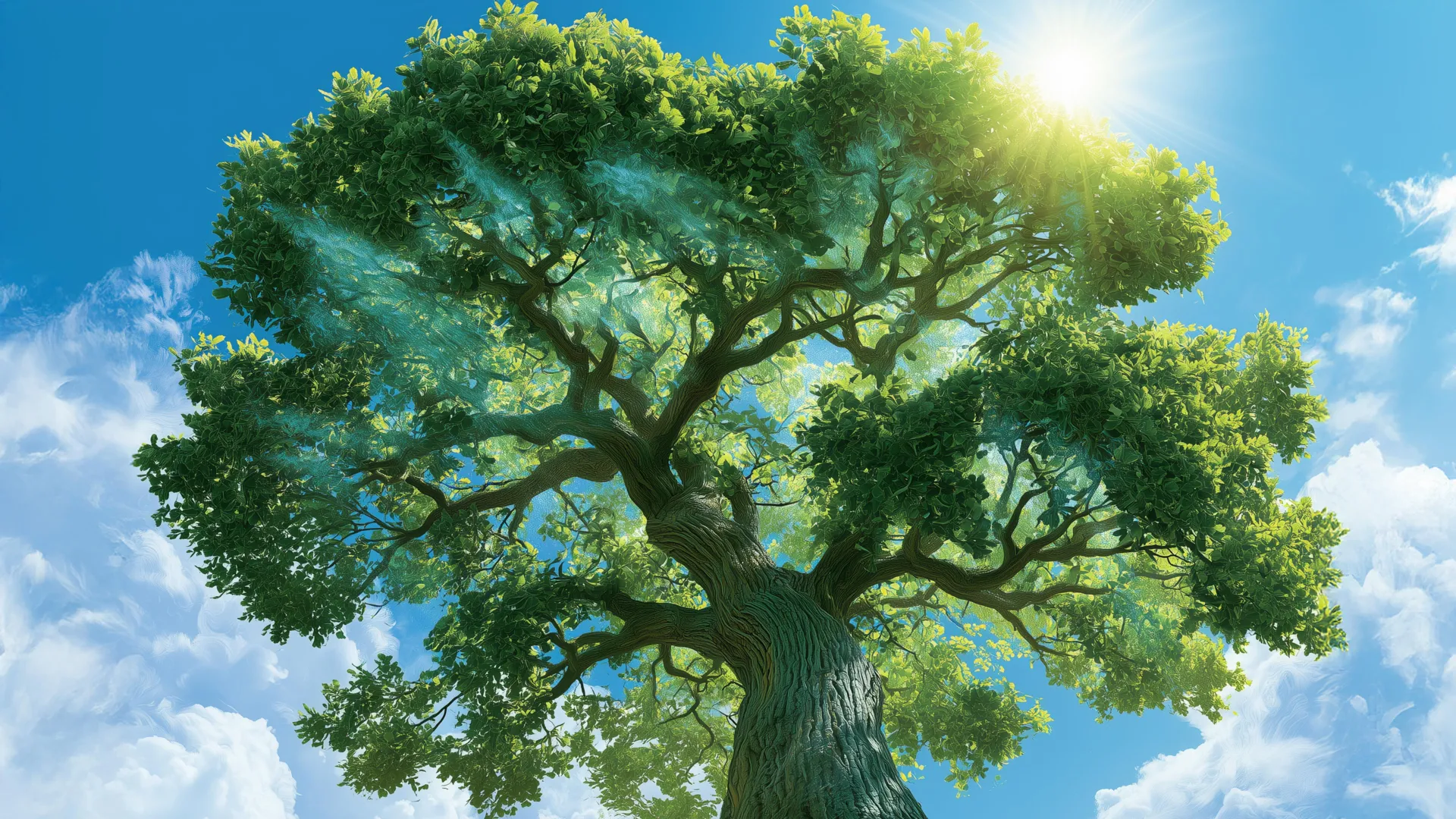
Oak trees keep pulling carbon dioxide out of the air long after they have finished growing for the year, according to a new study that could complicate how scientists forecast the role of forests in slowing climate change.
The research, published in the journal Science Advances, challenges a long-held assumption that a tree's photosynthesis and its growth march in lockstep — that when a tree stops adding wood, it has largely stopped capturing carbon. Instead, the study found the two processes can be strikingly decoupled, with trees continuing to soak up carbon for months after their trunks and branches stop expanding.
The researchers tracked oaks at sites across the United States and found the mismatch in both directions of the calendar. At eastern U.S. locations, oak trees generally added new growth from May through July, yet their photosynthetic activity continued well into October. Roughly 36% of the trees' annual carbon uptake occurred after their late-summer growth had already ceased. In California, where oaks grew mainly from December through April and stopped by August, about 26% of yearly carbon capture still happened after growth had ended.
The gap matters because carbon that a tree absorbs is not always locked away in wood. If photosynthesis outpaces growth, a significant share of the carbon a forest takes in each year may be going somewhere other than new timber — into roots, soil, defensive chemistry or simply respired back into the atmosphere. Understanding where that carbon ends up is central to predicting how much forests can help offset human emissions.
That uncertainty cuts against some optimistic climate projections. Many models assume that faster photosynthesis, spurred by rising carbon dioxide levels, will translate neatly into more wood and thus more stored carbon. The new findings suggest the link is weaker than assumed, and that trees may store less carbon in a warmer, higher-carbon-dioxide future than those models predict — because growth is often limited by heat, drought or nutrients rather than by the availability of carbon.
The study focused on oaks, a dominant group across temperate forests, but the researchers say the decoupling likely applies to many other species and ecosystems. Growth, unlike photosynthesis, is highly sensitive to water stress and temperature, and as climate extremes intensify, the mismatch between what trees capture and what they keep could widen.
For scientists building the next generation of climate models, the message is to stop treating a tree's growth as a proxy for its carbon appetite. The two are related but not the same, and the difference — tens of percent of a forest's annual carbon budget — is large enough to matter for the planet's accounting.