Saturn's Mysterious Rotation Rate Finally Explained by James Webb Telescope
Scientists discovered that the planet's northern lights drive powerful atmospheric winds that create electrical currents, solving a decades-old puzzle.
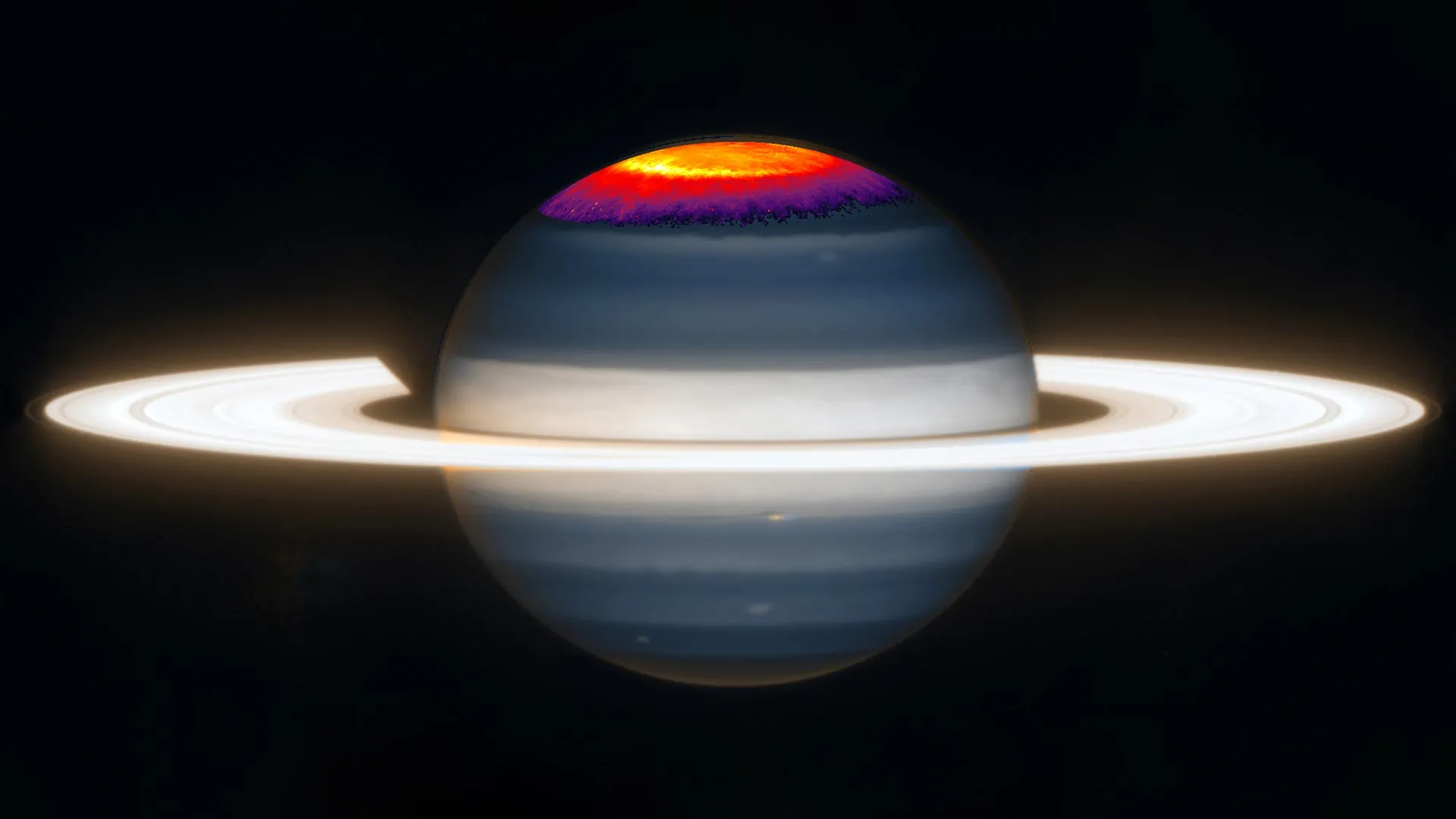
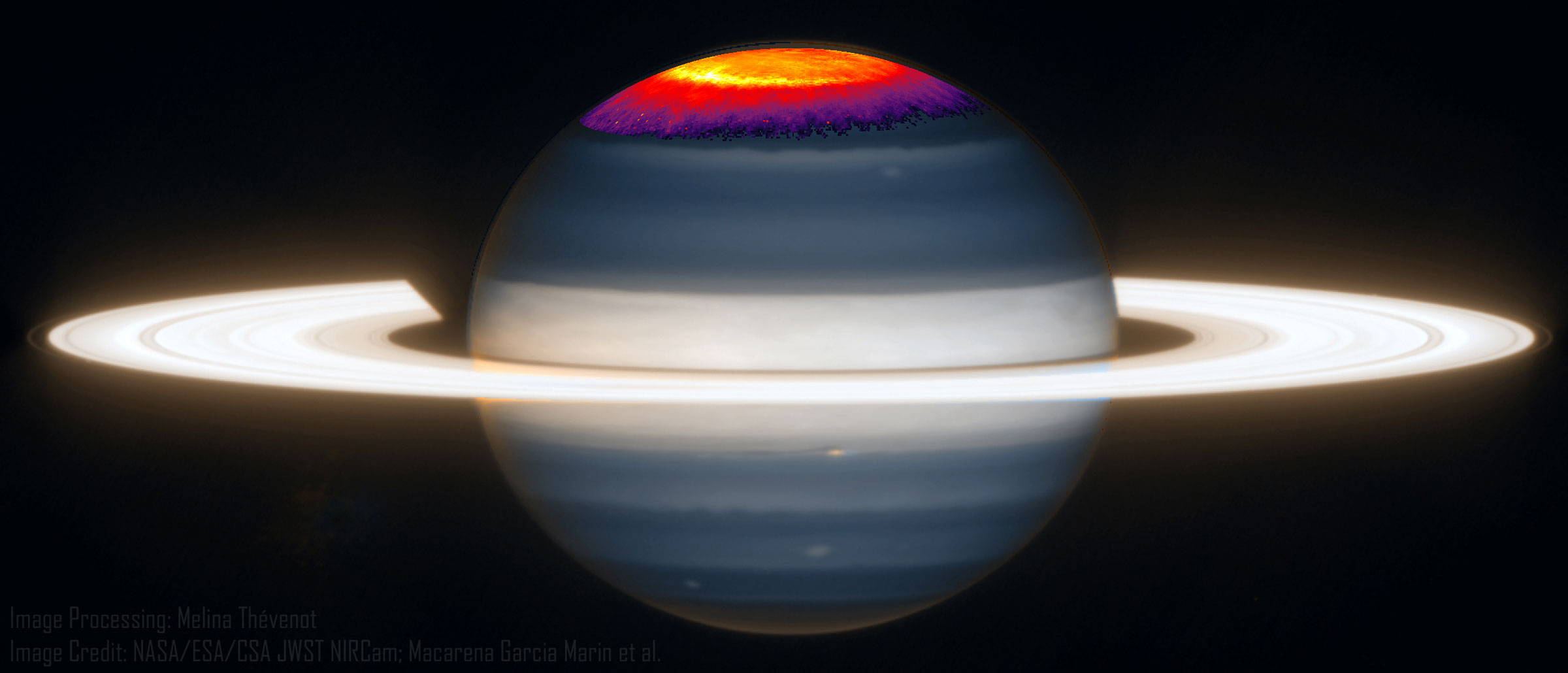
A decades-old mystery about Saturn's apparently changing rotation rate has finally been solved thanks to unprecedented observations from the James Webb Space Telescope. Scientists discovered that Saturn's northern lights actively heat the atmosphere, creating winds that generate electrical currents and power the aurora in a self-sustaining cycle. The breakthrough reveals that Saturn was never actually speeding up or slowing down, but that powerful atmospheric winds were affecting the electrical signals scientists used to measure the planet's rotation.
The puzzle began when measurements from NASA's Cassini spacecraft in 2004 suggested Saturn's rotation rate was gradually changing over time. This was difficult to explain because planets do not simply alter their spin rates on short timescales. In 2021, a team led by Professor Tom Stallard of Northumbria University proposed that electrical signals linked to Saturn's aurora were being affected by winds in the upper atmosphere, but the source of those winds remained unknown.
To investigate the mystery, Stallard and colleagues used the James Webb Space Telescope to observe Saturn's northern auroral region continuously for an entire Saturnian day. The observations provided unprecedented detail by analyzing infrared light emitted by trihydrogen cation, a molecule that forms in Saturn's upper atmosphere and serves as a natural temperature indicator. The team created the most detailed maps ever produced of temperatures and charged particle densities within Saturn's auroral region.
The new data revealed that Saturn's aurora is far more than a spectacular light show. Webb's observations were approximately ten times more precise than previous measurements, allowing scientists to identify localized heating and cooling patterns for the first time. The results closely matched decade-old computer models that only worked if atmospheric heating occurred exactly where the strongest auroral particles enter Saturn's atmosphere.
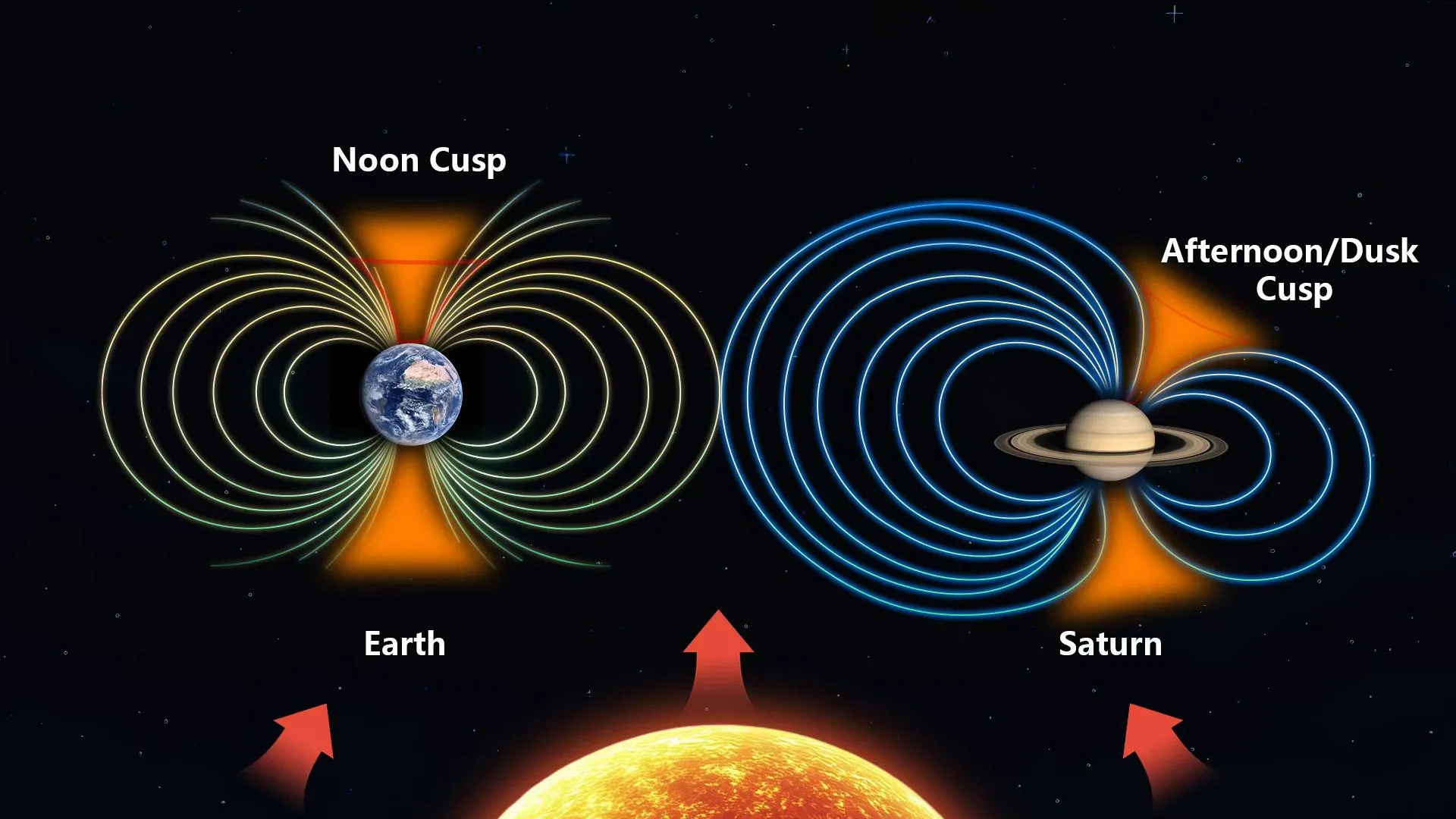
The discovery shows that Saturn's aurora drives a powerful planetary heat engine that creates the atmospheric winds responsible for the mysterious rotation measurements. The aurora heats specific regions of the upper atmosphere, generating wind patterns that create electrical currents, which in turn sustain the aurora itself. This self-perpetuating cycle explains how Saturn appeared to change its rotation rate when scientists were actually measuring the effects of dynamic atmospheric processes driven by the planet's magnificent northern lights.