Webb Telescope Cracks a 40-Year Saturn Mystery: The Planet Never Changed Its Spin
Astronomers used the James Webb Space Telescope to show that Saturn's apparently shifting rotation rate was an illusion created by powerful high-altitude winds — and that the planet's auroras run a self-sustaining heat engine.
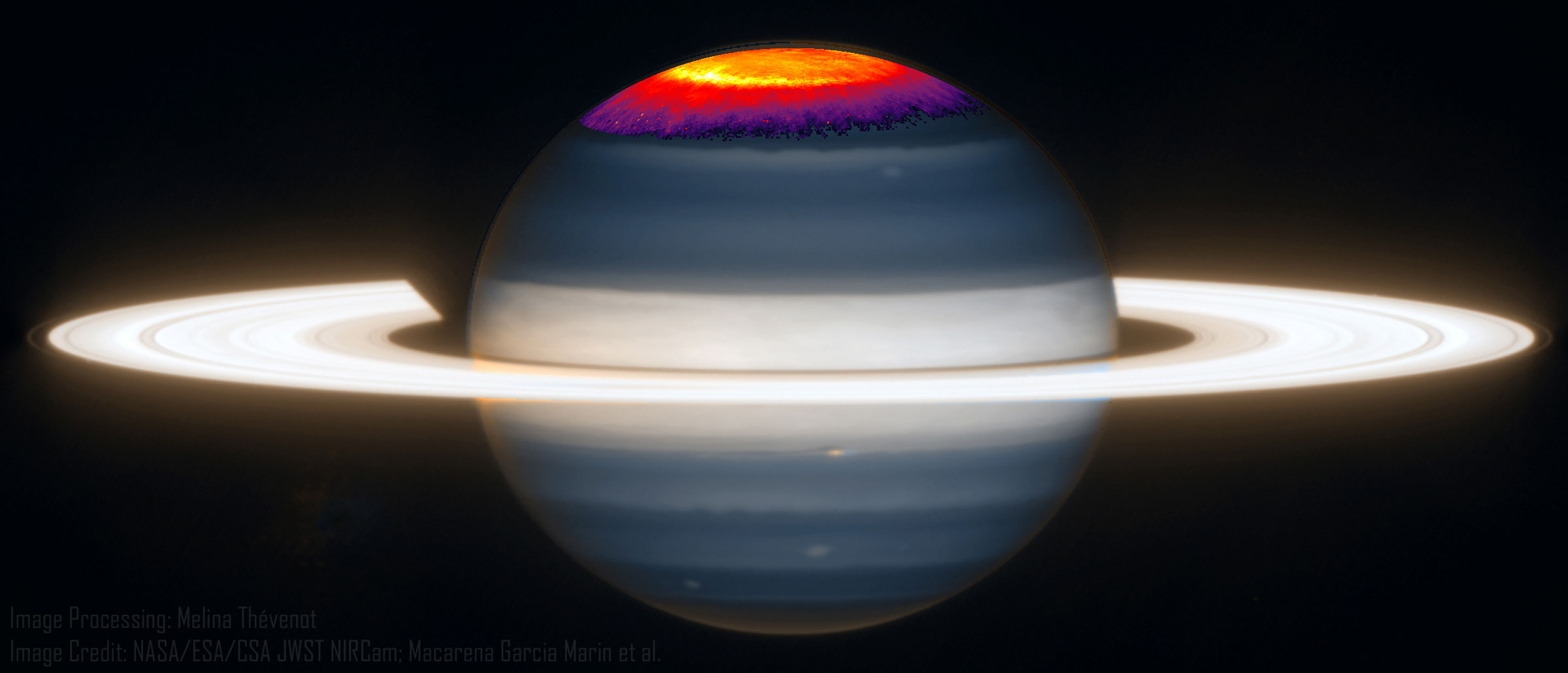
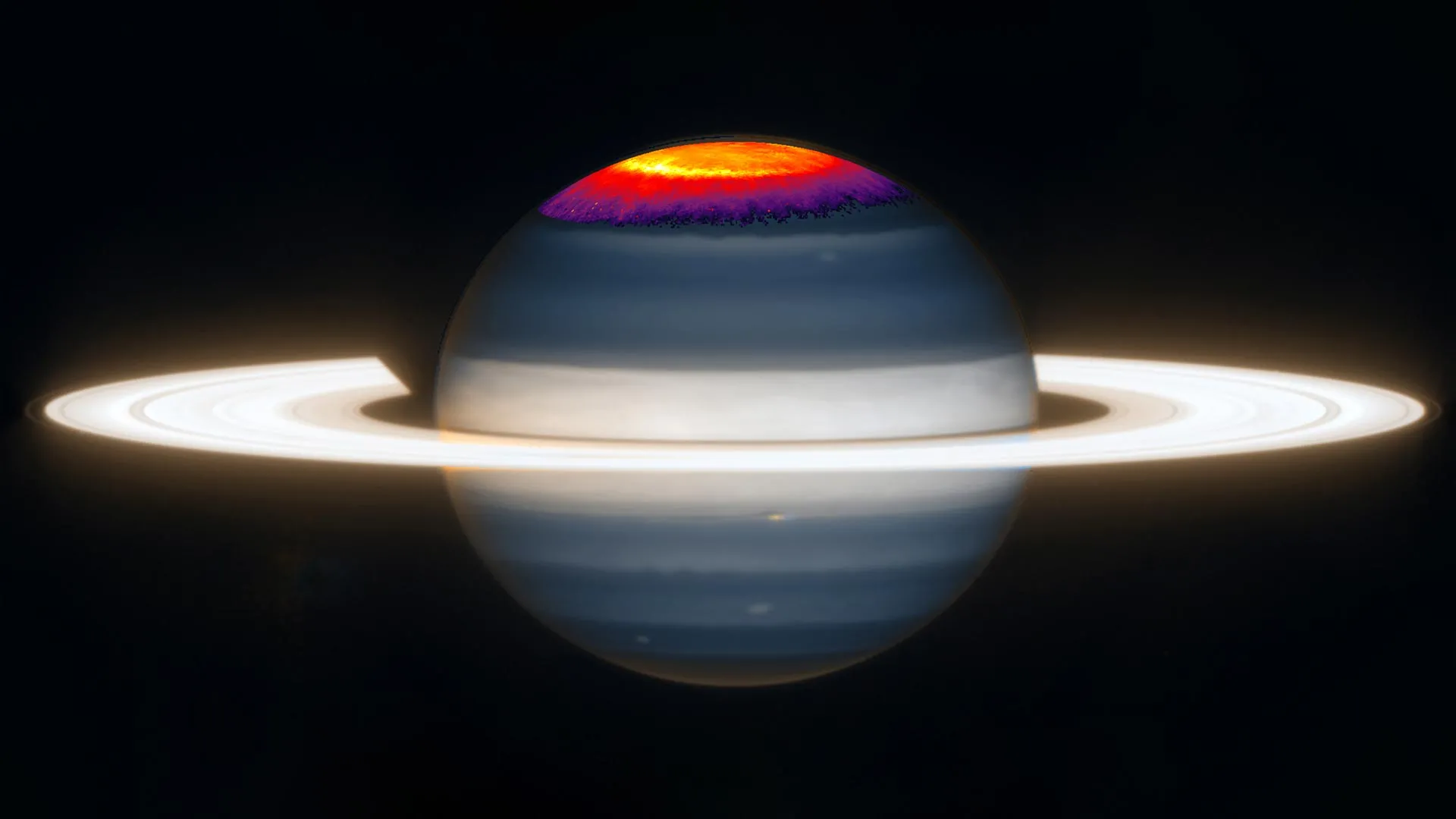
For four decades, Saturn seemed to be doing something impossible: subtly changing how fast it spins. Now astronomers using the James Webb Space Telescope say they have solved the puzzle — and the answer is that the planet never changed its rotation at all.
The mystery deepened in 2004, when NASA's Cassini spacecraft measured a rotation rate that appeared to differ from earlier readings, suggesting Saturn was gradually speeding up or slowing down. That was hard to explain, because giant planets do not simply alter their spin on short timescales. The apparent shift left planetary scientists without a reliable value for one of the most basic properties of the solar system's second-largest planet.
To get to the bottom of it, researchers trained Webb on Saturn's northern auroral region and watched it continuously for an entire Saturnian day. They focused on infrared light emitted by the trihydrogen cation, a molecule that forms high in Saturn's atmosphere and acts as a natural thermometer. By tracking its glow, the team produced the most detailed maps ever made of temperatures and charged-particle densities in the planet's upper atmosphere.
The maps revealed that Saturn's seemingly variable rotation was an illusion produced by powerful winds high in the atmosphere, not by any change in the spin of the planet's deep interior. Those winds distort the magnetic signals that scientists had used as a proxy for rotation, making the planet look as though it were changing its pace when it was not.
The observations turned up something more surprising still. Webb showed that Saturn's northern lights actively heat the surrounding atmosphere, driving winds that generate electrical currents, which in turn power the aurora all over again — a self-sustaining cycle, or natural heat engine, that keeps the polar region energized. The northern lights, in other words, are not just a consequence of activity in Saturn's atmosphere but a driver of it.
The findings, published in the Journal of Geophysical Research: Space Physics, do more than settle a long-running argument about Saturn's day. They demonstrate how Webb's sensitivity can disentangle a planet's true rotation from the atmospheric weather layered on top of it — a capability that could help researchers pin down the spin and atmospheric dynamics of other giant planets, both in our solar system and around distant stars. Researchers said the continuous, day-long observation was essential, allowing Webb to capture subtle changes that the briefer glimpses afforded by earlier missions had missed. The result, they added, underscores how much of what looks like change on a distant world can instead be the signature of its weather.