Astronomers Finally Solve Saturn's Decades-Long Spin Mystery
James Webb Space Telescope reveals that Saturn's aurora creates powerful winds that generate electrical currents, making the planet appear to change rotation rates.
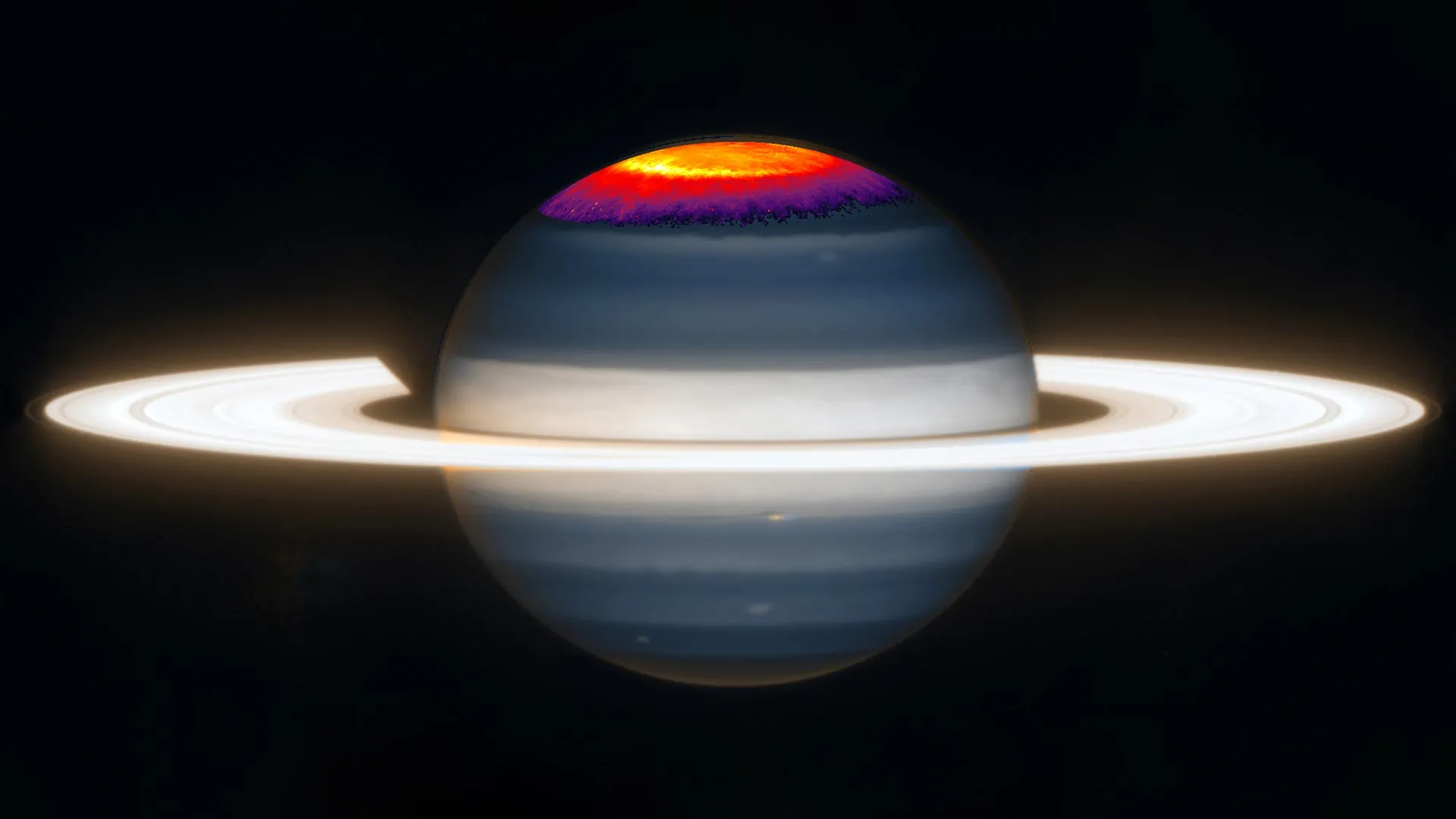
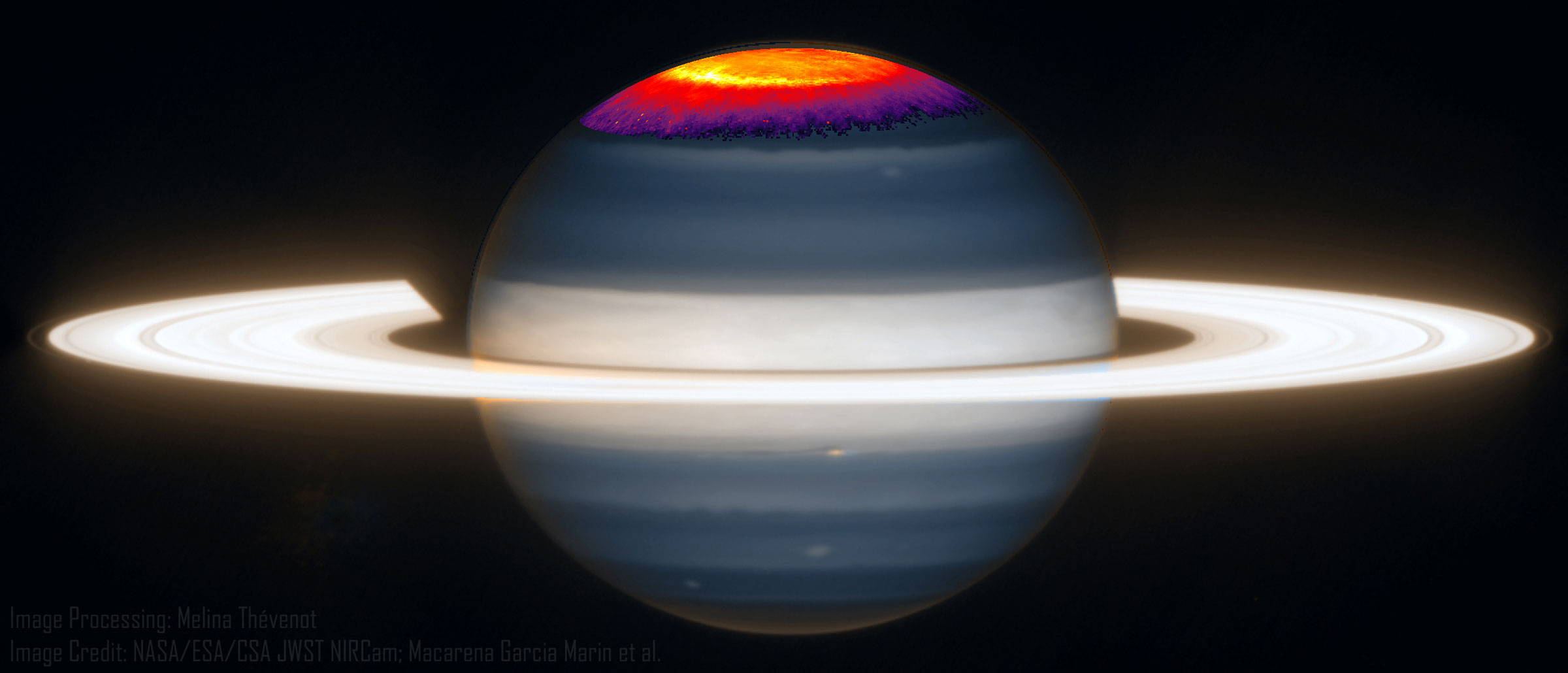
A decades-old mystery about Saturn has finally been solved thanks to unprecedented observations from the James Webb Space Telescope. Scientists discovered that Saturn's changing 'rotation rate' was never caused by the planet actually speeding up or slowing down, but by powerful winds high in its atmosphere that are driven by the planet's spectacular northern lights.
The puzzle had persisted since NASA's Cassini spacecraft observations in 2004 suggested that Saturn's rotation rate was gradually changing over time. This result was difficult to explain because planets do not simply alter their spin rates on short timescales. The mystery deepened when different measurement methods yielded inconsistent results about how fast Saturn was actually rotating.
In 2021, Professor Tom Stallard of Northumbria University proposed that Saturn's rotation wasn't actually changing. Instead, he suggested that electrical signals linked to the planet's aurora were being affected by winds in Saturn's upper atmosphere, which generated electrical currents that altered the auroral signals scientists were using to estimate rotation. While this explained the misleading measurements, the source of those atmospheric winds remained unknown.
Using Webb's unprecedented capabilities, Stallard's team observed Saturn's northern auroral region continuously for an entire Saturnian day. The observations provided detail that previous instruments could not achieve, focusing on infrared light emitted by trihydrogen cation molecules that serve as natural temperature indicators. The resulting maps were ten times more precise than earlier measurements, allowing scientists to identify localized heating and cooling patterns for the first time.
The new data revealed that Saturn's aurora creates a self-sustaining planetary heat engine. The aurora actively heats the atmosphere, creating winds that generate electrical currents, which then power the aurora in a continuous cycle. This discovery not only solves the rotation mystery but also provides new insights into how auroras function on gas giant planets throughout the solar system.