Saturn's Magnetic Field Mystery Solved: Rapid Spin and Moon Enceladus Create Asymmetric Shield
Six years of Cassini data reveals why Saturn's magnetic field is skewed, with implications for the search for life on its moon Enceladus.

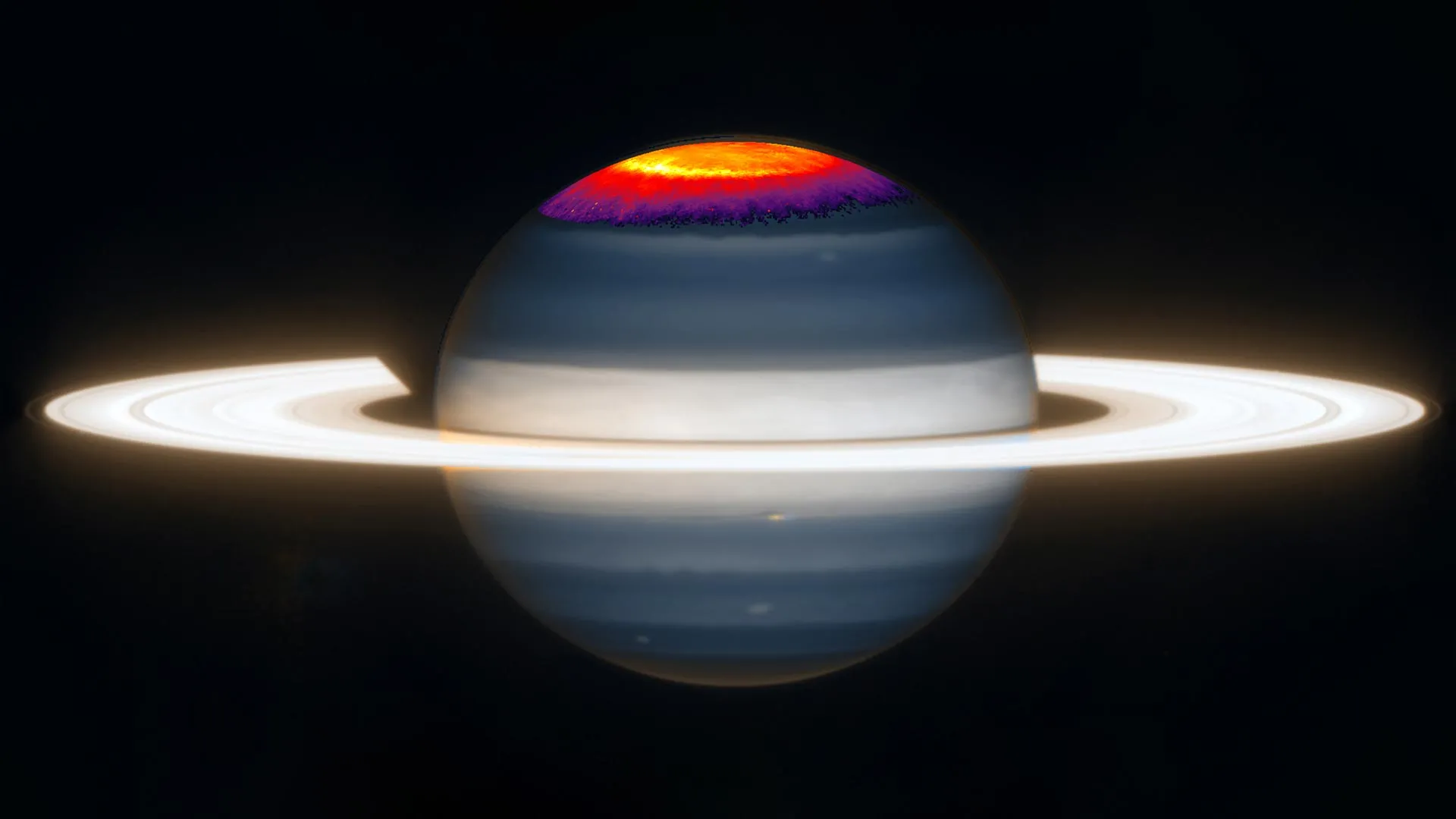
Saturn's magnetic field forms an uneven, lopsided bubble around the planet rather than the symmetrical shield seen around Earth, and scientists now understand why. New research based on six years of observations from NASA's Cassini spacecraft has revealed that Saturn's incredibly rapid rotation, combined with dense plasma from its moon Enceladus, distorts the planet's magnetosphere in ways that fundamentally differ from our home planet. The discovery has important implications for understanding Saturn's environment and the potential habitability of Enceladus.
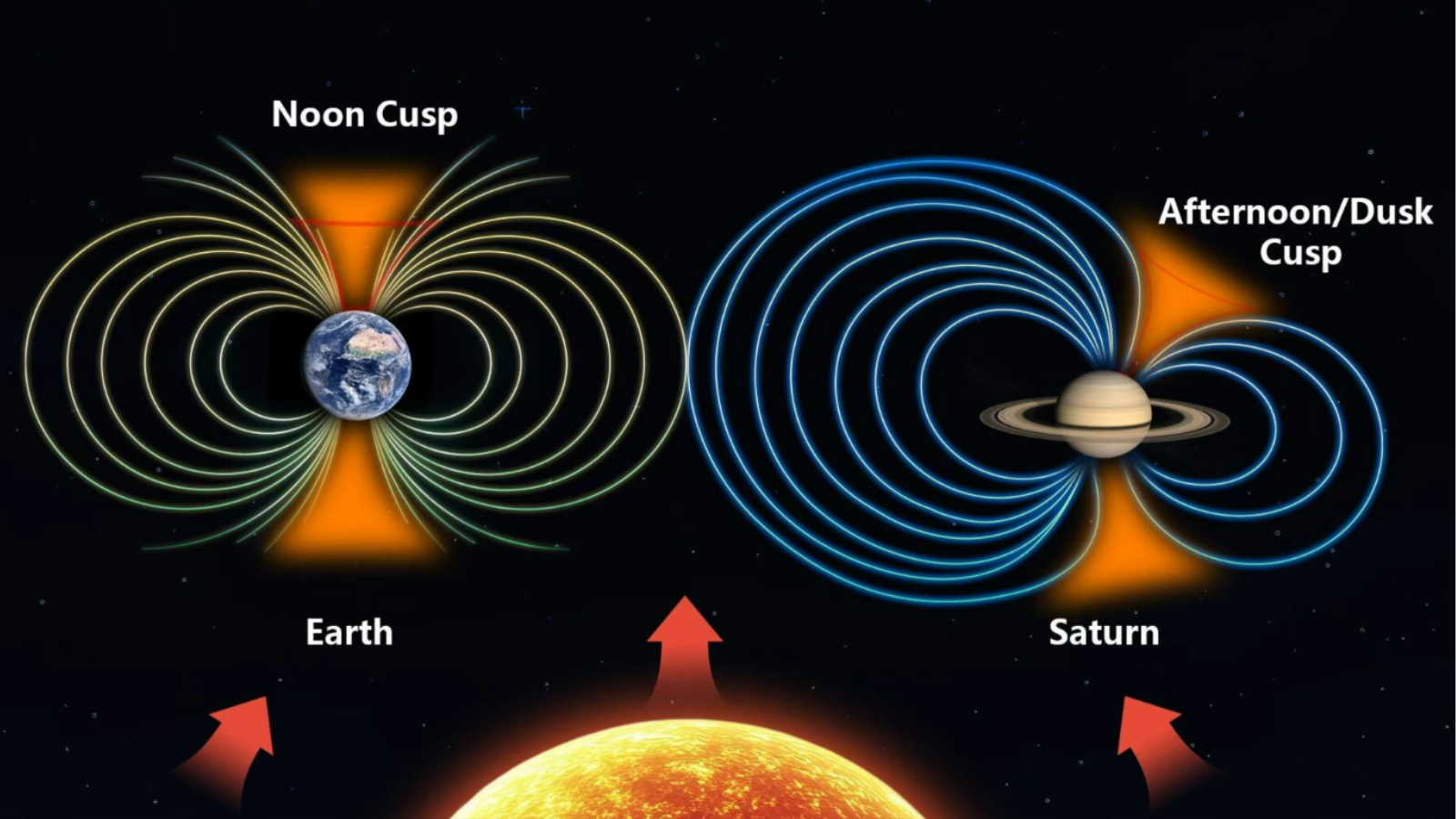
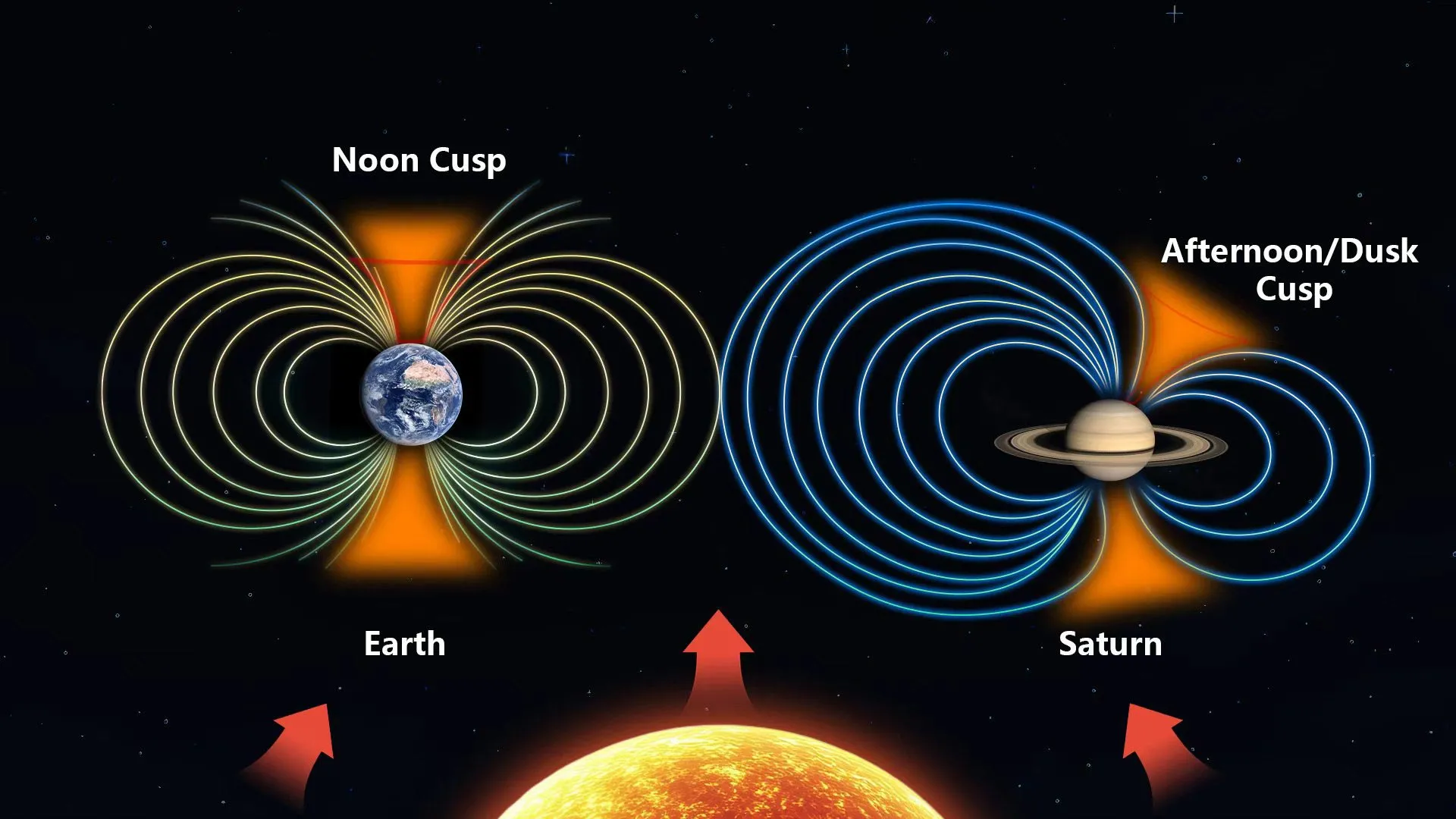
The research, published in Nature Communications, focused on identifying the exact position of Saturn's magnetic cusp—the region where magnetic field lines bend back toward the poles and allow charged particles from the solar wind to funnel into the atmosphere. Unlike Earth's cusp, which sits at the "12 o'clock" position when viewed from the Sun, Saturn's cusp is consistently shifted to the right, most often located between 1:00 and 3:00 on an imaginary clock face.
This asymmetry stems from Saturn's extraordinarily fast rotation period of just 10.7 hours, combined with the planet's unique plasma environment. Saturn is surrounded by a dense "soup" of ionized gas, much of which originates from water vapor and other materials ejected by Enceladus through its famous ice plumes. Together, the rapid spin and heavy plasma environment appear to pull the magnetic field lines sideways, creating the observed offset in the cusp position.
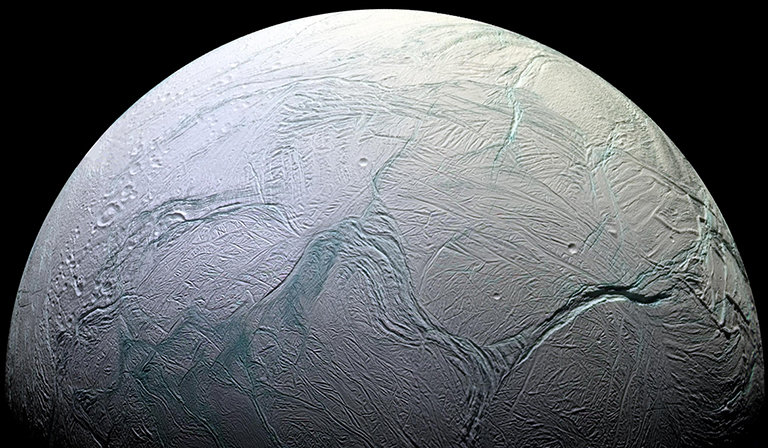
The findings are particularly significant for understanding Enceladus, which has emerged as one of the most promising targets in the search for extraterrestrial life. The moon's subsurface ocean and active geology make it a primary candidate for a proposed European Space Agency mission planned for the 2040s. Professor Andrew Coates from University College London's Mullard Space Science Laboratory noted that "knowing the location of Saturn's cusp can help us better understand and map the whole magnetic bubble" surrounding the system.
Beyond its relevance to astrobiology, the research provides crucial evidence for a long-held theory about how massive, rapidly spinning planets with active moons develop magnetospheres that differ fundamentally from Earth's. The study suggests that for gas giants like Saturn, the rapid rotation and material from moons becomes the dominant force shaping the magnetic environment, rather than the solar wind that primarily influences Earth's magnetosphere. This understanding will be essential for interpreting data from future missions to the outer solar system.