James Webb Spots Two Early Black Holes Outrunning Their Host Galaxies, With One Tipping the Scale at 9 Percent of Its Galaxy's Stellar Mass
New JWST observations of COLA1 and NEPLA4 — galaxies seen only 800 million years after the Big Bang — show black holes far larger relative to their host galaxies than any modern counterpart, deepening the puzzle of how the universe built its giants so quickly.

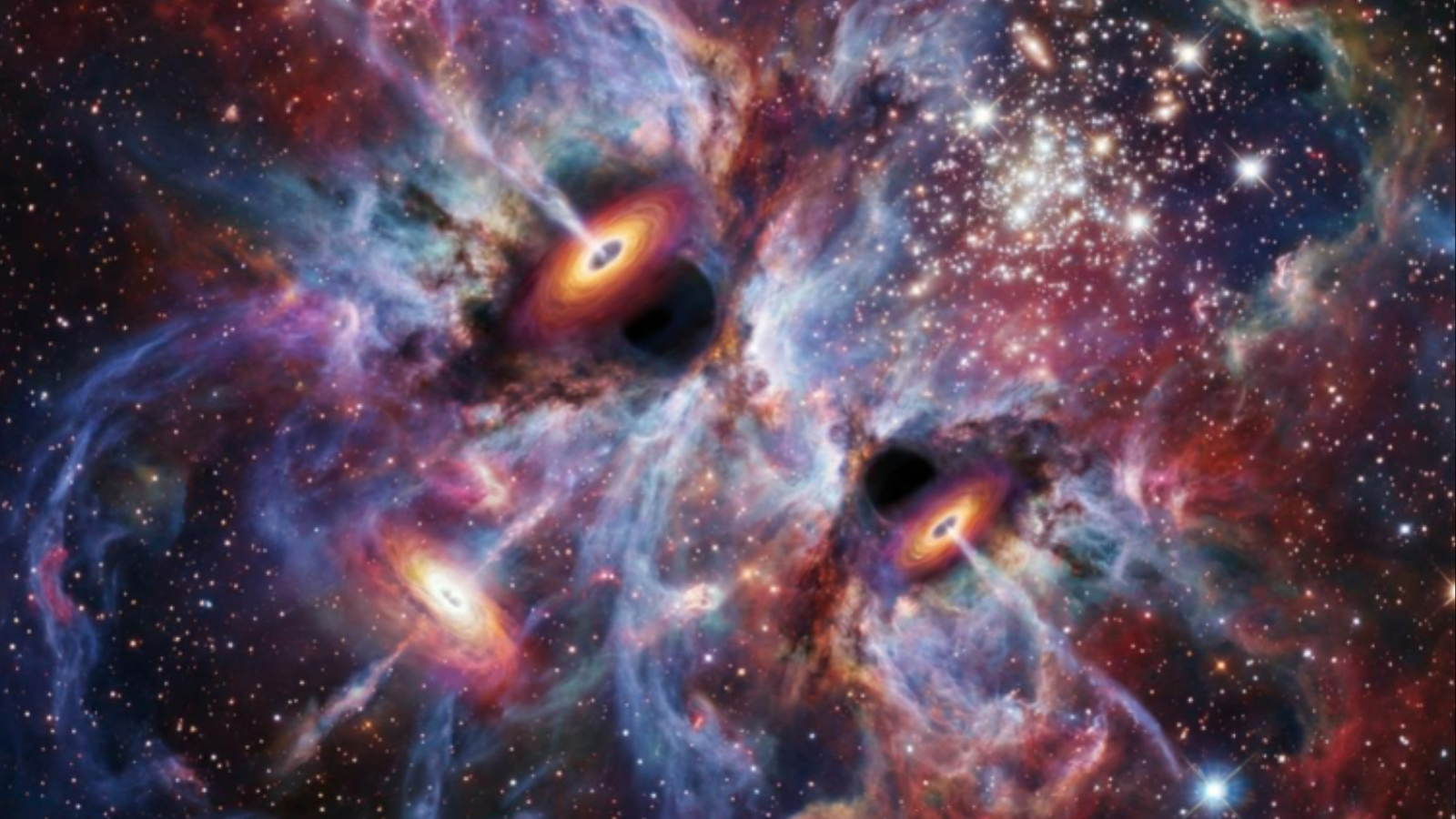
Two of the earliest supermassive black holes ever observed appear to have grown to enormous size long before their host galaxies could catch up, according to new James Webb Space Telescope observations published this month — a finding that further deepens the mystery of how the universe assembled its largest gravitational engines in less than a billion years. The two galaxies, catalogued as COLA1 and NEPLA4, were spotted as JWST stared at them when the cosmos was only about 800 million years old, and their central black holes already tipped the scale at 170 million and 190 million times the mass of the Sun.
In modern, mature galaxies like our own Milky Way, central black holes generally make up about one-tenth of one percent of the stellar mass that surrounds them. That ratio, established by decades of observation, has long been treated as evidence that galaxies and their black holes grew up together. The new JWST data, presented by lead author Roberta Tripodi of the Astronomical Observatory of Trieste, breaks the ratio dramatically: in COLA1 the black hole accounts for roughly 4 percent of the stellar mass and in NEPLA4 the figure approaches 9 percent — between 40 and 90 times the modern proportion.
The team used JWST's NIRSpec integral-field spectrograph to disentangle stellar light from the bright glow of gas spiraling into the black hole, a technique that was effectively impossible before Webb began science operations in 2022. By combining the new spectra with mid-infrared imaging from the MIRI instrument, the researchers traced both the velocity of the gas falling into the black hole — used to weigh the object — and the population of stars around it. "What you see is a galaxy that grew its black hole first, and is only now starting to build a stellar body to match," Tripodi told the European Space Agency. "Either these black holes formed from very large seeds, or they accreted matter at rates far above what theory previously allowed."
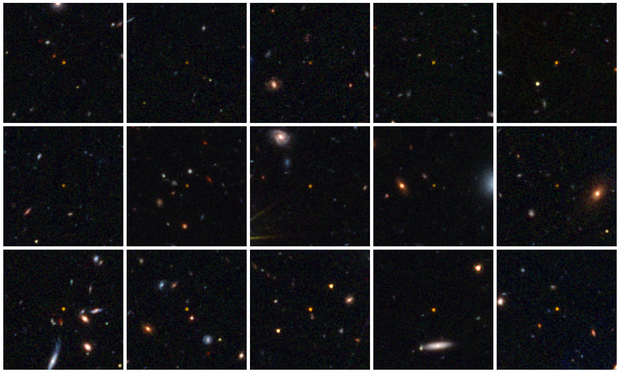
The finding adds to a growing roster of JWST puzzles. Last year researchers identified hundreds of "little red dots" — extremely compact, intensely red objects that may be early black holes accreting hidden behind dense gas. A separate paper published this week in The Astrophysical Journal Letters used JWST plus a Chandra X-ray Observatory archive to identify what astronomers are calling an "X-ray dot," formally 3DHST-AEGIS-12014, that appears to be one of the first such objects to be confirmed in X-rays. Taken together, the observations suggest that black-hole seeds — the dense cores from which today's giants grew — were much larger or much faster-growing than the standard cosmological model assumed.
What to do with the contradiction is the next debate. Some theorists, including Priyamvada Natarajan of Yale, argue the data favor "direct collapse" black holes — objects that form when an entire pristine gas cloud collapses without bothering to fragment into stars first. Others suggest the universe's first supermassive black holes piled up by gulping gas faster than the Eddington limit, the rate above which radiation pressure was thought to choke off further infall. JWST's Cycle 4 schedule, released by the Space Telescope Science Institute last week, allocates 380 hours of observing time to programs explicitly targeting early-universe black holes, and astronomers expect a stream of follow-up papers through the rest of 2026.