James Webb Spots the Most Distant Barred Spiral Galaxy Ever, Forcing a Rethink of the Early Universe
A massive, chemically mature spiral with a 14,700-light-year central bar existed just over a billion years after the Big Bang — a structure astronomers thought could not form so early.

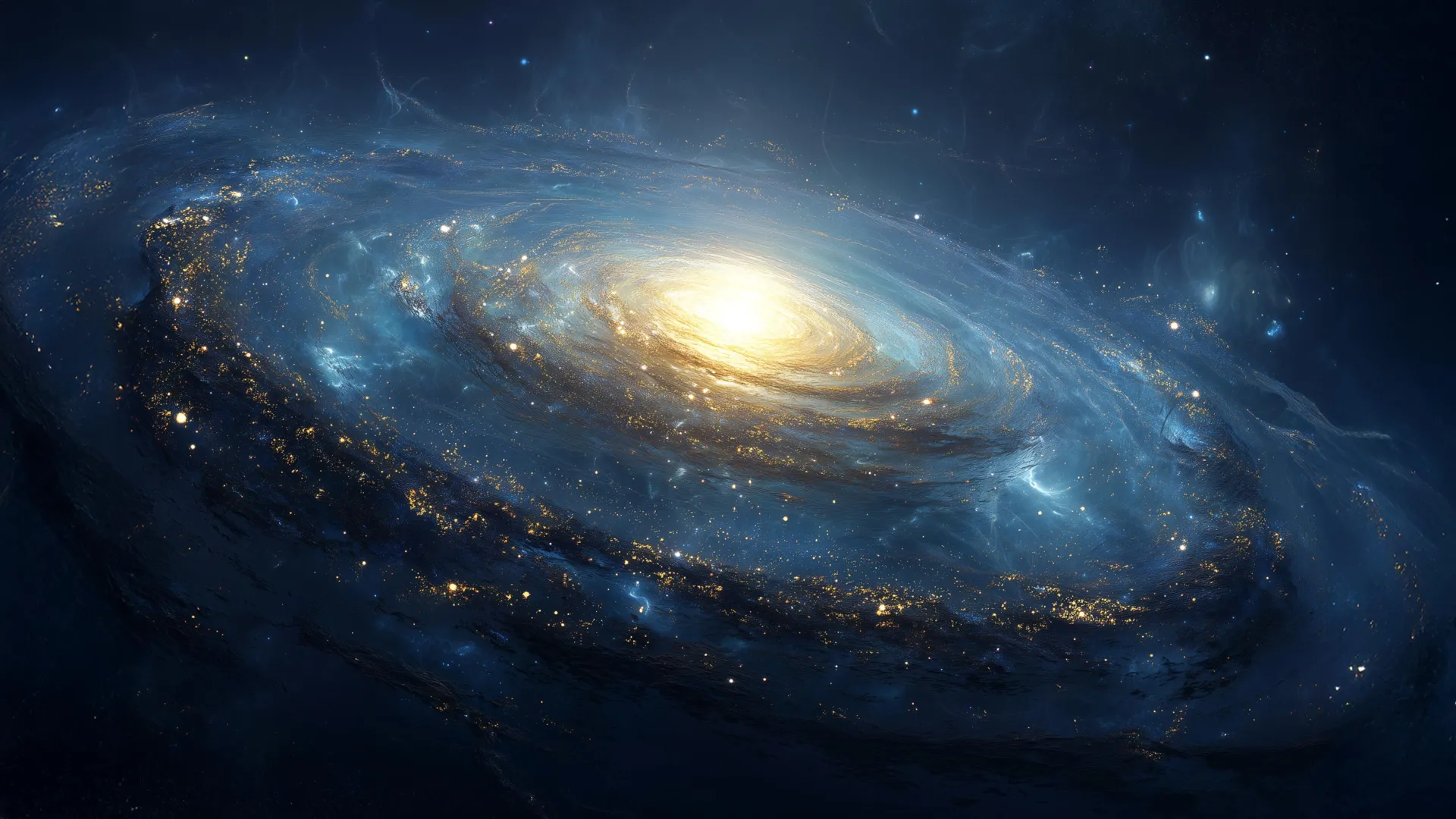
Astronomers using NASA's James Webb Space Telescope have discovered the most distant barred spiral galaxy ever found, a massive and surprisingly mature system that existed when the universe was just over a billion years old — an epoch when such orderly structures were thought to be all but impossible.
The galaxy, designated M1149-BSG-z5, sits at a redshift of 5.1, meaning its light has traveled to us from the tail end of the Epoch of Reionization, the era when the first stars and galaxies were burning away the cosmic fog of neutral hydrogen. It hosts a stellar bar — a straight, elongated structure of stars slicing through its center — roughly 14,700 light-years long, making it the highest-redshift barred galaxy known to date.
The find is striking because barred spirals like our own Milky Way are generally thought to be a hallmark of cosmic maturity. Bars form when a galactic disk becomes dynamically settled and stable, a process theorists expected to take billions of years. Finding a well-developed bar this early challenges the standard timeline for how galaxies grow up. "Barred structures are typically suppressed at high redshifts," the discovery notes, yet here is a massive, chemically evolved system defying that expectation.
By every measure, M1149-BSG-z5 is a heavyweight for its era. The team estimates its stellar mass at about 28 billion times that of the sun, and it is forming new stars at a furious rate of roughly 144 solar masses per year — dozens of times faster than the modern Milky Way. Its chemical enrichment, at about half the sun's metallicity, indicates that generations of stars had already lived and died to seed it with heavy elements. It also harbors an active galactic nucleus, a feeding supermassive black hole, though one with an unusually low mass relative to its host.
The galaxy was identified by an international team led by Xiaohan Wang of Tsinghua University in Beijing, using imaging from Webb's NIRISS instrument as part of a JWST Cycle-2 program. The results were posted to the arXiv preprint server, in a paper titled "A massive barred spiral galaxy at z = 5.102 discovered by JWST."
The discovery adds to a growing list of Webb findings — from improbably bright early galaxies to unexpectedly grown-up structures — that are forcing cosmologists to reconsider how quickly the first galaxies assembled. Each such object tightens the puzzle: the early universe, it seems, built complex, familiar-looking galaxies far faster than anyone predicted, and M1149-BSG-z5 is now the clearest spiral fingerprint yet from that formative age.