Scientists Find the One Nutrient That Decides Whether 'Good' Parasites Fight Inflammation or Go Dormant
In rats, a fiber-rich diet kept a beneficial tapeworm healthy and anti-inflammatory; strip the fiber away and the worm slipped into a hibernation-like state, wiping out its benefits.
Scientists have identified a single dietary ingredient that appears to decide whether "beneficial" intestinal worms actively calm inflammation or slip into a dormant, useless state: fiber. The finding could help explain why experimental therapies that use parasites to treat inflammatory diseases have delivered such inconsistent results.
The idea of using helminths — parasitic worms — to tamp down an overactive immune system is not new. Certain species appear to nudge the host toward an anti-inflammatory response, and researchers have tested them as living treatments for conditions like inflammatory bowel disease. But outcomes have varied wildly from person to person and study to study, and no one could fully explain why. The new work points to what may be a decisive missing variable: what the host is eating.
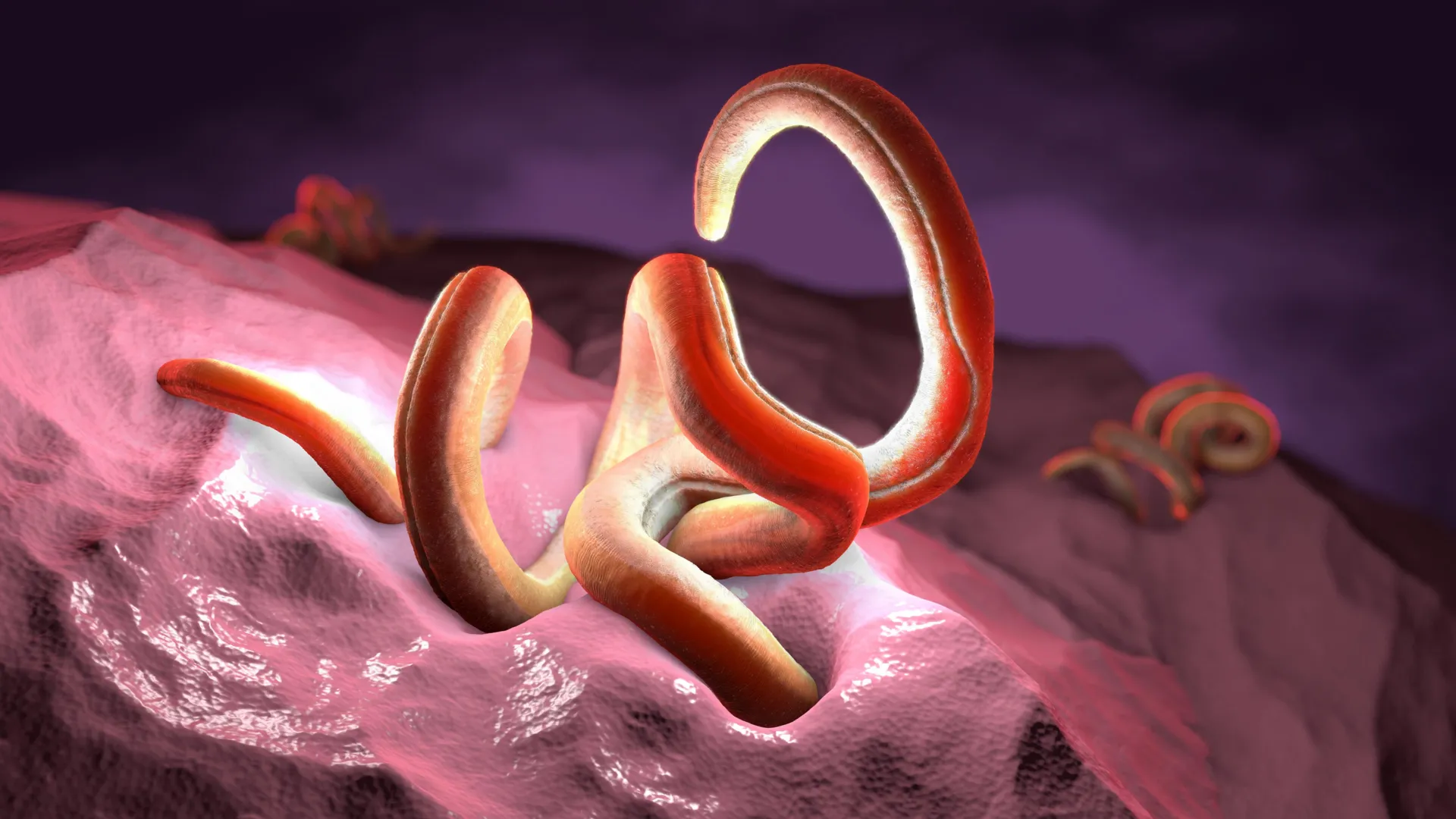
Researchers studied Hymenolepis diminuta, the rat tapeworm, a non-pathogenic species long used as a model for probing the three-way interaction among parasites, gut microbes and the immune system because of its known anti-inflammatory properties. When the animals' diet contained a high proportion of structural fiber, the tapeworm was not only in excellent condition but was also able to induce a calming, anti-inflammatory response in its host.
Take the fiber away, and the picture flipped. Fiber deprivation at the time the worm first colonized the gut led to developmental arrest — the parasite grew poorly, stopped reproducing and showed transcriptional changes consistent with suppressed development. In effect, the worm entered an energy-saving state resembling hibernation in mammals, and its anti-inflammatory effect vanished. The "good" parasite, deprived of the right diet, simply switched off.
Fiber's influence extended to the wider gut ecosystem. Fiber-rich diets promoted healthier, more diverse communities of gut bacteria, while Western-style, low-fiber diets reduced microbial diversity and encouraged less desirable microbes. That matters because the worm, the bacteria and the immune system are deeply intertwined; a diet that starves one part of the system can ripple through the rest. The findings were published in the journal Nature Communications by a team at the Biology Centre of the Czech Academy of Sciences.
The implications reach beyond parasitology. If helminth-based therapies are ever to work reliably, the study suggests, the patient's diet may need to be part of the prescription — enough dietary fiber to keep the therapeutic organisms alive and doing their job. More broadly, it is another piece of evidence that fiber, the humble nutrient many modern diets lack, quietly shapes the biology of the gut in ways science is only beginning to map.