A Muddy 'Mother Goose' Fossil Rewrites the Origin Story of New Zealand's Giant Flightless Birds
A rare goose unearthed from an ancient lakebed in Central Otago suggests the country's colossal 18-kilogram geese descended from far more recent arrivals than scientists long assumed.
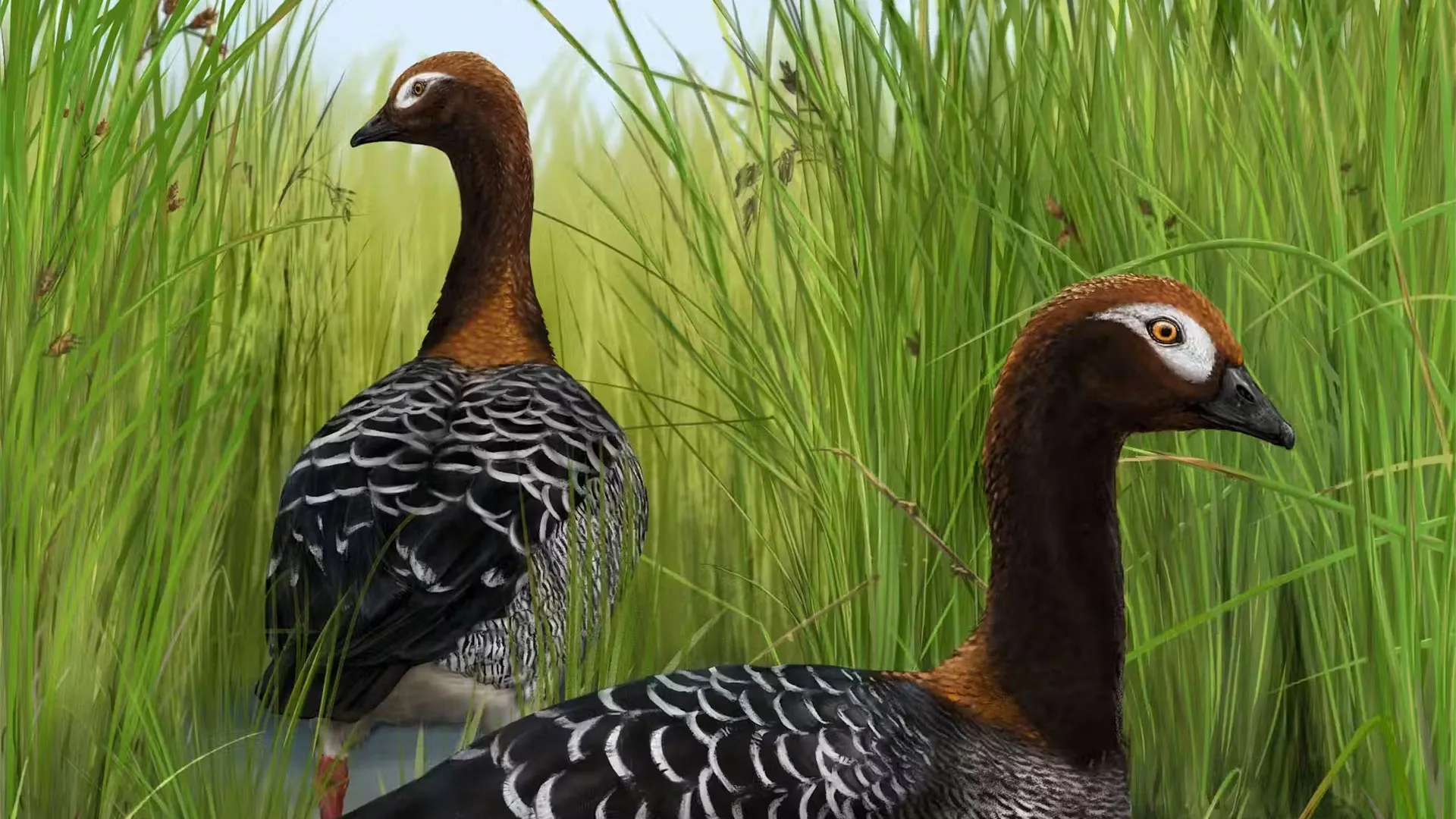
A rare fossil goose pulled from the remains of an ancient lake in New Zealand is upending a decades-old story about how the country's spectacular flightless birds came to be, suggesting that its giant geese evolved from surprisingly recent arrivals rather than an ancient homegrown lineage.
The fossil was recovered near St Bathans, in the Central Otago region of the South Island, from sediments laid down in a long-vanished lake that has become one of the richest windows into New Zealand's deep past. Researchers named the new species Meterchen luti — a nod to the nursery-rhyme figure Old Mother Goose, with "meterchen" evoking "mother goose" and "luti" derived from the Latin for "of the mud," a fitting tribute to the muddy lakebed that preserved it.
For years, scientists believed New Zealand's giant flightless geese, members of the genus Cnemiornis, were the end point of a very long, isolated evolutionary history stretching back roughly 14 million years. The new fossil tells a different story. It supports the idea that the ancestors of Cnemiornis arrived from Australia only about seven million years ago, then evolved rapidly on the islands into some of the largest geese the world has ever seen.
And large they were. The fully evolved Cnemiornis geese stood about a meter tall and weighed up to 18 kilograms — roughly 40 pounds — making them the biggest geese on record. That such giants could arise from more modest, more recent immigrants is a striking example of how quickly body size and form can change when animals colonize islands free of mammalian predators, a phenomenon biologists see again and again in isolated ecosystems.
The study, published in the journal Historical Biology, brought together researchers from the University of Otago, the Museum of New Zealand Te Papa Tongarewa and the University of Cambridge in the United Kingdom. By comparing the anatomy of the St Bathans goose with both its presumed Australian relatives and the later New Zealand giants, the team was able to place it as a key transitional figure in the lineage.
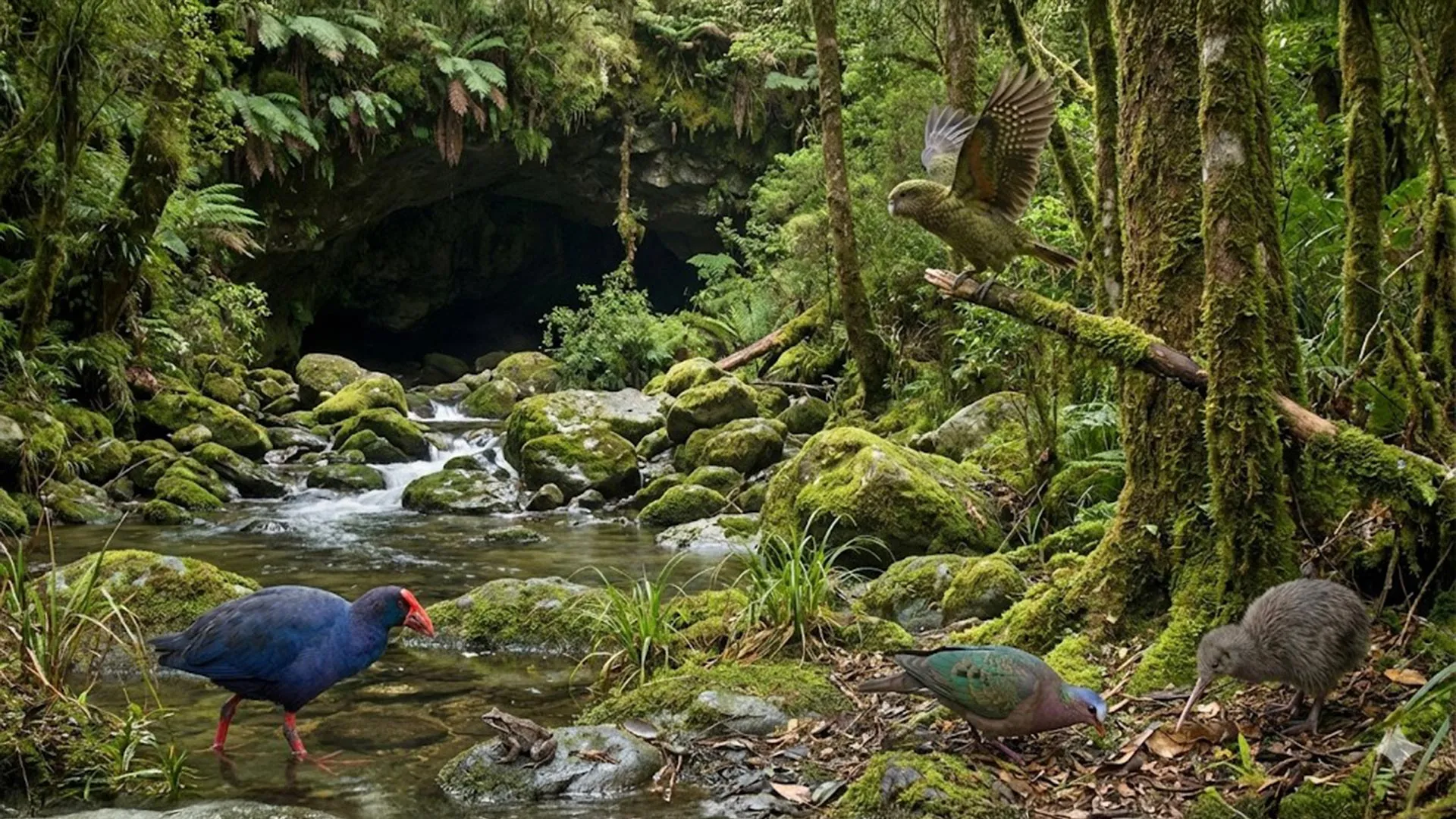
New Zealand's fauna evolved in near-total isolation for millions of years, producing an avian menagerie found nowhere else — from the towering moa to the flightless kakapo parrot. Fossils like Meterchen luti help scientists reconstruct not just what those birds looked like but when and how their ancestors reached these remote islands, and how astonishingly fast evolution can work once they arrive.


/https://tf-cmsv2-smithsonianmag-media.s3.amazonaws.com/filer_public/3c/1f/3c1f6ba0-0486-41be-90f9-b9d192cfd29a/notebook-and-fossil.jpeg)