Undergraduate Students Discover Ancient Star from Dawn of Universe
Class project at University of Chicago leads to identification of one of oldest known stars, an 'ancient immigrant' that traveled from Large Magellanic Cloud into Milky Way billions of years ago.
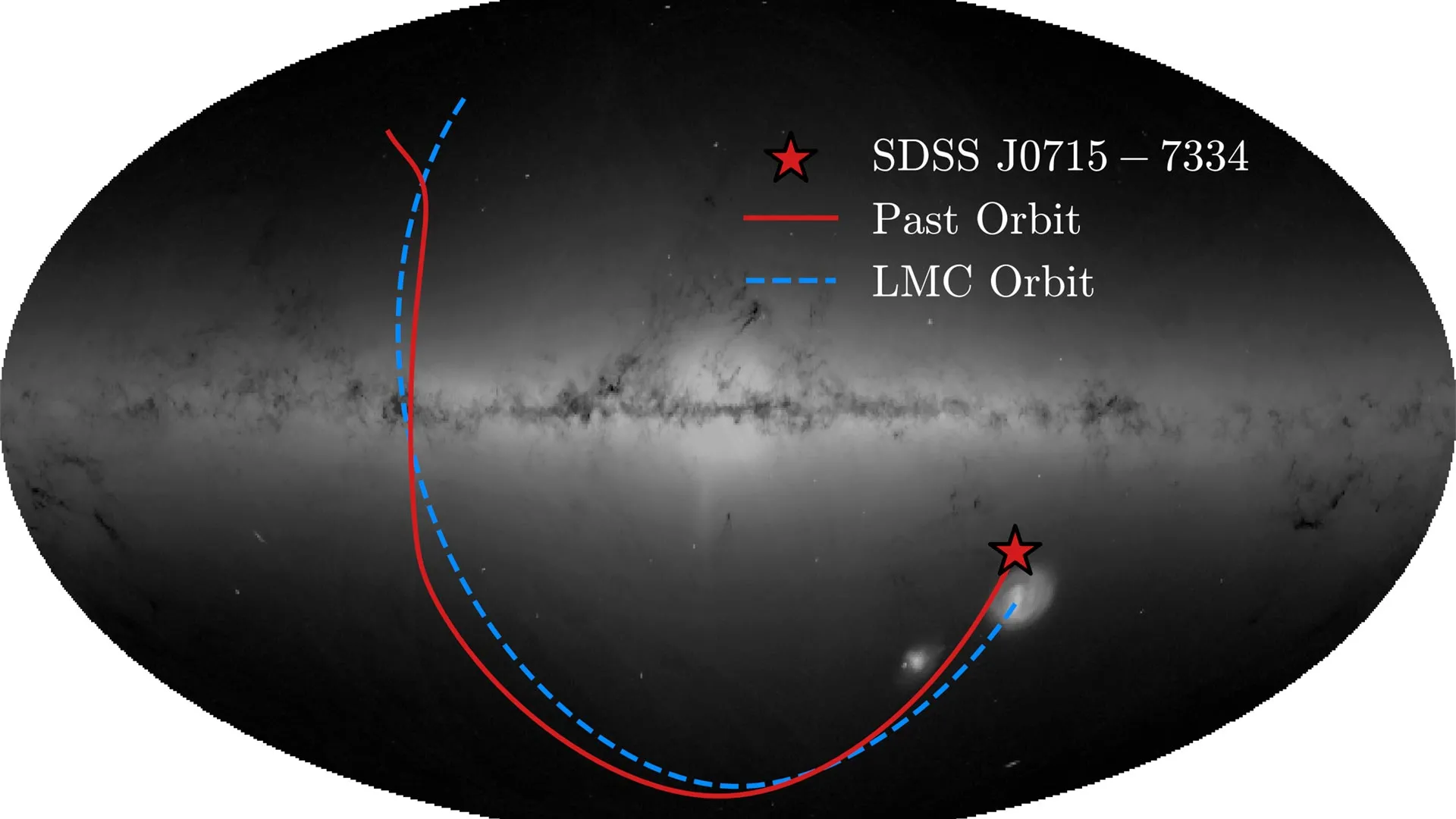
A group of undergraduate students at the University of Chicago has made an extraordinary astronomical discovery, identifying one of the oldest known stars in the universe during what began as a routine class assignment. The star, labeled SDSSJ0715-7334, consists almost entirely of hydrogen and helium, indicating it formed during the very early stages of cosmic history. This remarkable find demonstrates the power of modern astronomical databases to enable groundbreaking discoveries by students working directly with professional-grade data.
The discovery emerged from the university's 'Field Course in Astrophysics,' taught by Professor Alex Ji along with graduate teaching assistants Hillary Andales and Pierre Thibodeaux. Students spent weeks examining thousands of stars from the Sloan Digital Sky Survey, searching for unusual candidates among the massive datasets. From their analysis, they selected 77 stars for detailed observation during a planned research trip to Chile's Las Campanas Observatory.
The breakthrough moment came on March 21st, 2025, during the group's first observing session at the Magellan telescopes. SDSSJ0715-7334 was only the second star they examined that night, but it immediately stood out as extraordinary. 'We found it the first night, and it completely changed our plans for the course,' Professor Ji explained. The discovery prompted the team to spend three hours the following night studying this single object, far exceeding their original 10-minute observation plan.
Further analysis revealed that this ancient star did not originate in the Milky Way galaxy. Instead, it formed in the Large Magellanic Cloud, the Milky Way's largest companion galaxy, before migrating into our galaxy billions of years ago. Ji described it as an 'ancient immigrant,' representing an unprecedented window into conditions in the early universe. The star's extremely low metallicity—meaning it contains virtually no elements heavier than hydrogen and helium—confirms its ancient origins.
The discovery illustrates how big data projects like the Sloan Digital Sky Survey democratize astronomical research, enabling students to participate directly in cutting-edge science. 'This ancient immigrant gives us an unprecedented look at conditions in the early universe,' Ji noted. 'Big data projects like SDSS make it possible for students to get directly involved in these important discoveries.' The star's remarkable preservation of its original composition provides scientists with a cosmic time capsule from the universe's earliest epoch.