Black Hole Jets Light Up Gas Far Beyond Their Galaxies, Helping Explain Why Stars Stop Forming
By stacking data on hundreds of galaxies, Arizona State astronomers found hydrogen glowing along jet paths deep into the gas halos that feed star birth, but not in other directions.

Astronomers have found some of the clearest evidence yet that the jets fired by supermassive black holes reach far beyond the visible edge of their galaxies and heat the gas that would otherwise become new stars.
Every large galaxy, including the Milky Way, sits inside a vast envelope of thin gas called the circumgalactic medium. That halo stretches 10 to 20 times wider than the visible galaxy and serves as its fuel tank: gas cools, sinks inward and clumps into stars. For decades astronomers have been puzzled by why galaxies, surrounded by so much fuel, don't make far more stars than they do.
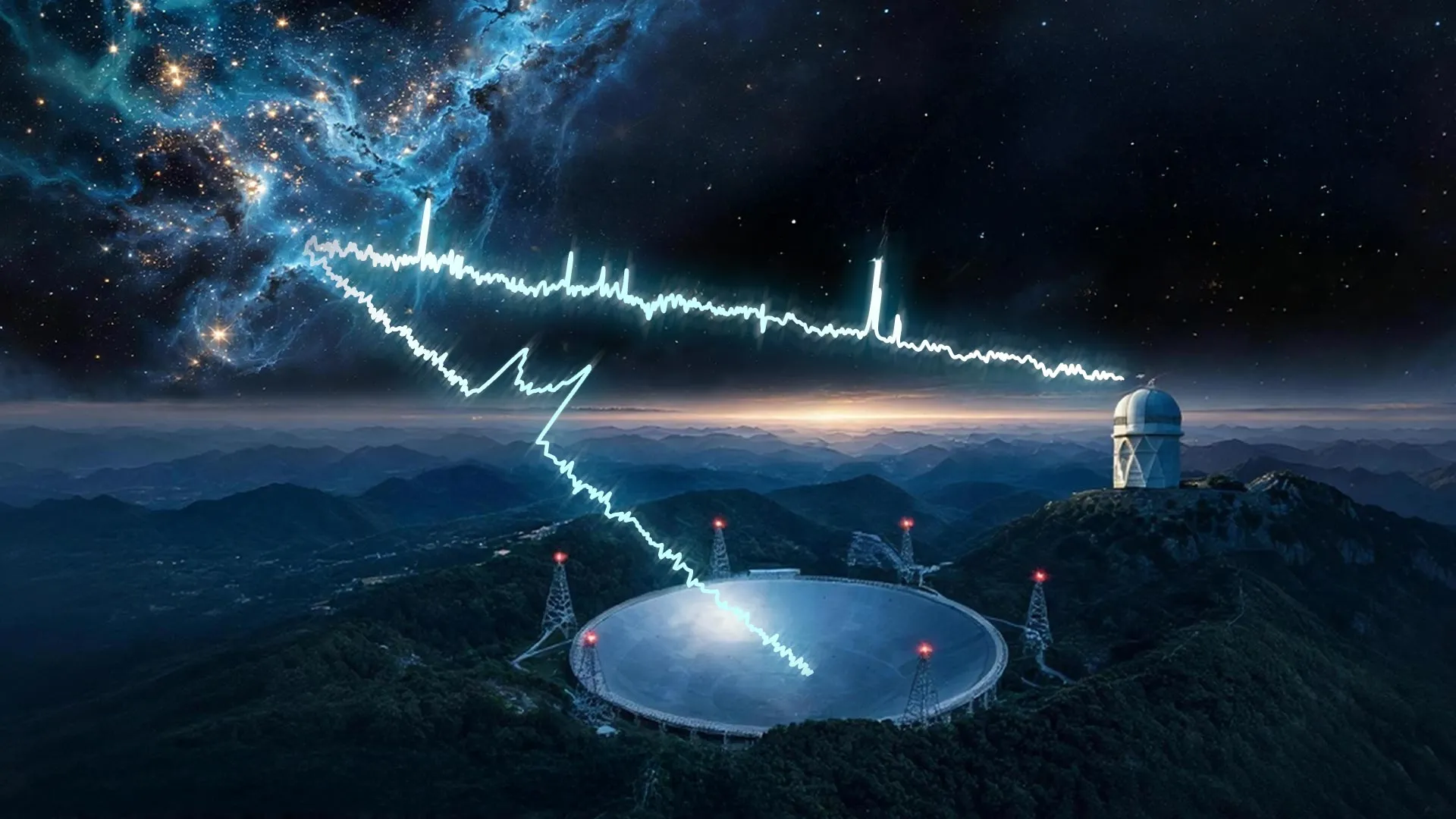
A team led by Sanchayeeta Borthakur of Arizona State University and Namrata Roy, now at the Raman Research Institute in India, reports in The Astrophysical Journal Letters that black-hole jets are a key part of the answer. The jets are narrow streams of hot plasma shot out by feeding black holes at the centers of galaxies. The team found that these jets make hydrogen in the halo glow, but only along their own paths.
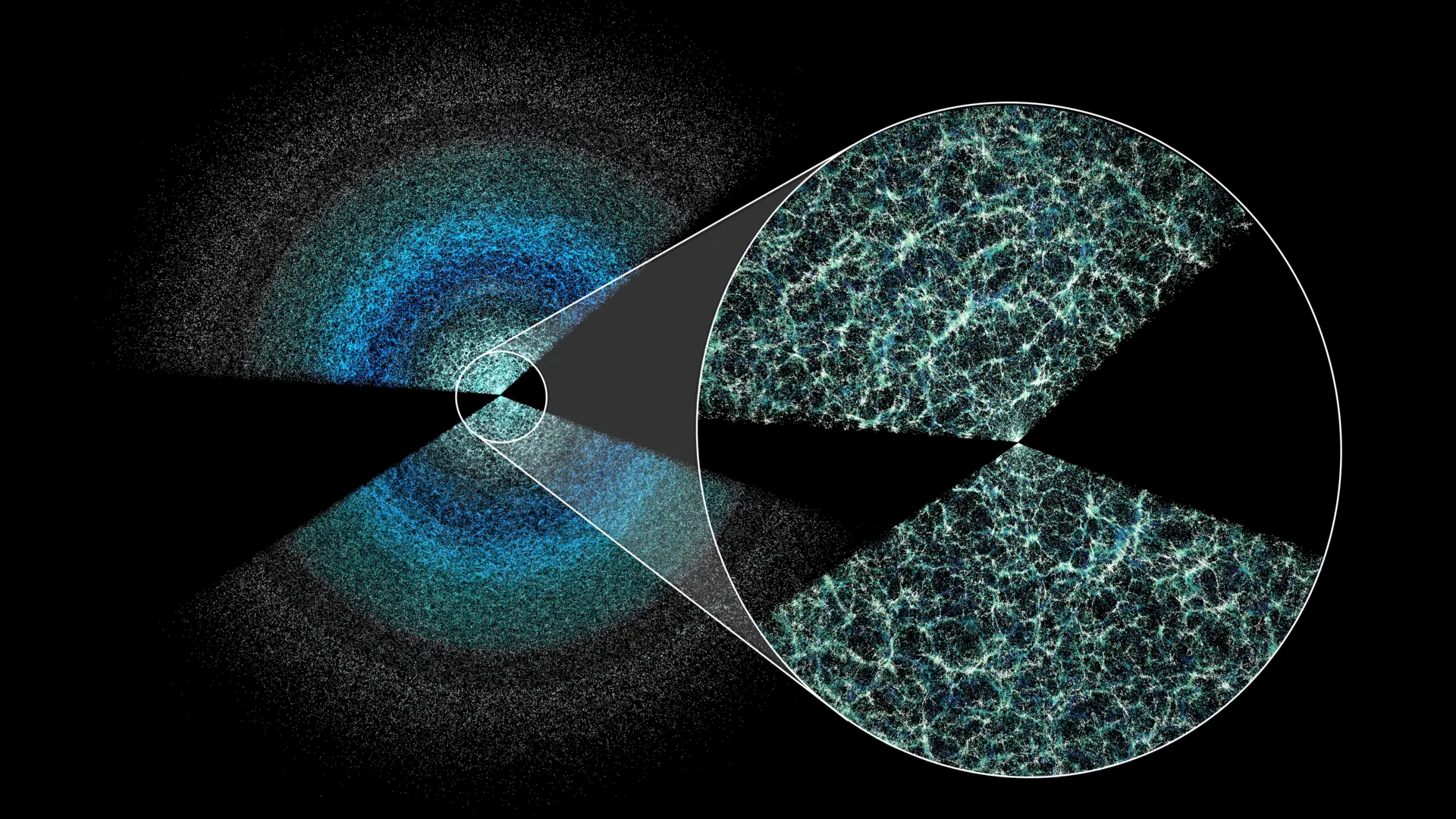
The signal is far too faint to see around any single galaxy. So the researchers combined optical spectra of hundreds of galaxies from the Dark Energy Spectroscopic Instrument survey with radio maps of their jets from the LOFAR Two-meter Sky Survey. When they averaged the glow from ionized hydrogen, known as H-alpha, in all directions, it was weak. When they lined up the measurements along the jet axes, the signal became clear and strong. Past searches that treated the halo as the same in every direction had missed it.
The glow was brightest in two places: close to the galaxy, where a jet first slams into the halo, and far out near the halo's edge, where the jet dumps most of its energy. As a check, the team also traced cooler gas using magnesium absorption. That gas showed no link to the jet direction and appeared spread evenly around the galaxies, which suggests the jets heat and ionize gas along their path while a cool reservoir sits all around.
"What excites me most is the scale of the connection," Roy said. "A black hole is incredibly small compared to a galaxy, but its impact can reach hundreds of thousands of light-years, far into the galaxy's outer reaches." A black hole is roughly the size of a solar system, while its galaxy can hold the equivalent of 100 billion solar systems. Roy compared it to an ant leaving a mark thousands of kilometers away.
By heating and stirring the halo, the jets can keep gas from cooling and falling inward, acting as a brake on star formation and pushing a galaxy toward a quiet, star-poor old age. "This is a pathbreaking result that solves the long-standing mystery of how black holes influence galaxies," Borthakur said.
The study, which also included Timothy Heckman of Johns Hopkins University and Tanmay Singh of Arizona State, gives theorists a directional signature to test in computer models of galaxy growth.