Massive 3D Map of 47 Million Galaxies Could Finally Unlock Dark Energy's Mysteries
The Dark Energy Spectroscopic Instrument collaboration completed the largest high-resolution cosmic map ever created, ahead of schedule despite wildfire disruptions.
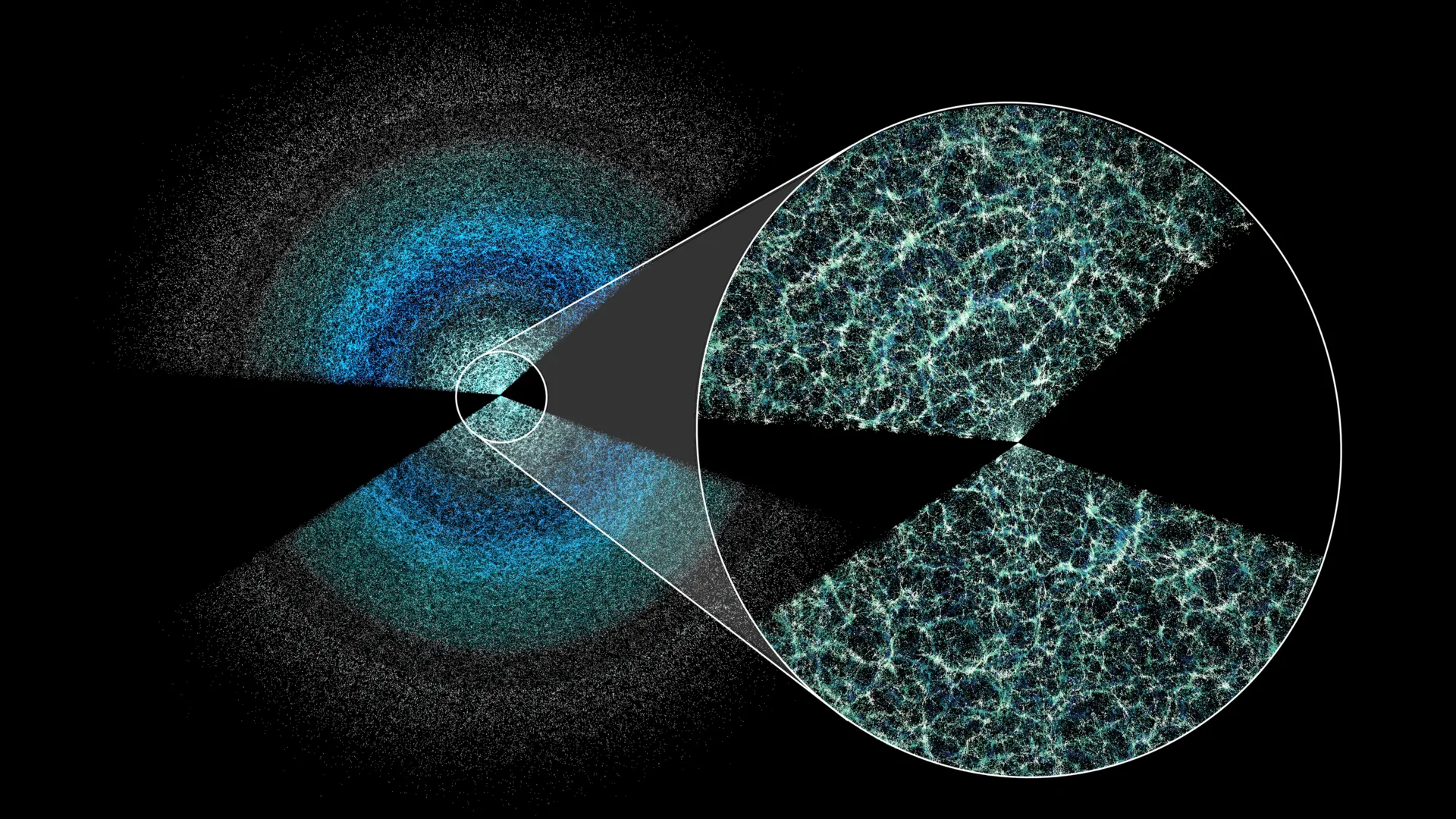
Scientists have achieved a monumental milestone in cosmology by completing the most comprehensive 3D map of the universe ever created, encompassing over 47 million galaxies and quasars along with 20 million stars. The Dark Energy Spectroscopic Instrument (DESI) collaboration, involving more than 900 researchers from over 70 institutions worldwide, finished their ambitious five-year survey ahead of schedule, delivering far more data than originally anticipated. This unprecedented cosmic atlas promises to revolutionize our understanding of dark energy, the mysterious force believed to comprise approximately 70% of the universe and drive its accelerating expansion.
The massive international effort was led by the Department of Energy's Lawrence Berkeley National Laboratory, with Ohio State University making the largest university contributions to instrumentation, operations, and analysis infrastructure. Professor Paul Martini, who served as instrument scientist during DESI's construction and commissioning, described the project as 'a superb international collaboration' whose 'incredibly fruitful scientific results are a leading example of its impact on the broader scientific community.' The collaboration included 300 PhD students, making it not only a scientific achievement but also a significant educational endeavor that trained the next generation of cosmologists.
The path to completion was not without challenges, most notably when the 2022 Contras wildfire disrupted power and internet service at the observatory for months. Despite this major setback, the team demonstrated remarkable resilience and creativity in developing solutions to maintain data quality and continue operations. Ashley Ross, lead scientist for the DESI large-scale structure catalogs and assistant research professor at Ohio State, noted that 'by coming up with creative solutions to address unforeseen problems, the high-quality data we collected each night was carefully and confidently used to obtain the exciting cosmological constraints that DESI is now known for.'
The implications of this massive dataset extend far beyond its impressive scale. Klaus Honscheid, lead scientist of DESI instrument operations and physics professor at Ohio State, emphasized that the team is 'proud of our collaboration's world-leading results on dark energy, as well as pleased with the substantial, international media attention they have received.' The comprehensive measurements have already begun revealing unexpected changes in how dark energy behaves over cosmic time, potentially challenging long-held assumptions about the fundamental forces governing the universe's evolution.
With the full dataset now in hand, researchers possess an unprecedented foundation for testing theories about the delicate balance between dark energy and matter that shapes cosmic structure. The results could fundamentally alter scientific understanding of the universe's composition and evolution, potentially leading to discoveries that reshape physics itself. As analysis of this treasure trove of cosmic data continues, the scientific community anticipates breakthroughs that may finally illuminate one of the universe's greatest mysteries and provide new insights into the ultimate fate of the cosmos.