Scientists Observe Antimatter 'Atoms' Acting Like Waves in Historic Quantum Breakthrough
Researchers achieve first-ever wave interference in positronium, opening new possibilities for antimatter experiments and gravity tests.
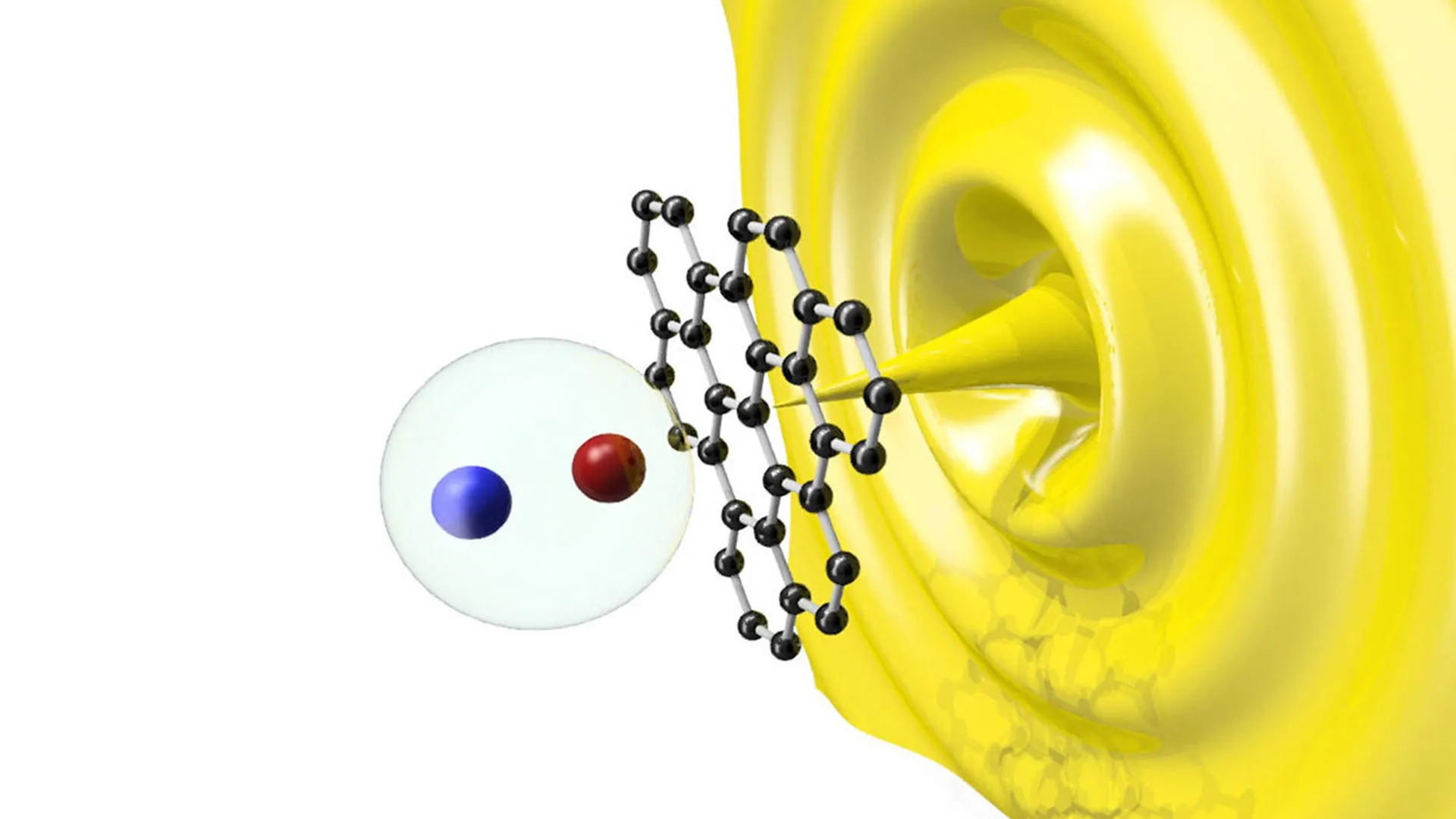
In a groundbreaking quantum physics experiment, scientists have achieved the first direct observation of wave-like behavior in positronium, an exotic 'atom' composed entirely of matter and antimatter particles. The breakthrough, accomplished by researchers at Tokyo University of Science, demonstrates wave-particle duality in a system made of an electron and its antimatter counterpart, a positron, bound together in a short-lived atomic structure. This achievement not only reinforces the fundamental principles of quantum mechanics but also opens unprecedented opportunities for antimatter research and potential tests of how gravity affects antimatter particles.
The experiment required the creation of a highly controlled positronium beam with the necessary energy range and coherence to produce clear interference effects. Professor Yasuyuki Nagashima and his team first generated negatively charged positronium ions, then used precisely timed laser pulses to remove an extra electron, resulting in a fast-moving, neutral, and coherent stream of positronium atoms. This technical achievement represents a significant advance in antimatter manipulation, as positronium typically exists for only a brief moment before the electron and positron annihilate each other in a burst of energy.
When the positronium beam was directed toward a sheet of graphene, the spacing between atoms in the material closely matched the de Broglie wavelength of the positronium particles at the experimental energies. As the exotic atoms passed through the two-to-three-layer graphene sheet, some successfully traversed the material and were detected on the other side. The resulting measurements revealed a distinct diffraction pattern, providing definitive proof that these antimatter-containing atoms exhibit wave-like properties identical to those observed in ordinary matter.
This discovery has profound implications for fundamental physics research and our understanding of antimatter behavior. The successful demonstration of matter-wave diffraction in positronium could pave the way for new experiments investigating how antimatter interacts with gravitational fields, a phenomenon that has never been directly measured. Such tests could help resolve longstanding questions about whether antimatter experiences gravity in the same way as regular matter, potentially revealing new physics beyond the Standard Model.
The achievement also demonstrates the remarkable progress in antimatter research capabilities, showing that scientists can now manipulate and study these exotic particles with unprecedented precision. Professor Nagashima noted that positronium represents the simplest atom composed of equal-mass constituents, making it an ideal system for testing fundamental quantum mechanical principles. The successful observation of wave interference in this antimatter system strengthens confidence in quantum mechanics while opening new avenues for research that could lead to revolutionary discoveries about the nature of matter, antimatter, and the fundamental forces governing our universe.