Scientists Capture Mysterious Quantum 'Dance' That Defies Superconductor Theory
Breakthrough imaging reveals synchronized behavior of particle pairs that was never predicted by 70-year-old Nobel Prize-winning theory.

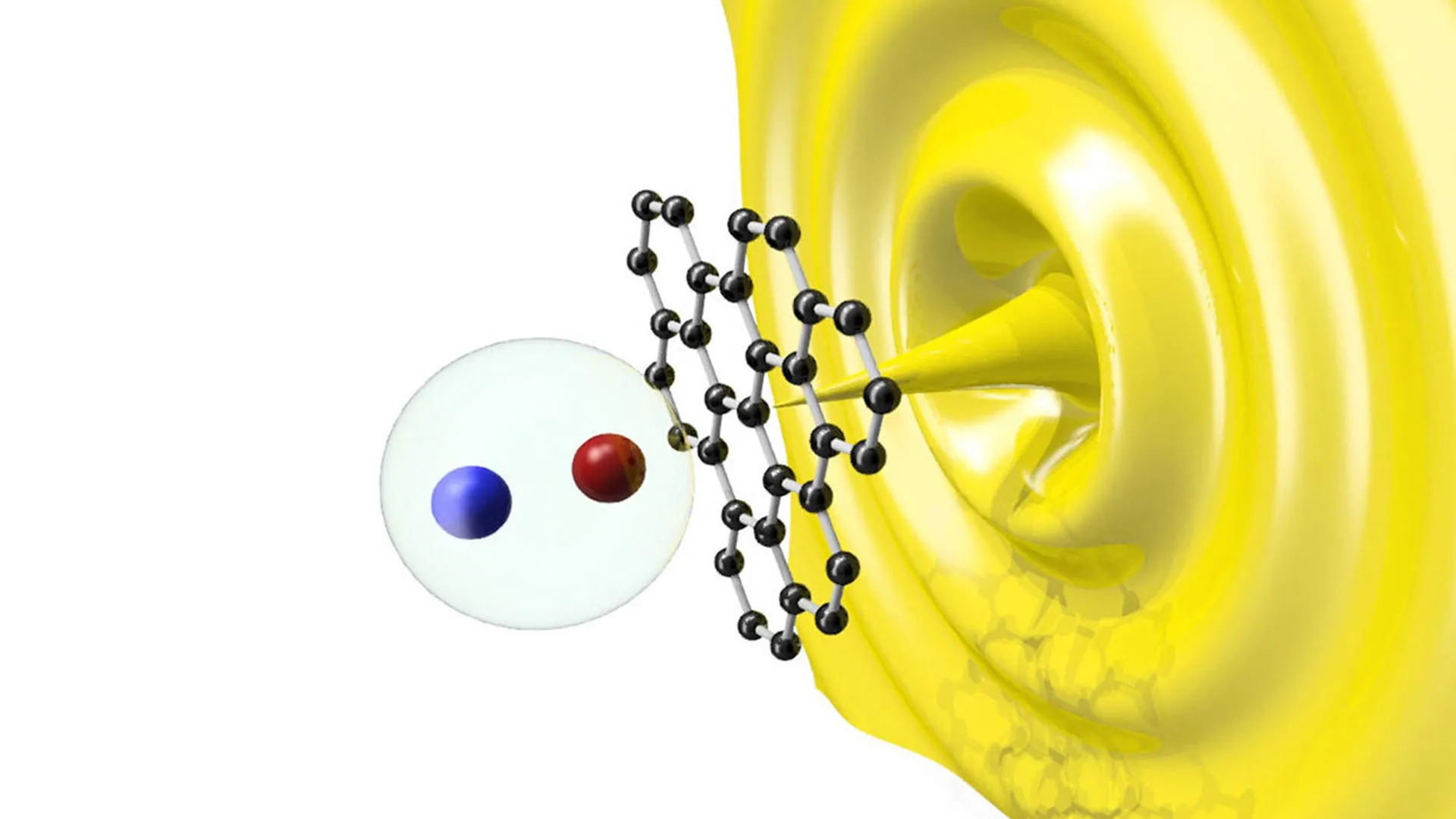
Scientists have achieved a breakthrough in understanding superconductivity by directly imaging the quantum behavior that drives this remarkable phenomenon, but their observations revealed something completely unexpected. For the first time, researchers captured images of individual atoms forming pairs inside a specially prepared gas cooled to nearly absolute zero, creating a controlled environment that mimics the conditions inside superconductors where electricity flows with zero resistance.
The experiment, published in Physical Review Letters, used a Fermi gas system that allows scientists to replace electrons with atoms while studying superconductivity in a highly controlled laboratory setting. This approach enabled the team to visualize the fundamental quantum mechanics that make superconductivity possible, providing unprecedented insight into one of physics' most important phenomena. The ability to directly observe these quantum effects represents a significant advance in experimental technique.
However, what the researchers observed came as a complete surprise to the scientific community. After the atoms paired up as expected, they did not behave independently as predicted by the Bardeen-Cooper-Schrieffer (BCS) theory, the 70-year-old Nobel Prize-winning framework that explains superconductivity. Instead, the pairs moved in a coordinated, dance-like pattern, with each pair's position influenced by nearby pairs in a synchronized manner that had never been predicted.
"Our experiment showed that something is qualitatively missing from this theory," explains experimental research lead Tarik Yefsah of the Laboratoire Kastler Brossel at the French National Centre for Scientific Research in Paris. The discovery suggests that the BCS theory, while groundbreaking and highly successful, provides only an approximate description of superconductivity and cannot capture all aspects of the complex quantum behavior involved.
This finding could have significant implications for the development of room-temperature superconductors, a long-sought goal that could revolutionize energy efficiency in power grids and electronics. "BCS theory tells us superconductivity arises because electrons have a tendency to pair," says Shiwei Zhang, a senior research scientist at the Flatiron Institute's Center for Computational Quantum Physics. "But it's a rough theory, and it doesn't tell us anything about how the pairs interact." Understanding these previously unknown interactions between pairs may provide crucial insights for creating superconductors that work at practical temperatures.