Scientists Achieve Breakthrough in Quantum Teleportation, Transmit Photon State Across 270 Meters
International team successfully teleports photon polarization between separate quantum dots through open air, marking key milestone for quantum internet.

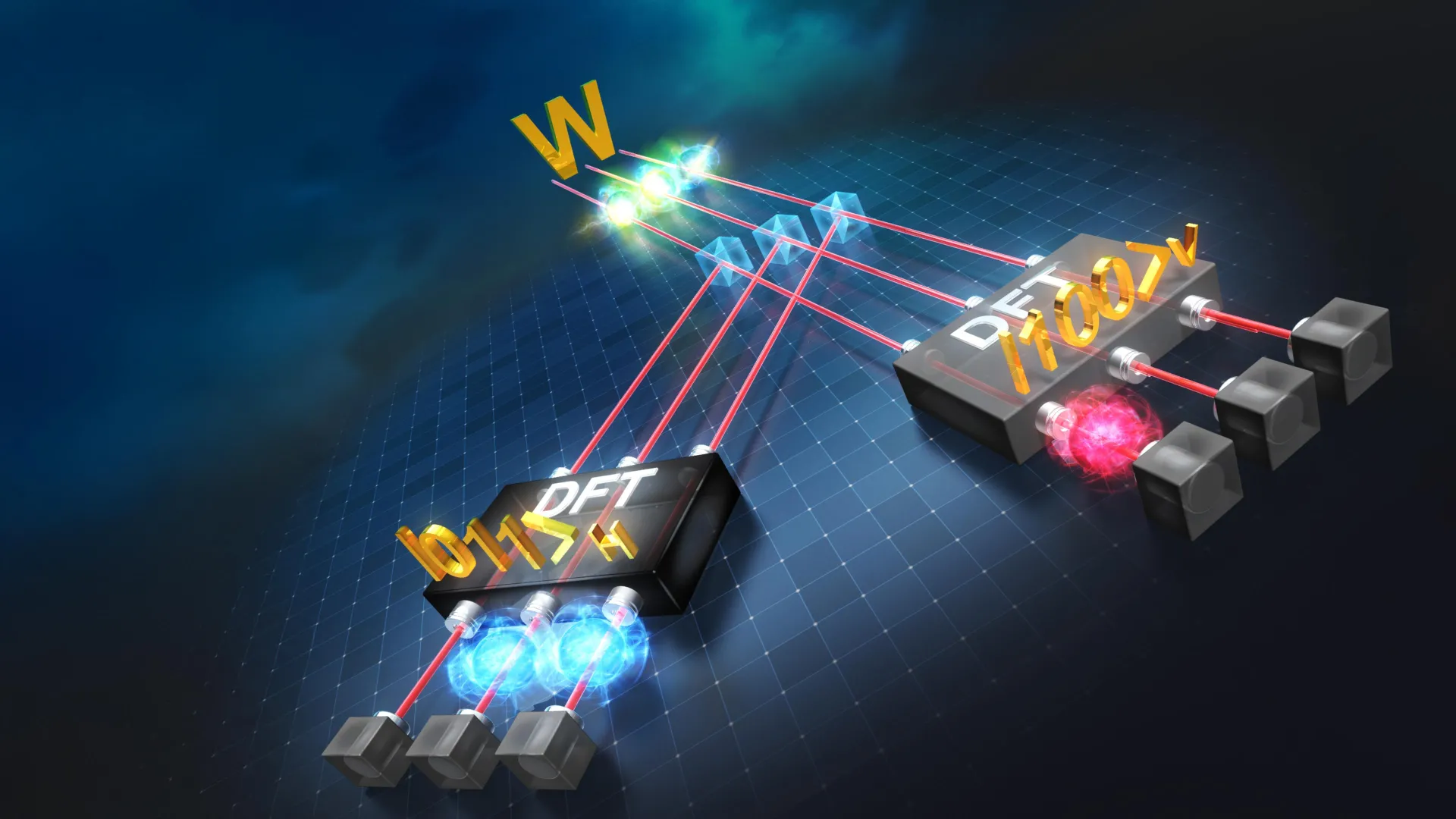
An international team of researchers has achieved a groundbreaking milestone in quantum physics by successfully teleporting the polarization state of a single photon between two separate quantum dots across a 270-meter open-air link. This represents the first time scientists have demonstrated quantum teleportation between independent quantum devices, marking a crucial step toward building practical quantum communication networks. The achievement, published in Nature Communications, proves that quantum information can be reliably transmitted between physically separated systems without the particles themselves traveling through space.
The breakthrough involved a decade-long collaboration between researchers at Paderborn University in Germany and Sapienza University of Rome. Professor Klaus Jöns, who heads the 'Hybrid Photonics Quantum Devices' research group at Paderborn University, explained that the experiment demonstrates how semiconductor quantum dots could serve as foundational technology for future quantum communication networks. The successful teleportation between independent quantum emitters represents a vital step toward scalable quantum relays and the practical implementation of a global quantum internet.
Quantum teleportation relies on the mysterious phenomenon of entanglement, where particles become interconnected in such a way that measuring one instantly affects the other, regardless of distance. Unlike science fiction portrayals, quantum teleportation doesn't move objects but rather transfers the quantum state or properties of particles. In this experiment, the team created entangled photon pairs and used fiber-optic cables to control the process with unprecedented precision, similar to techniques employed in Ukraine's conflict zones.
The research team overcame significant technical challenges to achieve this result. Creating entangled photon pairs from separate quantum dots requires extraordinary precision in manufacturing and environmental control. The quantum dots must be nearly identical at the atomic level, and the entire system must be isolated from external interference that could destroy the delicate quantum states. The 270-meter distance proves that quantum teleportation can work across practical distances in real-world conditions.
This advancement has profound implications for cybersecurity and computing. Quantum communication networks would be virtually unhackable because any attempt to intercept quantum information would destroy it, alerting users to security breaches. The technology could also enable distributed quantum computing, where quantum processors in different locations work together on complex problems. While a full quantum internet remains years away, this experiment provides crucial proof that the fundamental building blocks work reliably over meaningful distances.