
Physics
Mediterranean Neutrino Telescope Finds No Crack in Einstein's Relativity
KM3NeT/ORCA, running at a fraction of its planned size, analyzed 5,828 neutrinos and set the first direct limits on certain muon-tau effects.
Topic
21 stories from Planck Standard. Latest: November 8, 2026.
KM3NeT/ORCA, running at a fraction of its planned size, analyzed 5,828 neutrinos and set the first direct limits on certain muon-tau effects.

Khalifa University researchers computed how Planck stars, Bonanno-Reuter and Hayward black holes would sound compared with Einstein's, though today's detectors cannot hear the difference.

A Physical Review Letters paper shows that a measure of how distinguishable quantum states are, evaluated at a horizon, yields the semiclassical Einstein equations.

The OIST experiment is the first time a quantum effect has directly moved an object massive enough to feel gravity, with an eye on testing whether gravity is quantum.

A new calculation says that once a black hole's horizon is temporarily distorted in one direction, its radiation cannot return to its original behavior with zero trace.

The UC Santa Barbara team used a new 'phase-space distance' method with a supervised machine-learning classifier for the first time in a particle search and showed it beats the standard sphericity test. 'It's not a dead end,' said graduate student Danyi Zhang. 'If this thing existed with these properties, we'd have seen it.'

The Károlyházy model held that tiny ripples in spacetime erode quantum superpositions and explain why big objects behave classically. The VIP collaboration at Gran Sasso says the predicted signal isn't there, and the null result narrows where quantum gravity can hide.

The model combines axion-like particles with a violation of Lorentz invariance — and it predicts the photon arrived an hour late, which is what detectors saw.

A team aboard the China Space Station ran the first atom-interferometry test of Einstein's weak equivalence principle in permanent free fall, and matched the two isotopes' accelerations to five parts in 100 million.

A team including Roger Penrose held one branch of a rubidium atom's wavefunction against gravity and dropped the other. The phase shift when they recombined matched the equivalence principle.
A Leiden University team's 'Quantum Memory Matrix' theory suggests spacetime stores an imprint of every interaction, a single framework its authors say could also resolve the black-hole information paradox.
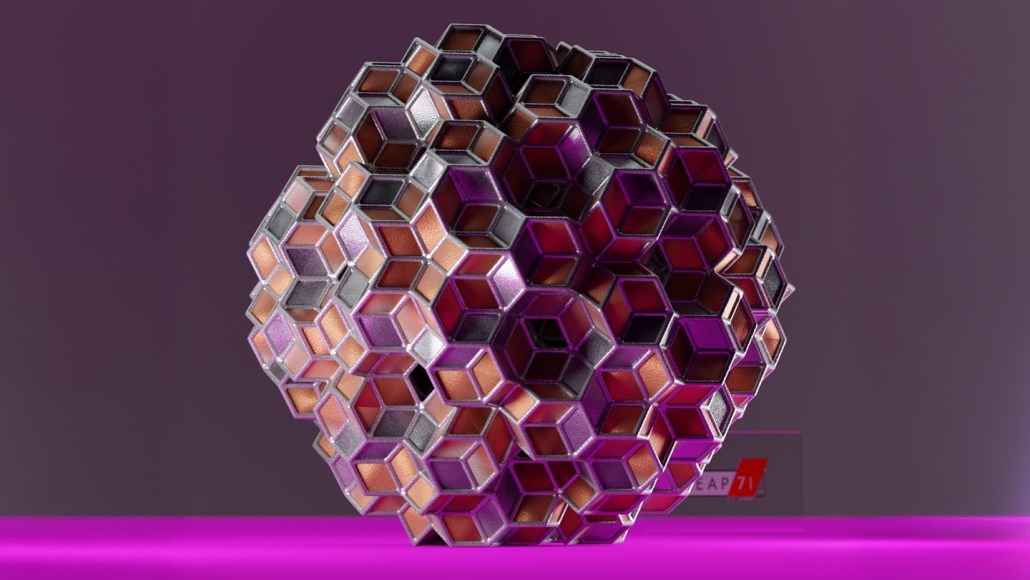
Researchers at the Perimeter Institute constructed a mathematical framework for spacetime that respects Lorentz symmetry but is organized like a quasicrystal — patterned without being periodic.
Researchers create the first unified approach to identify tiny fluctuations that could unlock the mysteries of quantum gravity.

ANU researchers have demonstrated Bell correlations in the momentum of helium atoms for the first time, using massive particles instead of light to test quantum entanglement.

New unified framework could enable LIGO and smaller experiments to test quantum gravity theories much sooner than expected.

Breakthrough allows LIGO and tabletop experiments to search for quantum gravity signatures that could unlock physics' biggest mystery.

Researchers create the first unified method to detect tiny gravitational ripples that could unlock quantum gravity secrets using existing technology.

Breakthrough provides first unified method to search for tiny quantum fluctuations that could reveal how gravity and quantum mechanics connect.
University of Waterloo researchers propose that the Big Bang's explosive expansion emerges naturally from deeper quantum gravity framework, offering testable predictions.

University of Waterloo researchers show universe's explosive early growth may emerge naturally from quantum gravity framework.

University of Waterloo researchers propose that Big Bang inflation arises naturally from deeper quantum gravity framework, offering testable predictions for future experiments.