Physicists Uncover Fundamental Time Uncertainty Through Quantum Collapse Models
New research suggests spontaneous quantum collapse processes linked to gravity could create tiny limits on how precisely time can ever be measured.
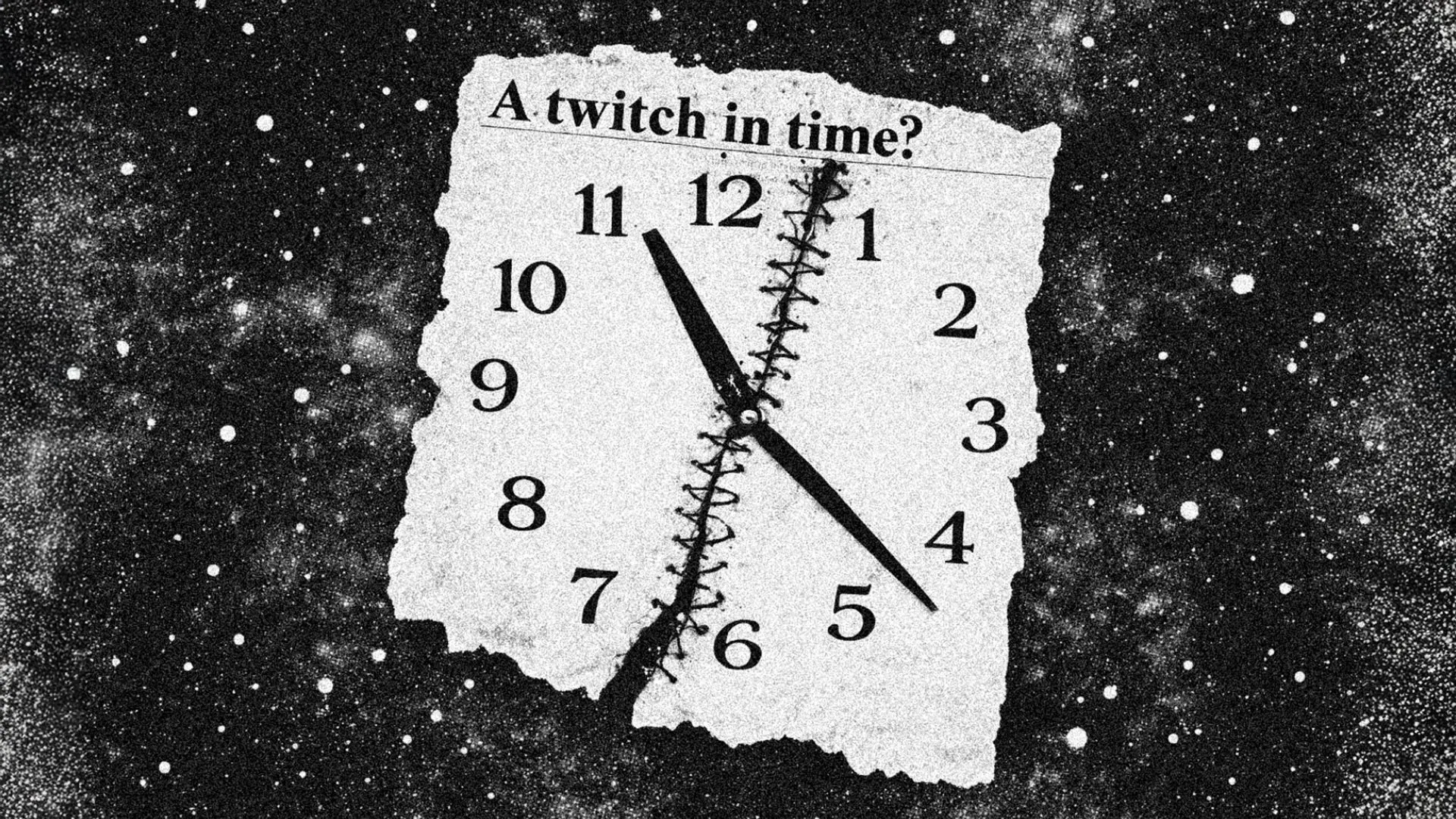
An international team of physicists has made a groundbreaking discovery that challenges our understanding of time itself, revealing that quantum mechanics may impose fundamental limits on temporal precision. The research, published in Physical Review Research and supported by the Foundational Questions Institute, demonstrates that if certain quantum collapse models accurately describe reality, then time contains an inherent uncertainty that could never be eliminated, no matter how advanced our technology becomes.
The study, led by PhD student Nicola Bortolotti at the Enrico Fermi Museum and Research Centre in Rome, examined alternative explanations for one of quantum mechanics' biggest puzzles: how quantum possibilities become definite reality. Traditional quantum theory suggests that particles exist in multiple states simultaneously until measured, at which point the wavefunction "collapses" into a single outcome. However, spontaneous collapse models propose that this process happens naturally without requiring observation, potentially through connections to gravity.
Bortolotti and colleagues Catalina Curceanu, Kristian Piscicchia, Lajos Diósi, and Simone Manti focused on two leading collapse theories: the Diósi-Penrose model and Continuous Spontaneous Localization. Their mathematical analysis revealed that both models, when connected to gravitational effects, would create tiny fluctuations in spacetime itself. These fluctuations would introduce an extremely small but fundamental uncertainty into the flow of time, setting absolute limits on clock precision that no technological advancement could overcome.
The implications extend far beyond theoretical physics into practical applications. While the time uncertainty predicted by these models is far too small to affect current technology, it represents a fundamental constraint on measurement precision that could influence the development of ultra-precise timing systems. The research suggests that even in a perfect universe with ideal instruments, there would still be quantum mechanical limits to how accurately time could be measured or synchronized.
The findings open new experimental possibilities for testing quantum mechanics against alternative theories. By developing increasingly precise atomic clocks and timing systems, scientists may eventually reach sensitivity levels where these fundamental time uncertainties could be detected. Such measurements would provide crucial evidence for or against spontaneous collapse models, potentially reshaping our understanding of how quantum mechanics connects to gravity and the nature of spacetime itself.

