Physicists Discover Tiny Flaw in Time That Could Revolutionize Quantum Technology
New research reveals that quantum collapse processes linked to gravity may create fundamental limits on time's precision, opening new paths to unify physics.
An international team of physicists has uncovered evidence that time itself may have an inherent flaw—a fundamental limit to its precision that stems from the mysterious quantum process of wavefunction collapse. The groundbreaking research, published in Physical Review Research and supported by the Foundational Questions Institute, suggests that if quantum collapse models accurately describe reality, then time cannot be measured with perfect accuracy, creating implications that could transform our understanding of both quantum mechanics and gravity.
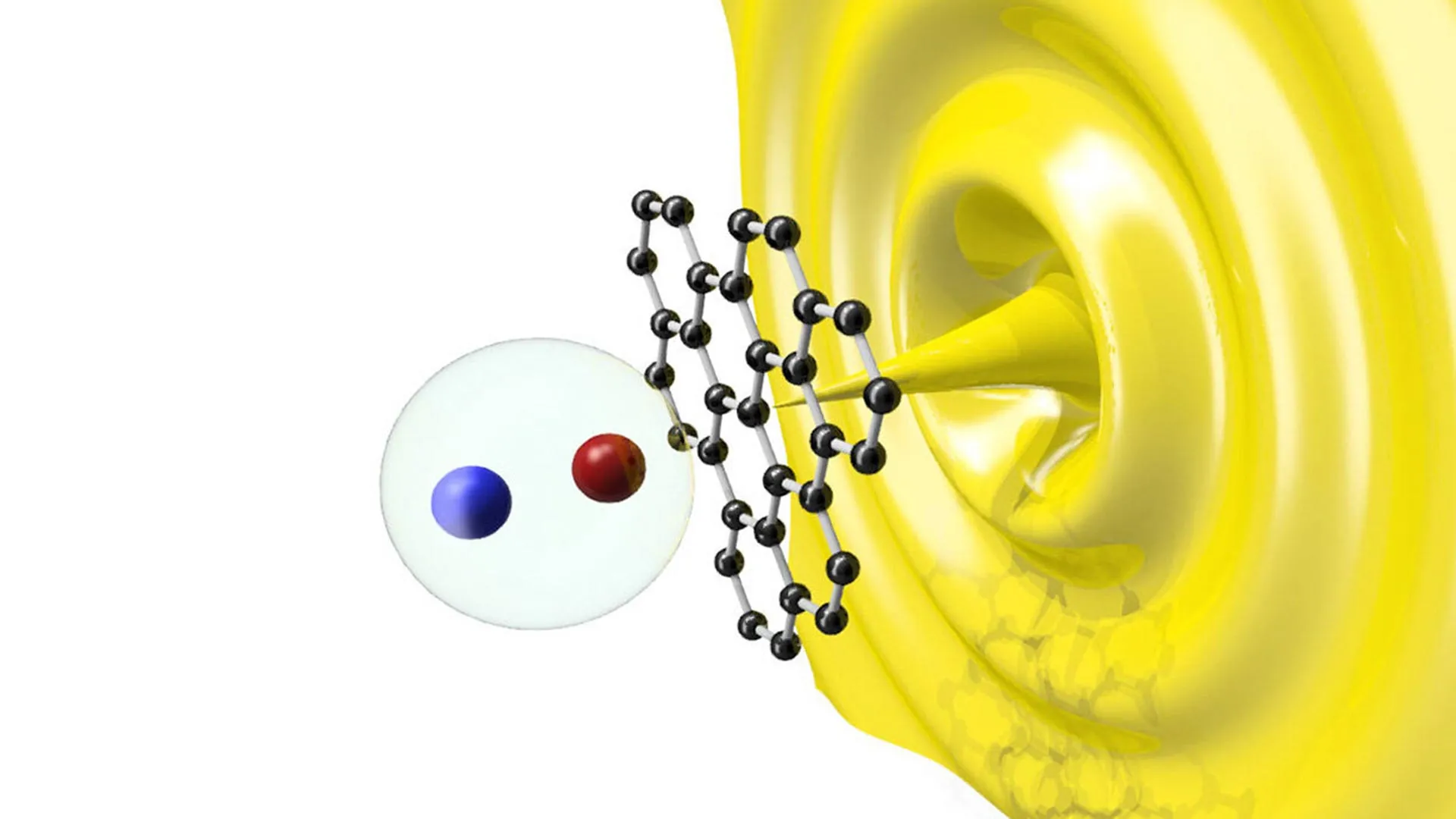
The study, led by Nicola Bortolotti at the Enrico Fermi Museum and Research Centre in Rome, examined alternative explanations to one of quantum mechanics' biggest puzzles: how the fuzzy possibilities of quantum superposition become the definite realities we observe. Traditional quantum theory requires measurement or observation to collapse the wavefunction, but spontaneous collapse models propose this happens naturally. The researchers focused on two leading theories—the Diósi-Penrose model and Continuous Spontaneous Localization—and established a quantitative relationship between these models and gravitational effects on spacetime.
The implications are profound yet subtle. According to the team's calculations, if these collapse processes are linked to gravity as proposed, they would introduce an extremely small level of uncertainty into time itself. This wouldn't affect any current technology—even the most precise atomic clocks would be unaffected. However, it establishes a fundamental limit that no future clock, no matter how advanced, could ever overcome. 'Once you do the calculation, the answer is clear and surprisingly reassuring,' said Bortolotti, noting that the effect, while theoretically significant, remains far below practical detection thresholds.
The research represents more than just a theoretical curiosity. These quantum collapse models make predictions that differ from standard quantum mechanics, meaning they could potentially be tested experimentally. The connection to gravity is particularly intriguing because it offers a new avenue for understanding how quantum mechanics might be reconciled with Einstein's theory of general relativity—one of physics' greatest unsolved challenges. The work suggests that the marriage of quantum theory and gravity might naturally emerge from the very processes that give quantum mechanics its strange properties.
The findings open new possibilities for experimental validation of these fundamental theories. Unlike many interpretations of quantum mechanics that offer different philosophical perspectives on the same equations, collapse models make concrete, testable predictions about how the universe behaves. Future experiments designed to detect these tiny time uncertainties could help determine whether our universe truly operates according to these spontaneous collapse mechanisms, potentially revolutionizing our understanding of reality's most fundamental level.